Countries Attacked by Japan in World War II
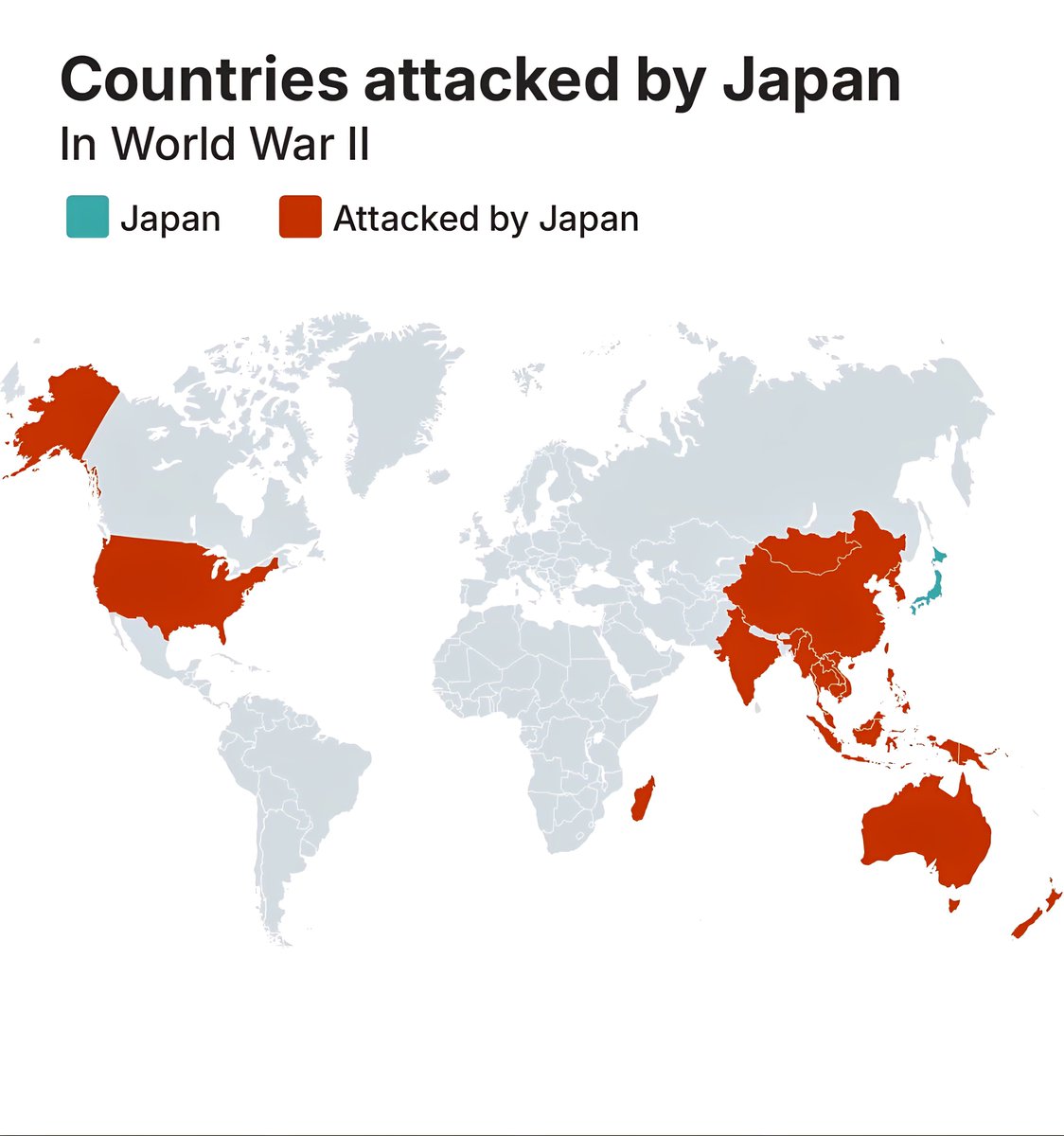
1. China – The Battlefield of the Early War
China bore the brunt of Japanese aggression from the outbreak of the Second Sino-Japanese War in 1937. Tokyo’s invasion marked a brutal chapter, with events like the infamous Nanjing Massacre devasting Chinese cities and civilians. The conflict in China was characterized by prolonged warfare, guerrilla tactics, and immense civilian casualties. Japan aimed to expand its empire into China, securing resources and strategic dominance in East Asia.
2. United States – Pearl Harbor and Naval Warfare
Japan’s surprise attack on the U.S. Pacific Fleet at Pearl Harbor on December 7, 1941, marked a pivotal moment in the war. The attack aimed to neutralize the U.S. Navy, allowing Japan to expand across Southeast Asia without interference. The assault led to the United States formally entering World War II, quickly mobilizing for a global conflict that would last several more years. The attack on Pearl Harbor remains one of the most infamous military strikes in history, resulting in significant American casualties and the destruction of numerous ships and aircraft.
3. Southeast Asia – Rapid Expansion and Control
Following its attacks on China and Pearl Harbor, Japan launched a swift campaign to seize control of Southeast Asia, including countries like the Philippines, Myanmar (Burma), Thailand, Malaya (Malaysia), Singapore, and Indonesia. These regions were strategic for their rich resources such as oil, rubber, and tin, which Japan desperately needed to fuel its war machine. Major battles, including the fall of Singapore in 1942, highlighted Japan’s military prowess during this period.
4. British India – Threats in the Subcontinent
Though not directly invaded, Japan posed a significant threat to British India during World War II. Japanese forces launched strikes into northeastern India through Burma, aiming to destabilize the British colonial administration and extend their influence further into South Asia. Events like the Battle of Imphal and Kohima in 1944 marked fierce fighting as the Allies successfully repelled Japanese advances, preventing further significant territorial gains.
5. Australian and New Zealand Territories – Defensive Battles
Japan targeted territories like Papua New Guinea and parts of Australia’s northern coast. Notably, the Battle of Milne Bay in 1942 was the first Japanese land defeat in the Pacific, marking a turning point in Australian defense efforts. New Zealand forces also engaged in coastal defense and jungle warfare campaigns across the Pacific theater, helping to push Japanese forces back toward their home islands.
6. The Dutch East Indies – The Path to Resource Control
The Dutch East Indies (present-day Indonesia) was a prime target for Japan due to its abundant oil reserves. The islands fell to Japanese forces in early 1942, leading to the occupation of key cities like Jakarta. The occupation disrupted Dutch colonial rule and contributed heavily to Japan’s resource stockpile, which was vital for maintaining their military operations across the Pacific.
7. Western Pacific Islands – Key Strategic Outposts
Japan expanded its reach across numerous Pacific islands, including Guam, the Caroline Islands, the Marshall Islands, and the Mariana Islands. These islands served as crucial military outposts for launching attacks and establishing a defensive perimeter. The Battle of Guam in 1944 was particularly significant, as U.S. forces recaptured the island in a fierce campaign, symbolizing the turning tide of the Pacific War.
8. Soviet Union – A Rare Eastern Flank Attack
Although Japan’s primary focus was in the Pacific, it also engaged in limited hostilities against the Soviet Union late in World War II. In 1939, Japan had signed a neutrality pact with the Soviets, but in 1945, as the war drew to a close, Japan launched a brief surprise attack on Soviet positions in Manchuria. This attack was part of Japan’s final efforts to secure strategic advantages before capitulation.
The scope of Japan’s military campaigns during World War II was extensive, impacting countless nations and shaping the geopolitical landscape of East Asia and the Pacific. These aggressive actions led to significant loss of life, destruction, and a reshaping of regional boundaries that still influence global politics today.