Category: Social Media

All Social Media News!

  • Why I Longed for Social Media in My Youth

    Why I Longed for Social Media in My Youth

    Certainly! Here’s a rewritten version of the content in American English that is unique, human-like, and plagiarism-free.

    While social media started to emerge in the mid-2000s, it truly gained traction in the 2010s. Unfortunately, this digital transformation unfolded during my adulthood, which leaves me pondering the numerous advantages I could have experienced had I been part of it in my youth.

    ### 1. The Joy of Instant Communication

    During my teenage years, texting was the primary way to communicate, but looking back, I realize how dull it was compared to today’s options. Texts lacked the excitement of real-time thought and idea sharing. Nowadays, chat applications allow for immediate sharing of various media, including videos, images, voice messages, GIFs, and stickers, making conversations much more engaging.

    Moreover, the ability to make voice and video calls would have made my interactions more intimate and expressive. Particularly, video calls could have helped bridge the gap between digital interactions and in-person friendships, strengthening bonds with childhood pals even across distances.

    ### 2. Staying Connected Would Have Been a Breeze

    Over the years, friends and family inevitably move away, complicating efforts to maintain connections. Before the era of social media, staying in touch required significant effort, especially as a kid when your options were limited, and regular visits weren’t possible.

    With social media platforms, I could’ve effortlessly kept up with everyone’s lives through their continuous updates, whether through posts, pictures, or videos. I could have remained an active participant in their lives, regardless of the physical distance.

    ### 3. Entertainment Would Have Been Abundant

    If I had grown up with social media, a treasure trove of entertainment would’ve been at my disposal. Platforms like Facebook, Instagram, and Bluesky, offer endless streams of funny memes, viral videos, and trending discussions.

    Additionally, if I wanted to explore new skills, learn about different cultures, watch music videos, or enjoy comedy clips, sites like YouTube and TikTok would have made it incredibly easy. With social media, boredom would have been virtually non-existent.

    ### 4. Access to News and Updates in Real Time

    The access to news and updates has dramatically changed thanks to social media. In the past, staying informed often meant relying on traditional media sources. Today, news is right at your fingertips.

    Now, you can get the latest information—be it about current events, entertainment, or scientific discoveries—in a matter of seconds. The news is provided in real-time from various perspectives, all customized to fit your interests.

    ### 5. My Hobbies Wouldn’t Have Died Out

    Social media has the power to create communities by connecting people with similar interests, regardless of geographical barriers. It facilitates sharing hobbies, planning events, and supporting each other’s passions. Through hashtags, groups, and forums, individuals can easily find communities that align with their interests.

    This sense of connection might have been especially impactful during my skateboarding phase (inspired largely by games like Tony Hawk’s Pro Skater). At the time, I felt isolated, thinking I was the only skater in my area. Later, I found out that other kids in nearby neighborhoods had also dabbled in skateboarding before moving on.

    We lacked a platform to connect, share experiences, and build a supportive skateboarding community. I often wonder how differently it could have turned out.

    ### 6. Nostalgic Memories Would Have Been Easily Captured

    Social media serves as a digital scrapbook for your fondest memories. It allows you to revisit various stages of your life through photos, videos, and posts you’ve shared or that others tagged you in.

    For me, my memories on social media start around 2008, and I often think about how much further back they could have gone. Although I have physical photos and memorabilia stored away, documenting, preserving, and sharing them would have been so much simpler with social media available (it’s still a bit painful that I don’t have a single picture from my high school graduation).

    While some may feel relieved to have avoided social media during their upbringing, and I understand the valid concerns surrounding it—especially in recent years—I can’t help but feel that it would have significantly enriched my childhood and teenage experiences.

    This version presents the original ideas but with unique phrasing and structure.
  • Discover the Exact Time You Read WhatsApp Messages

    Discover the Exact Time You Read WhatsApp Messages

    Finding out whether someone has read your WhatsApp message is easy with the checkmarks displayed beside each message. But did you know you can also discover the exact time when your messages were viewed on WhatsApp?

    How to Check Read Time for a Message on WhatsApp

    This feature is available only if both you and the person in the chat have read receipts turned on. If that’s the case, you’ll be able to see an exact time stamp for when your message was opened.

    To check the time your WhatsApp message was read, open WhatsApp on your smartphone. Locate the message you want to check and press and hold it.

    After doing this, you’ll see new options appear, which vary by platform. On Android, additional icons will show up in the top bar. Tap the three-dot icon at the top of the chat and select Info. If you’re using an iPhone, a list of options will appear. Choose Info from that list.

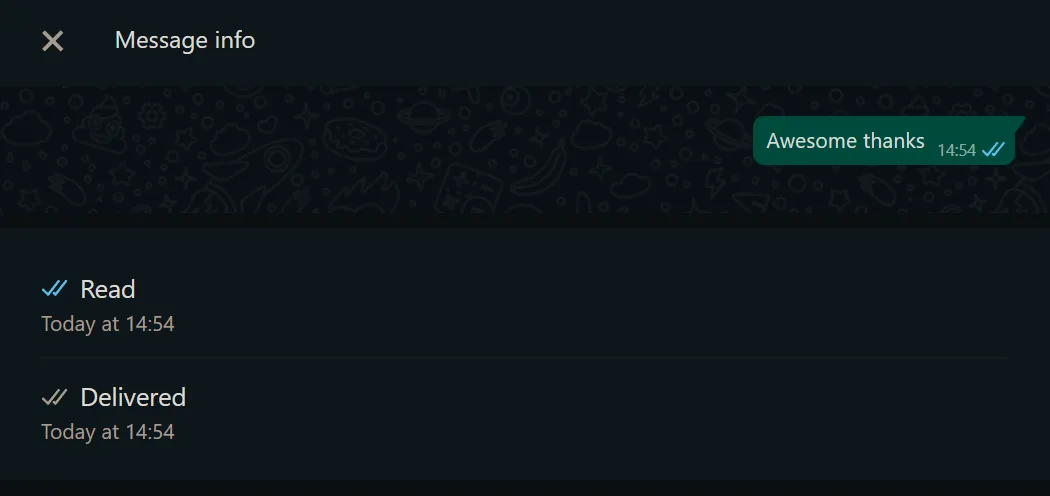
    This will show you the Delivered and Read times for your message. Delivered indicates when your message arrived on the recipient’s device, while Read signifies when they actually opened it. To understand more about this, familiarize yourself with the checkmarks in WhatsApp and Telegram.

    You can use this method to determine the read time for messages in one-on-one chats, group messages, or even messages you send to yourself. In group chats, you can see the Delivered and Read times for each participant. Just tap on a person’s name in the group chat to view complete details.

    Keep in mind that you cannot view the read times for messages sent by others, even in group chats. If the recipient hasn’t read your message yet, you’ll see three dots in the Read section instead.

    However, there may be instances where the WhatsApp message info indicates Read but does not provide a time. This likely means the other person has disabled read receipts. This feature allows users to maintain their privacy; they may not want anyone to know exactly when they were last active.

    When read receipts are turned off, WhatsApp won’t show that you’ve seen messages. That’s why no time is displayed even if the message is marked as “read.” It’s also possible for someone to read your message while offline, potentially using a method to view messages without generating read receipts.

    It’s important to remember that read receipts are always enabled in group chats. This means you can only conceal your message read times in private conversations.

    How to Check the Message Read Time on WhatsApp Web

    You can also find out the read time for WhatsApp messages using WhatsApp Web. Open the chat where the message is located and hover over the specific message you want to check. Click the small arrow that appears in the corner and select Message info from the dropdown menu.

    A sidebar will appear on the right side of the screen, similar to what you see in the mobile app. This will display the Delivered and Read times for your message. Note that unlike the mobile app, you’ll only see Read times in group chats; Delivered times are not shown for groups.

    Remember, if a message appears as “read” but lacks a timestamp, the other person likely has read receipts disabled. Ensure your own read receipts are enabled so this feature works in the future. In tests, sometimes the mobile app would show a read time while the web app would not. For the most reliable information, always check the mobile app.

    While you might not always need to know the exact time a message was read, it can be important in certain situations, like confirming that a family member has arrived safely at their destination.

  • Why I Choose WhatsApp for All My Voice and Video Calls

    Why I Choose WhatsApp for All My Voice and Video Calls

    I’ve experimented with various platforms for video and voice calls, including Zoom, Skype, and Google Meet. Yet, no matter how popular or innovative new options become, I always end up back on WhatsApp. The ease of use it offers is simply unparalleled. However, convenience isn’t the only motivating factor for my loyalty to this app.

    1 It’s Totally Free

    One of the most attractive features of WhatsApp for video and audio calls is that it is absolutely free. There are no subscription fees, hidden costs, or in-app purchases for its basic functionality. You just need an internet connection, and you’re set!

    When compared to traditional phone calls, particularly international ones, WhatsApp completely removes any financial obstacles. Even against traditional video conferencing tools, it shines because there’s no pressure to pay for upgrades to get better quality or extra features.

    This accessibility makes WhatsApp stand out in a way that few other applications can match. Whether I’m calling a neighbor or a family member across the globe, I appreciate knowing the only charges I might incur are for data usage.

    2 Smooth Integration with Messaging

    WhatsApp is remarkable because it seamlessly merges messaging and calling. Everything takes place in one app. If I’m already chatting with someone and find it easier to explain something over a call, I can switch to voice or video with just a tap—there’s no need to jump between different applications.

    But it’s not just about spontaneous calls. WhatsApp’s Events feature lets you schedule calls directly within a chat. You can arrange a meeting, and WhatsApp will send notifications to you and the person you’re calling. This is ideal for organizing discussions without relying on separate calendar applications or worrying about forgetting them.

    This smooth transition between texting, calling, and now scheduling adds a layer of convenience that is hard to beat. It feels like WhatsApp intuitively understands how modern conversations progress—which is one reason I keep coming back.

    3 Quality and Reliability of Calls

    No matter how many features an app has, it doesn’t matter if the call quality is lacking. WhatsApp has consistently impressed me with its dependable voice and video calls, even under less-than-ideal circumstances.

    Whether I’m using a strong Wi-Fi connection or mobile data on the move, WhatsApp dynamically adapts to ensure a stable call. While there may be occasional glitches—no service is foolproof—these are rare compared to my experiences with other platforms.

    4 Accessibility Across Platforms

    Another reason I trust WhatsApp for all my calls is its compatibility across devices. It works seamlessly on smartphones, tablets, and computers, regardless of whether you’re on Android, iOS, macOS, or Windows.

    This cross-platform functionality means you’re not confined to a specific ecosystem. I can initiate a video call from my laptop, and my call log updates across all devices. I can easily check if I’ve missed any calls, no matter which device I have with me at the time.

    5 Security Features

    Security is paramount when it comes to phone calls, and WhatsApp excels with its end-to-end encryption. Nobody—not even WhatsApp—can eavesdrop on your conversations. Whether it’s a casual hello or a serious talk, I know my calls are private and secure.

    Each WhatsApp call, whether video or voice, has the same level of encryption protection as your messages. The best part is that it’s automatic—there’s no need to adjust settings or pay for premium security. Many other video and voice calling services offer end-to-end encryption, but having it integrated into WhatsApp means I can make calls without needing an additional app. I can stay connected on WhatsApp and not worry about who might be listening.

    WhatsApp is my go-to application for video and voice calls because it simply works—without hassle. Whether I’m catching up with a friend in a different time zone or switching devices mid-call, WhatsApp ensures a smooth experience. Other apps may have their merits, but WhatsApp stands out by focusing on what truly matters: reliable connections, user-friendly tools, and features that feel custom-designed for everyday life.

  • 6 Changes I’d Love to See in Today’s Social Media Landscape

    6 Changes I’d Love to See in Today’s Social Media Landscape

    Today’s social media landscape has fundamentally altered how we interact, share, and absorb information, yet it definitely has its shortcomings. As a frequent user of these platforms, there are many elements I would like to see improved.

    1 Reduced Algorithmic Influence on Feeds

    In the earlier days of social media, news feeds were primarily chronological and free from algorithmic interference. This made the overall experience feel much more genuine and organic. While I recognize the goal of personalizing content, I often feel the algorithms fall short.

    Current algorithms tend to highlight attention-grabbing posts, which results in a constant bombardment of similar content. This not only restricts our viewpoints but also creates echo chambers. I strongly believe that social media could benefit from less algorithmic influence, allowing for a wider array of organic content that stimulates diverse perspectives.

    2 Fewer Advertisements

    No matter whether I’m on Facebook, Instagram, or X, ads are inescapable. While advertising has always been a part of these platforms, it seems there are now far more ads—and they are much more targeted than before. Each time I scroll my feed, I’m bombarded with sponsored posts, pop-ups, and video ads that disrupt my viewing experience. It feels more like a sales pitch than a platform for connection and engagement with others.

    I understand that ads are essential for these platforms’ revenue, but I wish there were more effective ways to integrate them without detracting from the user experience. Social media should be about relaxation and connecting, rather than a relentless marketplace. A little less marketing and a lot more meaningful interaction would make the experience feel more genuine and manageable.

    3 Minimized Focus on Likes, Shares, and Followers

    Likes, shares, and followers can provide insight into engagement levels, yet they have become overly dominant in determining success on these platforms. This issue extends beyond everyday users; many content creators also feel its effects.

    In their quest for virality and algorithm-friendly posts, I’ve noticed my favorite creators often sacrifice authenticity and creativity. While I can’t fault anyone for seeking likes—it’s a primary measure of success in the social media landscape—I wish platforms would pivot towards promoting genuine, creative content instead of merely rewarding high engagement metrics.

    4 Enhanced Privacy and Reduced Data Collection

    The saying goes, “If you’re not paying for the product, you are the product.” Nowadays, social media platforms often feel more like tools for surveillance than spaces for social interaction, collecting an extensive range of information—from personal details and online habits to social connections and device specifics.

    Even more troubling is that this data is often utilized to train AI models without our consent. Although many platforms provide options to limit data use, these features are frequently hidden or complicated to navigate. I firmly believe that transparency regarding our data usage—and the ability to control it—should be a baseline requirement, not a luxury.

    Despite my enjoyment of social media, I often find myself unsettled by the hidden costs to my privacy.

    5 Stronger Measures Against Misinformation and Fake News

    As I scroll through my feed, I frequently encounter content that spreads misinformation and fake news. With the rise of deepfakes and AI-generated materials, distinguishing fact from fiction is becoming increasingly challenging.

    It’s disheartening to see harmful conspiracy theories and misleading headlines gain traction while credible information struggles to circulate. Although fact-checking initiatives are in place, they don’t always seem adequate or effective.

    I wish platforms would implement more rigorous verification systems, enforce penalties for those who repeatedly spread false information, and create proactive tools to detect and flag inaccuracies before they go viral. Ultimately, social media should serve to empower truth, not propagate confusion.

    6 Focus on User Well-Being Rather than Continuous Engagement

    It’s well-known that social media is designed to be addictive. I often find myself scrolling long after the novelty wears off, a clear sign of effective design at play.

    Even though I’ve tried to curb my social media use during the day, I frequently struggle to stop once I begin. I wish these platforms would emphasize user well-being by introducing genuine tools that promote mindful usage. Imagine if social media prioritized helping us log off when we’ve reached our limit instead of subtly encouraging continuous engagement. That would truly make a difference.

    Ultimately, while modern social media has its advantages, certain quirks desperately need improvement. Until then, I suppose I’ll continue to navigate through these platforms with patience, hoping for a future where these challenges are effectively addressed.

  • Discover Your Facebook Account Creation Date Easily

    Discover Your Facebook Account Creation Date Easily

    Curious about when you first signed up for Facebook? Here’s a guide to help you discover the exact date of your account creation.

    How to Find Out When You Joined Facebook

    The simplest method to find your Facebook join date is by accessing the Personal Information section of the Facebook website or app.

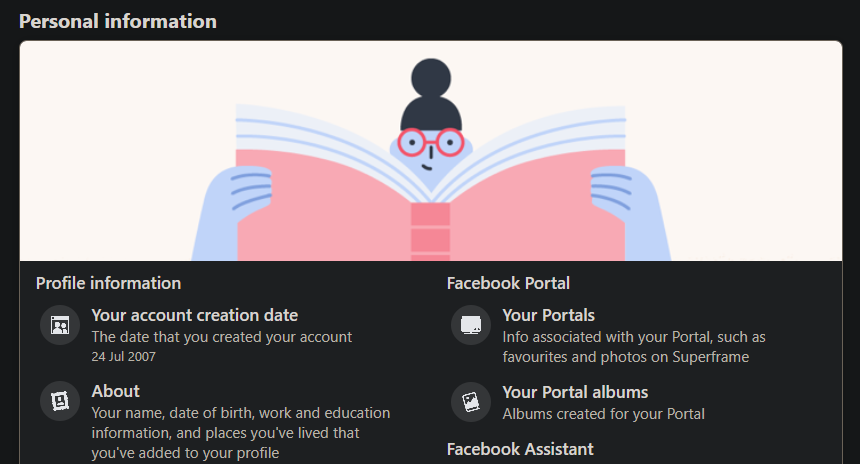
    This section is somewhat hidden within your Facebook settings and Account Center. To get there quickly, go to the Facebook homepage and enter “your information” in the search bar. You should see a result labeled Access Your Information—click on it.

    On the left side panel of the opened page, click on Personal Information. This will take you to a new page that displays a variety of details about your account. Look for Your Account Creation Date to see when you originally joined Facebook.

    person information page on facebook

    If you’re using the mobile app, the process for finding your account creation date is a bit different.

    To discover when you signed up for Facebook on the app, follow these steps:

    1. Tap your profile picture to open a menu, then select the gear icon.
    2. In the Settings & Privacy menu, scroll to Your Information and tap Access Your Information.
    3. Tap Continue. On the Access Your Information page, select Personal Information.
    4. Under Profile Information, you should see Your Account Creation Date.

    Utilizing the Facebook website or app is the best way to check your account creation date. But what if you’re unable to access your account?

    Using Facebook’s Welcome Email to Retrieve Your Join Date

    Another method to find out how long you’ve been on Facebook is by checking your welcome email.

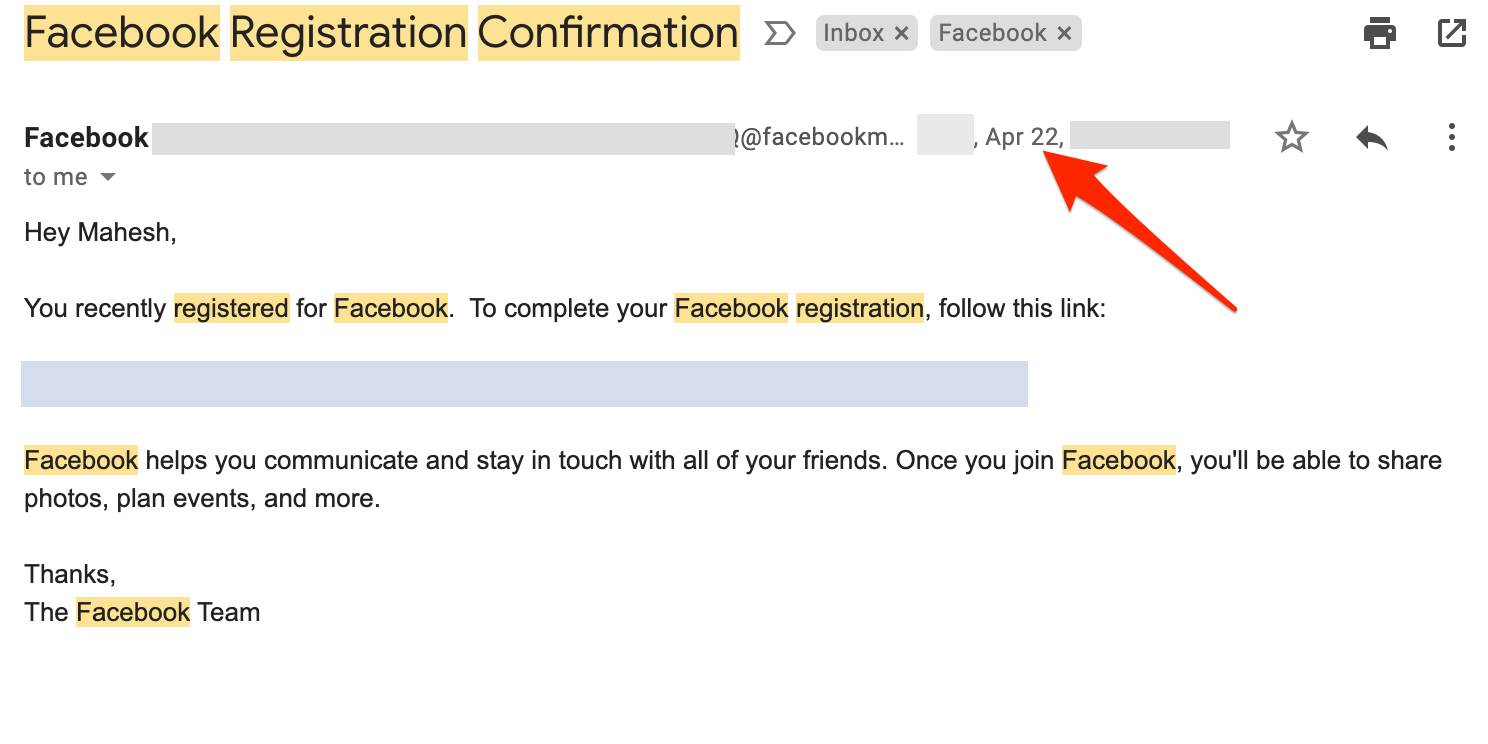
    When you register for an account on Facebook, the platform sends both a confirmation and a welcome email. If you can access the email account associated with your Facebook profile, you should locate this email, which will include your join date.

    To use this approach, open the inbox of your email account and search for keywords such as “Welcome to Facebook” or “Facebook Registration Confirmation“.

    Use the welcome email to find your join date on Facebook

    Find the email from Facebook that prompts you to confirm your email or provides instructions on how to start using Facebook. The date in that email will be your account creation date.

    This method is particularly useful if you no longer can access your Facebook account or if you just signed up, as the welcome email will still be available. However, if you routinely delete your emails, you may not be able to retrieve your account creation date through this method.

    Discover Your Facebook Account Age via Your Profile Picture

    Typically, Facebook encourages users to upload a profile picture right after account creation. Thus, the date of your first profile picture upload should correspond with your account creation date.

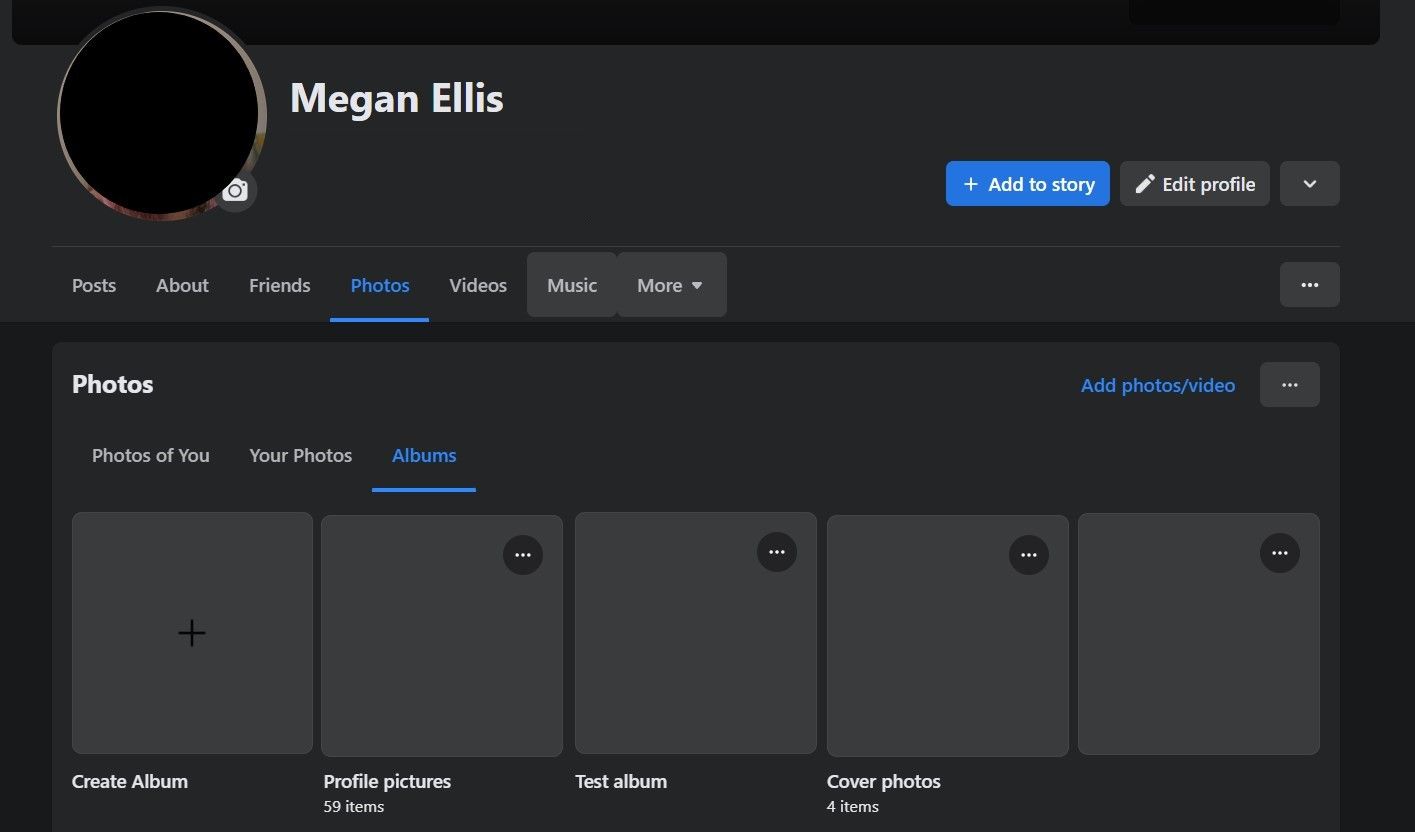
    However, this isn’t always applicable since some users opt not to upload a profile picture. If you’d still like a rough estimate of your join date, go to your profile page and select Photos.

    On the Photos page, look for the Albums option. This will allow you to view your photo albums on Facebook.

    facebook photo albums page

    Click on Profile Pictures to access your profile photo album. Look for the oldest profile photo in this album; if you haven’t uploaded many profile pictures, this shouldn’t take long.

    Once your oldest profile picture is open in full-screen view, check the upload date displayed to the right of the photo.

    first profile picture on Facebook

    This date should be around the time you created your Facebook profile. For example, my account was established on July 24, 2007, while my first profile picture was uploaded on July 25, 2007.

    You could also try to find your account creation date by looking through your old posts, but this is not a very precise approach. When I attempted it, there were no posts during the first month of my account.

    These strategies can help you easily determine when you established your Facebook account. Keep in mind that if you delete your account, only the email method will be available. If you regularly prune your Facebook account, the personal information page remains a reliable source for your creation date.

  • Is Facebook Marketplace Worth It? Pros and Cons Explored

    Is Facebook Marketplace Worth It? Pros and Cons Explored

    Facebook Marketplace has emerged as a popular choice for local buying and selling. It provides straightforward access and connects you with a vast audience of potential buyers and sellers. But is this platform the right fit for you?

    Advantages of Facebook Marketplace

    If you’re on the fence about using Facebook Marketplace, there are many compelling reasons to consider this feature of Facebook.

    User-Friendly Interface

    Facebook Marketplace is remarkably easy to use. It’s integrated into the standard Facebook app, meaning you don’t need to download any additional applications. The layout is straightforward, allowing users to quickly list items, browse various offers, and communicate directly with buyers or sellers. Personally, I found it very accessible, even as a first-time seller.

    Adding multiple items in one go on a single screen makes the process even smoother—no need to juggle multiple tabs! During my experience selling a variety of baby items, I was able to list all twenty products at once, which made the process incredibly quick.

    Geographic Flexibility

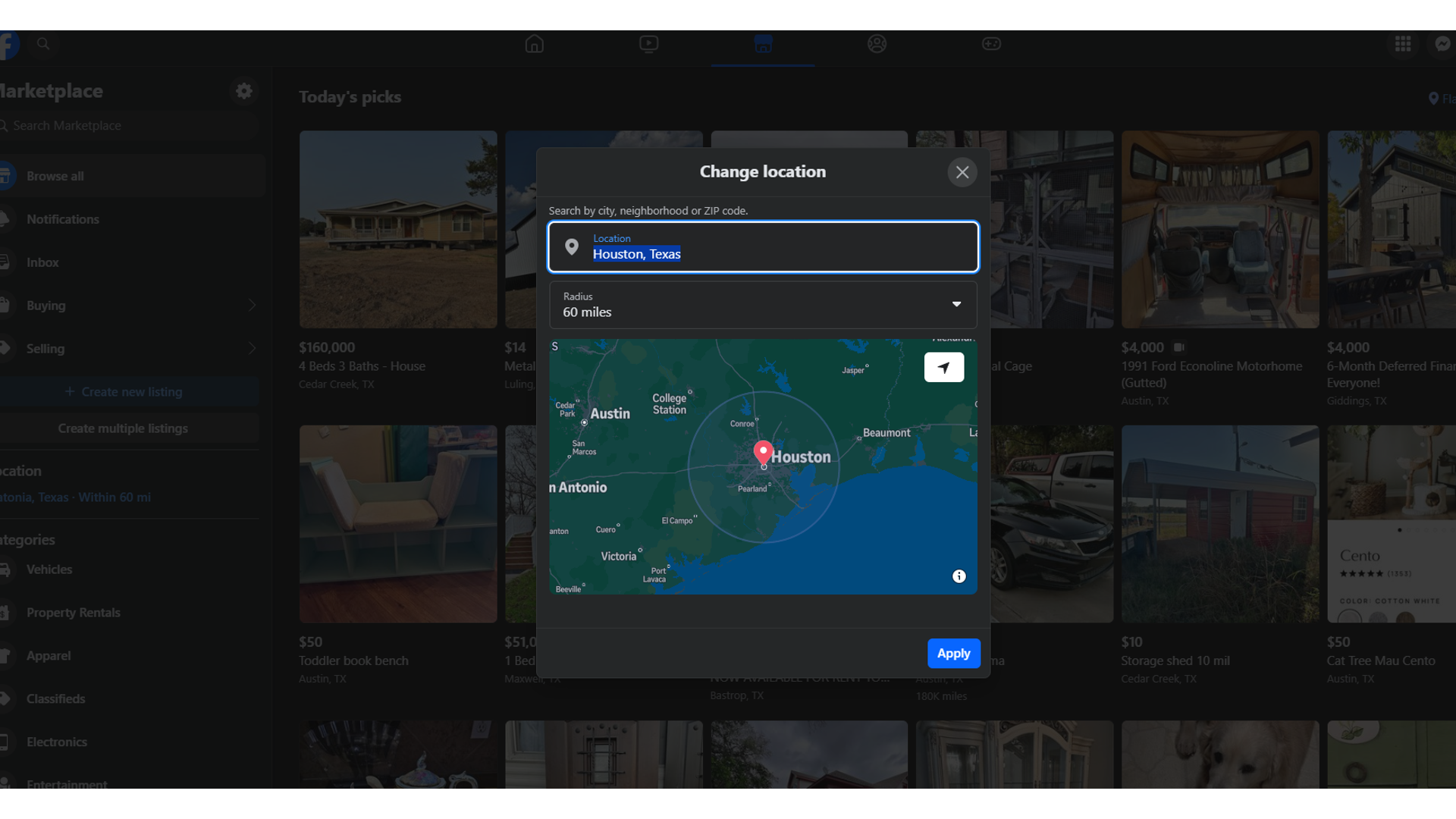
    Choose a location for selling items on Facebook Marketplace.

    With Facebook Marketplace, you can focus on specific locations for your listings without the need to join local groups. Of course, joining those groups can still enhance your chances of making a sale. Finding or listing items for sale in various areas, whether near or far, is a breeze.

    No Listing Fees

    One of the standout features of Facebook Marketplace is the absence of fees for posting, purchasing, or selling items. This makes it a cost-effective choice compared to other platforms that may take a cut from your sales or require listing fees. Personally, I favor it over eBay, where commissions on sales apply.

    Extensive Audience Reach

    Thanks to Facebook’s vast user base, your listings can reach a massive audience. You also have the option to specify the geographical area where you’d like your items to be seen, whether in your local neighborhood or beyond.

    Whether you’re selling furniture or on the hunt for second-hand electronics, the platform’s large user community can facilitate quick connections with potential buyers or sellers.

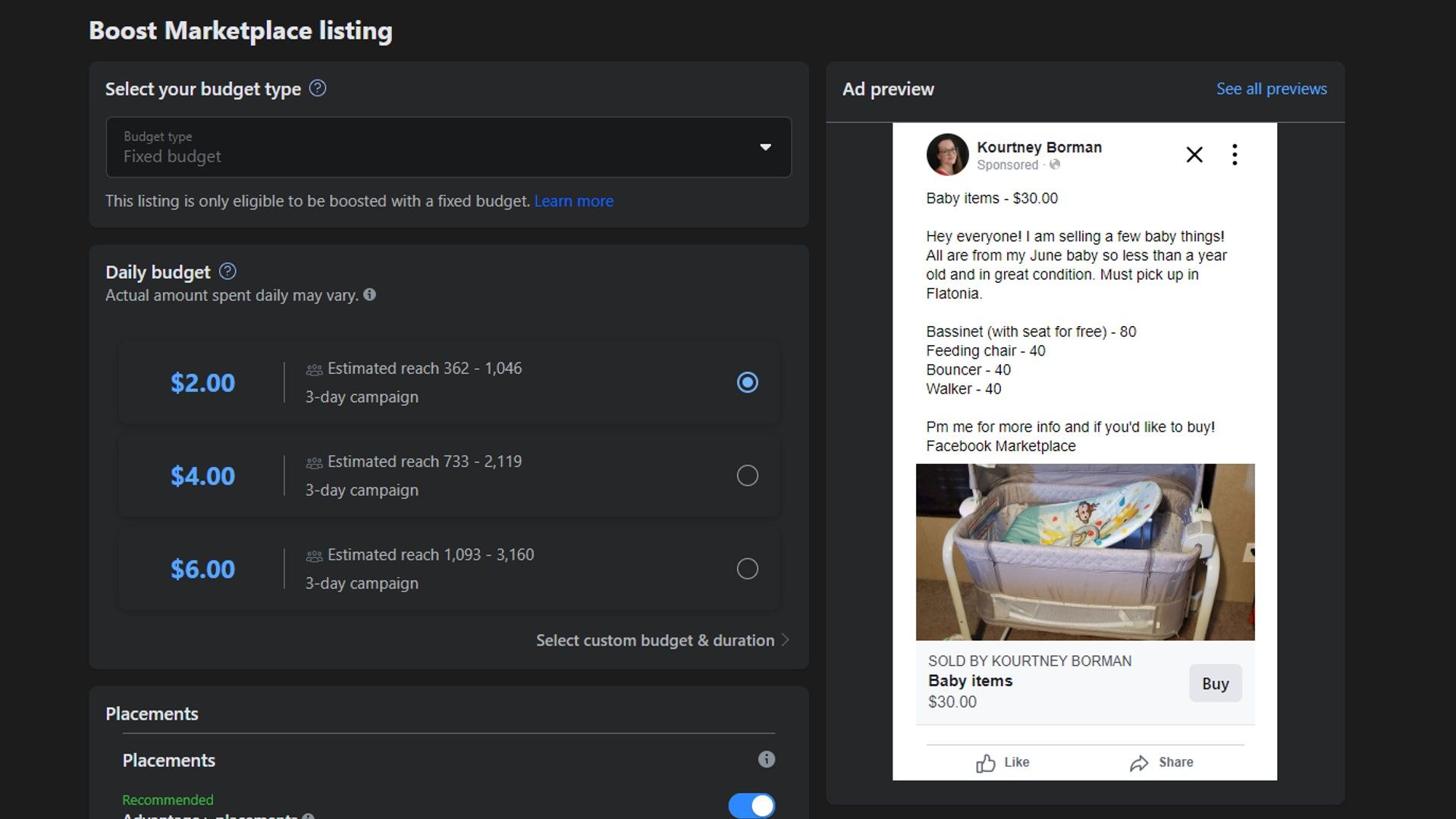
    Facebook Marketplace's ability to 'boost' your for-sale item.

    Do you want your items to reach a broader audience? If you’re open to spending a little, Marketplace allows you to “boost” your listing through ad campaigns of varying durations. This can increase the chances of a quick sale.

    Personally, I have not felt the need to boost my listings, as my local market is small enough to be effective without it, but it certainly could be beneficial in larger urban areas.

    Disadvantages of Facebook Marketplace

    Like any platform, Facebook Marketplace has its share of drawbacks that might lead some users to opt for alternative options.

    Minimal Protections

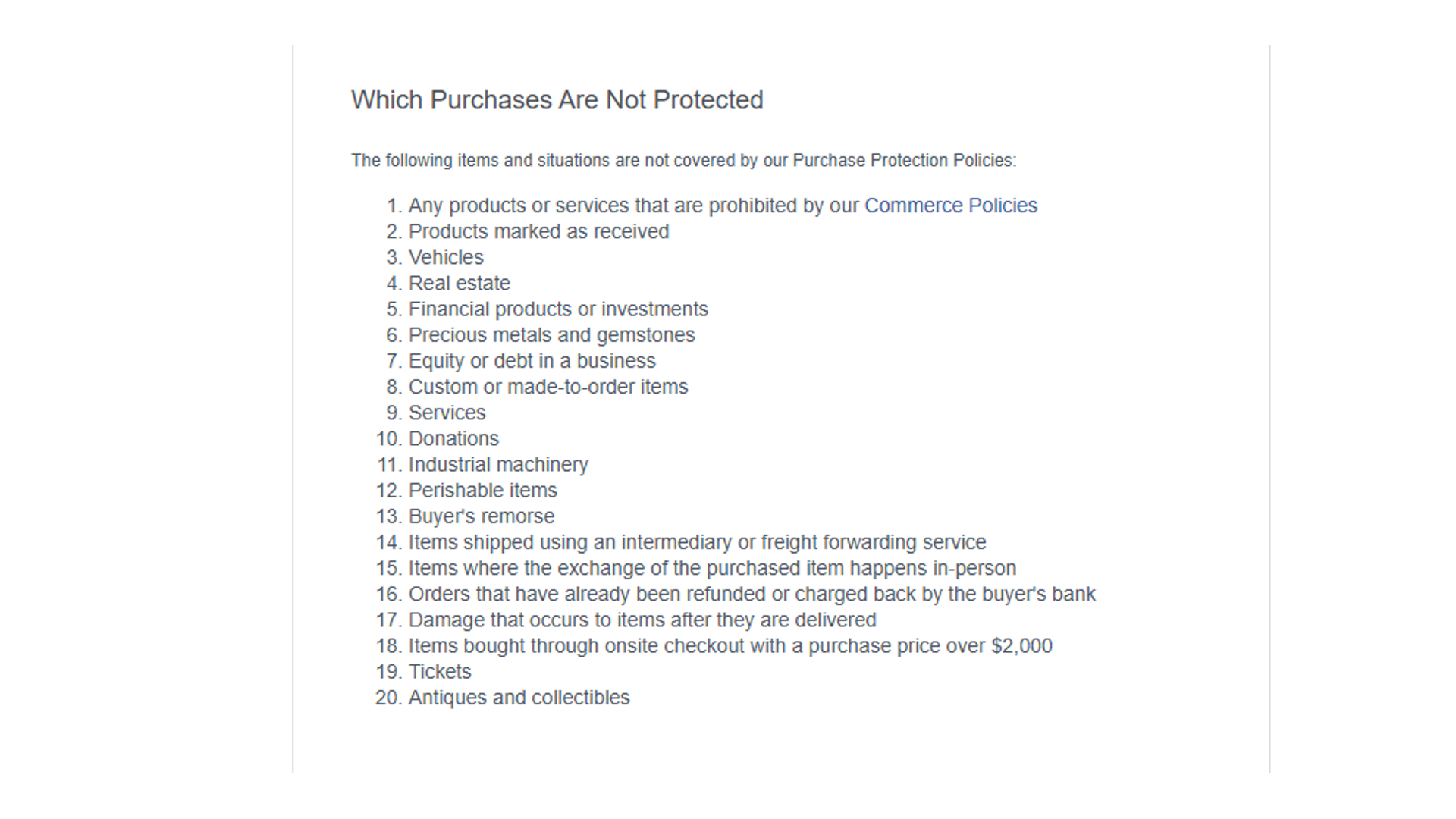
    Facebook Marketplace only offers money-back protection on select items.

    Unlike sites like Amazon and eBay, Facebook Marketplace has limited protections for both buyers and sellers. This means if something goes wrong, such as payment issues or an item not meeting its description, there’s no formal system in place for you to recover your money or item. Plus, there’s no assurance on the condition of the items being sold.

    Specifically, purchases made in person, vehicles, and precious stones typically aren’t covered by their buyer protection. Even for items that are, Facebook has the final say on whether you receive a refund.

    I once bought a laptop from someone in my area via Facebook Marketplace. When we met, the seller seemed rushed, which raised my suspicions. Unfortunately, after bringing it home and discovering it wouldn’t turn on, I learned the hard way about the lack of coverage for face-to-face transactions. It also served as a reminder that many sellers create profiles strictly for Marketplace purposes, which they tend to delete after receiving payment.

    Scam Concerns

    Facebook Marketplace scam alert sign

    Given the limited protections available, Facebook Marketplace can attract scammers. You must remain vigilant about deals that appear too good to be true or sellers who request unusual payment methods.

    If it sounds too good to be true, it probably is.

    Limited Features

    Facebook Marketplace also lacks the advanced features found on other e-commerce platforms. There are no built-in analytics for sellers to monitor their performance, and seller profiles are quite basic, making it challenging to assess their reliability.

    Privacy Issues

    Since Facebook Marketplace is tied to your personal Facebook profile, both buyers and sellers can see your name and might even message you through the platform, raising concerns about privacy for those who prefer to keep their personal lives separate.

    Narrow Categories

    Categories available on Facebook Marketplace.

    While Facebook Marketplace includes a wide variety of categories, some specialized areas may not receive adequate representation. This can limit your choices if you’re seeking to buy or sell within those less common categories.

    No Customer Support

    Should you encounter issues on Facebook Marketplace, you won’t find dedicated customer support to help resolve disputes or transaction problems. This isn’t an issue if everything goes smoothly, but the lack of assistance can be frustrating when unexpected problems arise.

    Tips for Safe Buying and Selling on Facebook Marketplace

    To maximize your experience and stay safe, keep the following advice in mind while using Facebook Marketplace:

    • Always meet in public, well-lit areas, ideally during daylight hours.
    • Independently verify profiles before finalizing transactions.
    • Opt for secure payment methods, avoiding untraceable payments. Consider cash or a system like PayPal, which offers fraud protection.
    • Trust your instincts; if something feels off, don’t hesitate to walk away.
    • Document your purchases with photos and messages to have reference materials for any disputes.
    • Communicate clearly and promptly with potential buyers or sellers.

    Ultimately, while Facebook Marketplace provides a convenient and cost-free platform for buying and selling, understanding its limitations and using it wisely will lead to a more satisfying experience!

  • Get Ready: AI Ads Are Coming to Your TikTok Feed!

    Get Ready: AI Ads Are Coming to Your TikTok Feed!

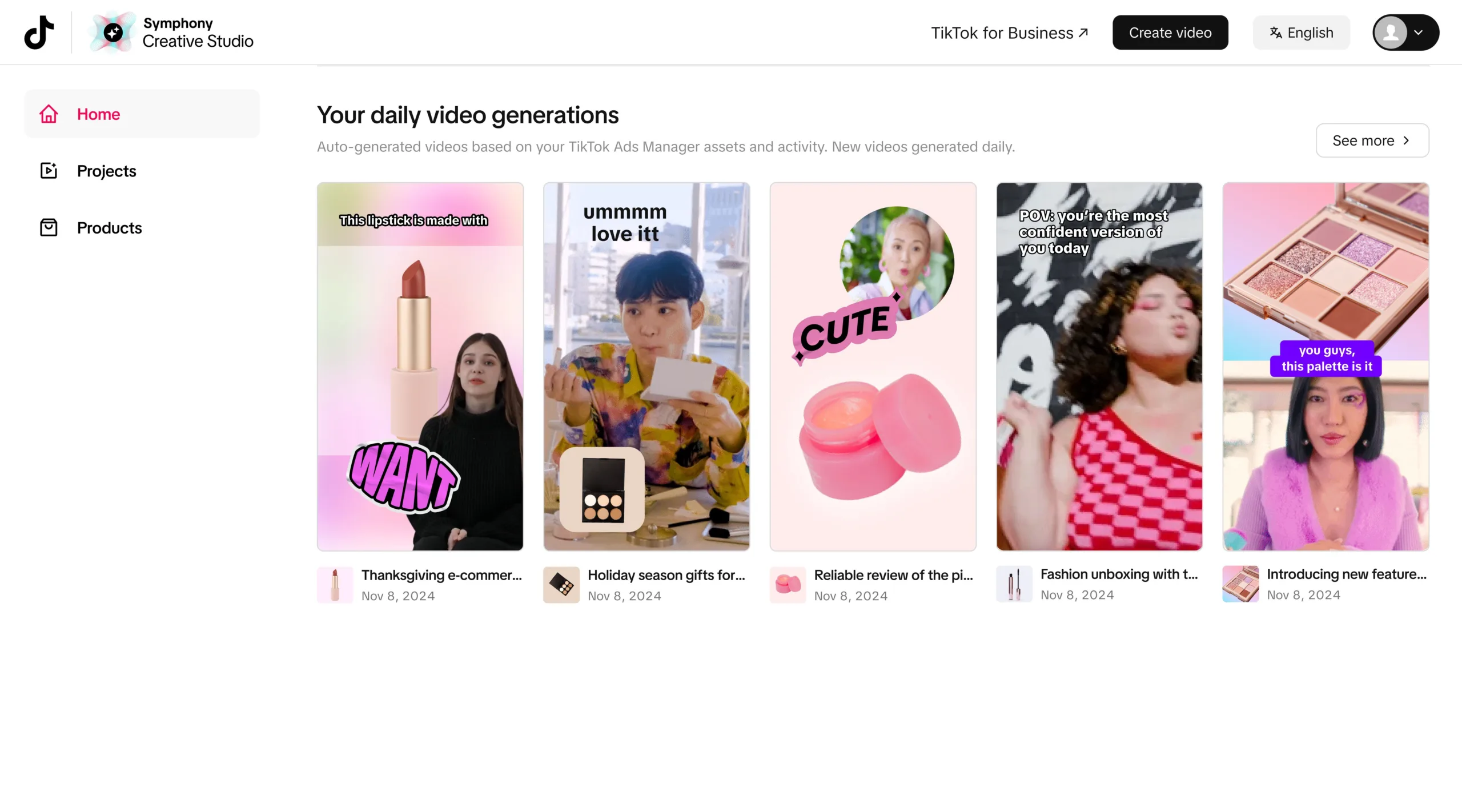
    While everyone prefers not to see advertisements, they play a crucial role in how social media platforms generate revenue. To streamline the creation of fresh ad content for its users, TikTok has launched the Symphony Creative Studio, an AI video generation tool aimed at advertisers. But what does this mean for the typical TikTok user?

    Expect to See an Increase in AI-Generated Ads

    With AI simplifying the process for advertisers to create video content, it’s likely that your TikTok feed will soon be populated with more AI-generated videos. According to the social media platform, their AI tool enables advertisers to produce videos within minutes with minimal effort, a significant reduction from the hours of planning, filming, and editing typically required for video ads in the past.

    While we hope to avoid a flood of nonsensical AI-generated videos, the Symphony Creative Studio provides creators with digital avatars capable of handling scriptwriting and even translating and dubbing voice-overs in over 30 languages. This advancement will enable professionals familiar with AI technologies to produce high-quality video content more easily. However, it also opens the door for almost anyone to create AI ad videos on TikTok, which could lead to an overabundance of generic content flooded onto the platform by businesses just aiming to churn out “creative” video ads.

    This concern reinforces the belief that generative AI should not be integrated into creative applications or software. Instead of enhancing creativity, it risks becoming a factory for producing countless mediocre videos designed merely for clicks. Additionally, a growing issue is misleading viewers into believing that a video showcasing a product was shot in real life, when it’s actually generated by AI.

    How to Identify AI-Generated Videos

    While there’s nothing inherently wrong with AI-generated videos, particularly when their artificial nature is made clear, you’d want to discern whether a video was created by a human or a machine. Just as you would verify if you’re communicating with a real person or AI, you can spot inconsistencies in videos that may hint at AI generation.

    Common indications include unusual pixelation or blurriness in certain areas where clarity is expected. You might also notice peculiar patterns or artifacts that are characteristic of AI-generated content.

    Sadly, as AI models evolve, distinguishing between real and AI-generated videos is becoming increasingly difficult. This trend contributes to the rise in AI video call scams. We sincerely hope that TikTok will implement a notification system for AI-generated videos, enabling viewers to clearly understand whether they are watching genuine content or not.

  • 5 Reasons to Embrace Signal for Better Communication

    5 Reasons to Embrace Signal for Better Communication

    When it comes to encrypted messaging options in 2024, there are plenty available, but Signal stands out as one of the most secure yet underappreciated apps. Here’s why I believe it deserves more attention.

    1. The Easiest Way to Text Securely

    Signal is arguably the simplest way to send secure messages. You don’t need to be a tech wizard, and there’s no need to tweak complicated settings—it just works right away.

    Every message and call on Signal is end-to-end encrypted by default, ensuring privacy without any extra hassle. Moreover, the app doesn’t collect any user data. Its self-destructing messages provide an intuitive alternative to other apps like WhatsApp, making them easier to use with more customizable options.

    On top of that, Signal includes a call-relay feature that obscures users’ IP addresses, adding another layer of security to your conversations. And that’s just scratching the surface.

    Additionally, by default, Signal conceals your phone number from your contacts. You can either share your number when necessary or create a unique username for others to find you on the app. This allows you to maintain control over who can see your information.

    Lastly, Signal includes a locking code feature that prompts you to enter your code every so often, helping you remember it without a cumbersome input each time you send a message. All these features come pre-enabled, allowing you to use the app without digging through online guides or adjusting tricky settings.

    2. You Don’t Miss Out on Any Features

    When you use Signal as your go-to messaging app, you won’t be missing out on any essential functionality. Many apps that prioritize security tend to sacrifice common features, but that’s not the case with Signal.

    Signal offers messaging, voice and video calls, stickers, group chats, and even the option to upload stories (or opt-out of that feature). With the exception of specialized business needs, Signal can do everything its more popular competitors like WhatsApp and Telegram can do. Even the stickers you share in Signal are end-to-end encrypted.

    Customization options are also available, allowing you to change chat wallpapers, backgrounds, and themes. I believe Signal’s calling interface is one of the best available on any mobile app, complete with features like an incognito keyboard, proxy support, in-app payments, text formatting, and message scheduling.

    Signal also has a desktop version for Windows, Linux, and macOS, allowing you to log into multiple devices simultaneously while keeping data stored locally. With a maximum group size of 1,000 members and features like admin approval for new joiners and invitation links via QR codes, Signal groups offer excellent administrative control.

    Since Signal uses a private group system, it keeps no records of your group memberships, titles, avatars, or attributes. You can even hold group video calls with up to 50 participants and share links instead of making individual calls.

    Furthermore, Signal allows you to verify your session to ensure your conversations are secure. To protect your messages from prying eyes, you can control whether notifications display the sender’s name and content.

    3. Sharing Files Is Much Better

    One of the standout features of Signal is its ability to share nearly any type of file with your contacts, not just images and videos. While the file size limits vary depending on the device you’re using, many users appreciate the flexibility.

    File Type iPhone/iPad Android PC
    Images 8 MB 100 MB 6 MB
    Videos 95 MB 500 MB 100 MB
    GIFs 25 MB 25 MB 25 MB
    General files 95 MB 100 MB 100 MB

    While the Android app typically allows larger files, those uploads must adhere to the stated size limits to ensure a smooth transfer. For anything under these thresholds, you can enjoy fast, uncompressed uploads.

    4. SMS Between Android and iPhone Is Still a Hassle

    If you’re still relying on SMS, it’s time to move on. Although Apple has started supporting RCS, messaging between Android and iPhone users remains cumbersome. The iPhone recipient needs to have RCS enabled, and even then, my experiences with messaging friends on Apple devices often fall short.

    Switching to an internet-based messaging app can resolve almost every issue associated with SMS, effectively ending the blue vs. green message bubble debate. While there are other options, many fall short when it comes to ensuring security.

    5. The Alternatives Aren’t As Robust

    Lastly, Signal’s primary competitors—WhatsApp and Telegram—aren’t as strong on the security front. WhatsApp, owned by Meta, relies on user data to support its ad-based model. You have to weigh the choice between WhatsApp and Signal, and I’d argue that Signal offers a safer experience.

    As for Telegram, it’s known for its extensive features, but also faces challenges with moderation that can lead to misuse. The app allows for a wide range of activities, from casual chatting to hosting scams and managing malware.

    In conclusion, Signal stands out as an effective app for secure texting and calling, yet it suffers from a small user base. Many potential users might be willing to switch, but they often find that most of their contacts are still on other platforms like WhatsApp or Telegram.

  • How to Handle Unexpected WhatsApp Messages from Strangers

    How to Handle Unexpected WhatsApp Messages from Strangers

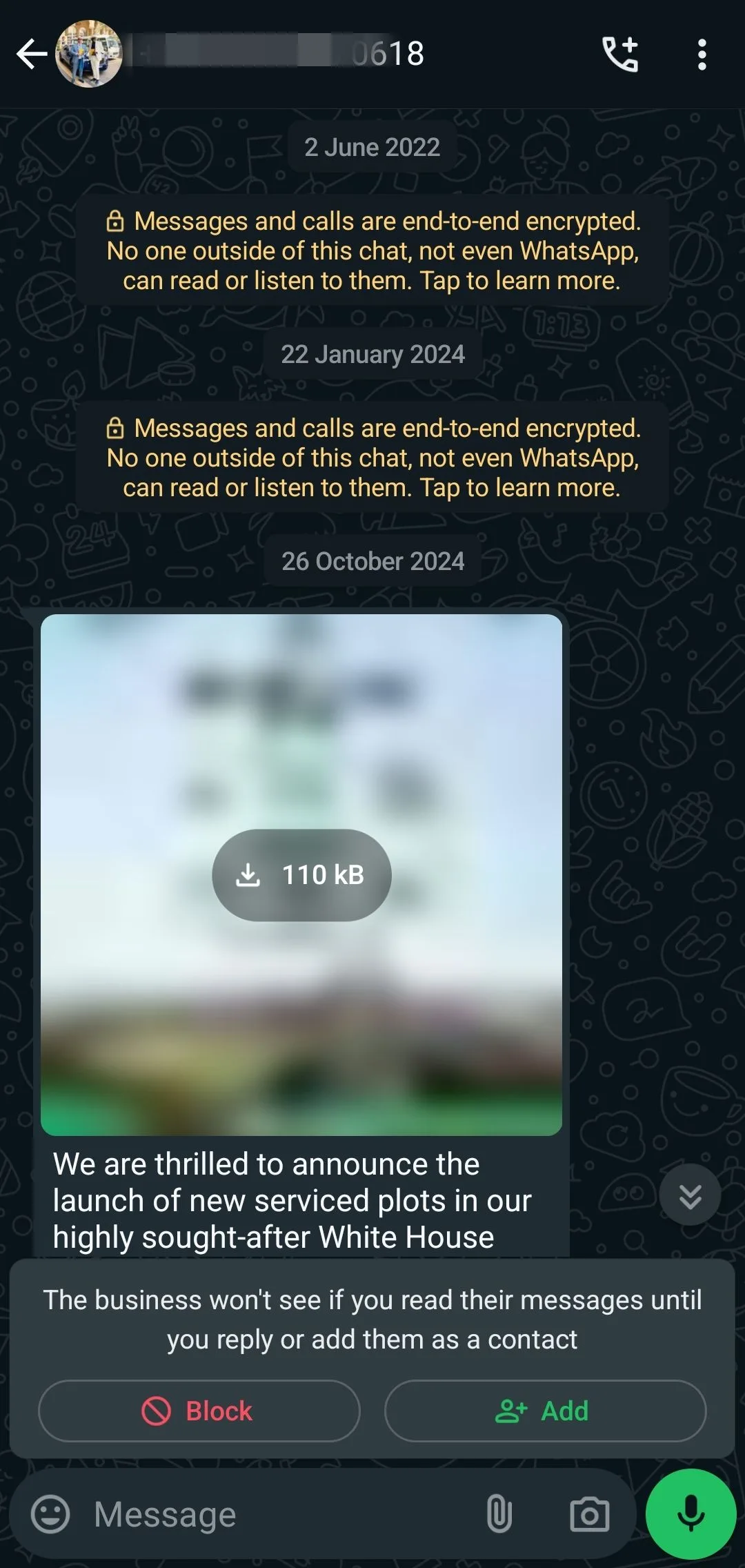
    It’s an ordinary day when, out of nowhere, a message from an unknown number appears in your WhatsApp. It might simply say “Hi” or feature a more detailed message. Regardless, it can be a bit alarming when the sender isn’t familiar. Before you hit reply, it’s beneficial to follow a few steps to figure out who’s reaching out to you and if they deserve your time and attention.

    1 Check for Mutual Group Connections

    The first step is to find out if you and the sender share any mutual groups on WhatsApp. When you access a chat from an unfamiliar number, WhatsApp usually alerts you if you both belong to the same group at the top of the conversation. This can offer you valuable context quickly.

    If the sender is from a group you recognize—like a community organization or work-related group—it’s likely they have a legitimate reason for messaging you. In such cases, you might want to take a look through the group chat or even contact an admin to confirm their identity. However, if there are no mutual groups, it’s wise to be more cautious.

    2 Examine Their Profile Picture

    Profile pictures can sometimes offer hints about someone’s identity. Check the display photo of the unknown contact, if they have one. A familiar face or setting could jog your memory about who they might be. However, be cautious if their picture is missing, overly generic, or looks too professional—it may indicate a fake account or spam.

    That being said, don’t rely solely on a profile picture to determine someone’s identity. Fraudsters often use innocent-looking photos, so consider this just one of many clues, not a definitive answer.

    Should an unknown contact send you a link, avoid clicking on it until you’re sure about their identity. Malicious websites are a common tactic used by scammers to infiltrate devices and steal private information. Clicking on these links could lead to phishing sites or even download harmful software.

    Instead, adopt a cautious approach. If the message seems urgent or tempting (for instance, if it claims you’ve won a prize or need to verify an account), it’s likely a scam. Remember, legitimate contacts usually don’t send unsolicited links without context, so it’s best to ignore them until you know more about the person who messaged you.

    4 Inquire About Their Identity and How They Found Your Number

    If you still have questions or think the person could be genuine, it’s perfectly acceptable to ask them politely who they are and how they obtained your number. Keep it brief with a message like, “Hi, may I know who this is and how you got my number?” This can help you understand their intentions better.

    If they respond vaguely or avoid the question, that’s a red flag. Someone legitimate will easily explain how they know you or where they got your contact information. Conversely, scammers may dodge the question or pressure you for a response. Trust your instincts; if the reply feels off, it’s safer to end the conversation.

    5 Look Out for Common Scam Behavior

    Scammers often employ predictable tactics in their outreach. Watch for signs like creating a sense of urgency, offering large sums of money, or suggesting that you’ve won something. Another common scheme involves impersonating someone you might know, claiming they’ve lost their phone and need your assistance.

    Be mindful of spelling or grammatical mistakes, overly formal or robotic communication, and requests for personal details. Scammers may even use guilt or emotional pressure to elicit responses, so stay alert for any signs of manipulation. Identifying these patterns early on can protect you from potential traps.

    6 Block and Report as Needed

    If you feel uncomfortable or suspect malicious intent, don’t hesitate to block and report the contact on WhatsApp. Blocking prevents them from messaging or calling you, while reporting informs WhatsApp to take potential action against scammers.

    To block and report someone, open the chat, tap on the contact’s name at the top, scroll down, and select Block and then Report Contact. Taking this step helps safeguard both yourself and others from possible scams. It’s wise to prioritize your safety rather than give a stranger the benefit of the doubt when something feels off.

    Receiving a message from an unidentified person on WhatsApp can be unsettling, but by following these guidelines, you can handle the situation safely. By checking for mutual group connections, examining their profile, avoiding suspicious links, and remaining vigilant for red flags, you can gauge their intentions without putting yourself at risk. If anything seems amiss, don’t hesitate to block and report the contact.

  • Instagram Eliminates “Rug Pull” Option for Better User Experience

    Instagram Eliminates “Rug Pull” Option for Better User Experience

    Instagram has addressed one of the most frustrating issues with its well-known social media platform. The “rug pull” feature, which caused posts to vanish unexpectedly, has been officially eliminated. This change, though minor on the surface, is likely to enhance the overall user experience for those who frequent the app.

    What Is Rug Pull?

    The rug pull feature was implemented by Instagram to present the most current content as soon as users opened the app. While the idea seemed beneficial in theory, allowing users to quickly access the newest posts, it often backfired.

    Unfortunately, this feature would sometimes cause engaging content to disappear without a trace. Many users found themselves filled with frustration as they attempted to retrieve interesting posts that had just been pulled out from under them, making it nearly impossible to recover the content they enjoyed.

    Rug Pull Increased Engagement

    Although it might appear that the rug pull was a mere oversight in programming, Instagram’s head honcho, Adam Mosseri, explained that it was designed specifically to boost user engagement and reduce loading times for content. However, Mosseri recognized the negative impact this feature had on the overall Instagram experience.

    Hand holding a smartphone with Instagram official account on screen

    “It’s really annoying,” Mosseri remarked in a Reels video shared on his Instagram profile. “So we stopped doing it. Now, we load new content in the background and won’t display it until you scroll. We’ll insert it further down the feed. We did take a slight hit in engagement from this change, but it really improved the user experience overall.”

    Instagram isn’t the only platform to employ a rug pull mechanism to enhance engagement. The X app (previously known as Twitter) also uses a similar tactic with its For You feed, where content frequently disappears, only for more recent updates to take their place—and it can definitely spark frustration among users.

    Instagram’s decision to eliminate the rug pull feature in favor of prioritizing user satisfaction is a refreshing development, especially given the recent scrutiny the platform has faced. Previously, Instagram came under fire for admitting it boosted video quality for more popular posts.

    However, this move away from the rug pull suggests a shift toward valuing user experience over mere engagement numbers. While this is a welcome improvement, it remains to be seen whether other social media platforms will follow suit.

  • 7 Sites That Should Provide Annual Highlights

    7 Sites That Should Provide Annual Highlights

    Annual Roundups: The Features I Wish Were Available in My Favorite Apps

    Every year, a variety of apps take inspiration from Spotify Wrapped and offer users a recap of their activities over the past twelve months. While this trend is becoming increasingly popular, there are still some standout applications that don’t have these yearly summaries. If they were to introduce such features, I would be absolutely delighted.

    1. YouTube

    YouTube boasts over two billion active users each month, making it surprising that the platform doesn’t provide a yearly recap feature. Interestingly, YouTube Music already has seasonal summaries, which makes the absence of a similar feature for general YouTube all the more curious.

    As someone who uses YouTube for both learning and enjoying sports highlights, having insight into my viewing habits over the year would be intriguing. Simply scrolling through my watch history doesn’t have quite the same impact or depth.

    Additionally, a yearly recap on YouTube could be immensely helpful for users looking to manage their viewing time better. For instance, if someone aims to reduce their screen time, a summary of their most-watched content could serve as a useful guide.

    2. Instagram

    Though my usage of Instagram has diminished over the years, I would still appreciate an overview of my app activity for the year. While you can see your most and least interacted accounts when checking your following list, this data isn’t compiled on a yearly basis.

    It would be fascinating to discover which accounts I engaged with the most and what content I liked versus skipped. Knowing my most liked posts and the types of accounts I engage with could provide valuable insights into my social media habits.

    As a fan of Instagram, I’d prefer to see such recap features rather than new functions that add complexity to the app.

    3. Streaming Services

    Many music streaming platforms offer annual roundups, with Spotify Wrapped as the most notable example. It seems logical that TV streaming services like Netflix and Disney+ would follow suit and provide similar features.

    A yearly recap from Netflix could highlight the genres I enjoy most, total watch hours, and even how I stack up against other users in my viewing habits.

    Moreover, while Netflix may not currently support interactive features like Spotify, it would be interesting to compare viewing statistics with friends, much like the competitive edge found in music streaming.

    4. Todoist

    As one of my favorite task management apps, Todoist has a uniquely gamified interface—but it doesn’t currently offer a yearly overview. This feature existed in the past, and its absence is felt by many users.

    With Todoist’s previous annual roundup, I could see how many tasks I completed in relation to other users and review the times of day when I was most productive. A return of this feature would be highly beneficial for those looking to enhance their productivity.

    5. Instant Messaging Apps

    I often wonder who I message most frequently each year and my activity patterns across platforms like WhatsApp, Messenger, or iMessage. Access to these statistics could provide fascinating insights into my communication habits.

    Similar to Todoist, I’d love a recap that outlines message frequency and highlights the contacts I engaged with the most. Understanding when I’m most active on these platforms could help me pinpoint trends in my communication and effectiveness in managing screen time.

    6. Banking Apps

    Tracking my spending habits is crucial for improving financial literacy, and a yearly spending roundup through my banking app would greatly enhance this process. Knowing what I spend the most on—which companies I frequently purchase from—would be invaluable.

    While some banking apps, such as Revolut, offer annual reviews, my primary banking app doesn’t have this functionality. I believe it would benefit many users if this feature were implemented.

    7. Notion

    Notion is one app I rely on more than almost any other. It excels at managing cluttered task lists and allows for effortless note-taking. Given its diverse range of features, a yearly summary of my activities would be really interesting.

    Being able to see which pages I spent the most time on and the number of hours logged in Notion could provide insight into my workflow and productivity. I would also love to know quirky details, like which emojis I used the most.

    Conclusion

    Although annual roundups have gained traction across various applications, several key tools have yet to adopt this feature. Given the resources and data necessary to create such summaries, it’s understandable why some apps haven’t made the change. Nevertheless, I remain hopeful that more of my favorite tools will incorporate annual roundups in the future!

  • No Political Ads on Facebook for the Remainder of the Week

    No Political Ads on Facebook for the Remainder of the Week

    This week, social media users across the United States are well aware that their feeds will be flooded with one dominant topic: politics. Although polls officially conclude today for the U.S. presidential election, Meta has decided to extend its ban on new political advertisements until “later this week.”

    To enhance ad transparency and maintain election integrity on its major social platforms, Facebook and Instagram, Meta has announced that it will extend the moratorium on new ads related to social issues, political discussions, and elections. As a result, users won’t be seeing any fresh paid advertisements from political candidates or election-related initiatives during this period.

    Meta previously imposed similar restrictions during the U.S. elections in both 2020 and 2022.

    It’s important to note that Meta’s current ban on politically-focused ads applies only to newly created campaigns submitted after October 29th. Therefore, users might still encounter some political advertisements this week on Facebook and Instagram, but these will be from campaigns that were initiated before 12:01 AM Pacific Time on October 29th, 2024.

    At first, this ban was expected to lift at the end of today, November 5th, aligning with a similar restriction previously announced by Google. However, Meta has opted to extend the ban for a few additional days, possibly in anticipation of potential recounts or disputes related to the election.

    The types of ads that fall under this ban include:

    – Ads created by or on behalf of public office candidates
    – General election-related advertisements, including those that encourage voting
    – Advertisements discussing broader social issues
    – Ads classified as political advertising

    As always, social media platforms will buzz with opinions and discussions surrounding the election before and after voting day. Yet, the continued restrictions on ads suggest that Meta may be preparing for a prolonged decision-making process.

    The motivation behind these advertising measures is to combat misinformation. Essentially, the platform aims to protect candidates’ rights to respond to allegations made against them in political ads. For instance, if Candidate A claims that Candidate B supports controversial policies, Candidate B should have the opportunity to counter those claims before voters cast their ballots.

    While it remains uncertain how long Americans will wait for election results, they can track updates using Apple’s Live Activity feature. The developments in the next 24 hours will likely influence when Meta eases its restrictions on political advertisements. For now, users will need to sift through election coverage online—and ideally, that information will come from traditional journalism rather than paid ads on social media.

  • How Do Social Media Platforms Generate Revenue?

    How Do Social Media Platforms Generate Revenue?

    Do you ever think about how social media platforms generate revenue? Websites such as Facebook, X (formerly Twitter), and Reddit allow users to create accounts and browse for free, attracting millions of people. But what’s the secret behind their profitability?

    1 Advertising

    Advertising stands out as the primary revenue source for social media. The design of these platforms often aims to keep users engaged, meaning the longer you scroll, the more ads you encounter.

    Ads are ubiquitous, from sponsored posts on Reddit’s homepage to advertisements in Instagram Stories and promoted tweets on X’s feed.

    With Facebook boasting around 2.9 billion monthly active users, there’s a vast audience ready to see promotions for various products and services. Although you can adjust your Facebook ad preferences, complete ad avoidance is impossible unless you’re in the EU and subscribe to a specific plan.

    Social media sites charge companies to place ads on their platforms. The cost varies based on factors like the reach of the ad and the duration of its promotion.

    Navigating the advertising landscape is delicate; too many ads can repel users or drive them to use ad-blockers. However, with the right balance, users are more inclined to engage with relevant ads and potentially make purchases.

    2 User Data Licensing

    Another significant and somewhat controversial revenue stream for social media platforms comes from gathering and selling user data.

    Understanding this process is crucial. Platforms like Facebook, X, and Instagram do not sell identifiable information such as your email or phone number. Instead, they aggregate user data to draw insights that can be marketed.

    In recent times, as AI companies require large datasets for model training, data licensing has surged in importance. For instance, Reddit secured over $200 million in data licensing agreements with AI firms, as reported by TechCrunch. This monetization approach transforms user-generated content—which is typically gathered at minimal cost—into a lucrative asset.

    3 Premium Subscriptions

    While most social media platforms allow free accounts, some provide exclusive features for a fee, hoping that users will opt for premium memberships.

    For example, Reddit offers a Premium subscription that enables an ad-free experience, access to exclusive content, and an enhanced profile. Similarly, LinkedIn Premium grants access to learning resources, deeper insights into profile viewers, and messaging abilities to recruiters.

    Although most users tend to stick to the free options, those willing to invest in premium memberships contribute a valuable income stream for these platforms.

    4 In-App Purchases

    In-app purchases provide additional revenue for social media platforms, particularly those that emphasize entertainment and creativity. Applications like TikTok, Instagram, and Snapchat allow users to buy virtual items or special effects to enhance their posts and interact with creators.

    For instance, TikTok users can purchase “coins” to gift virtual items to their favorite live streamers, while Instagram users can buy badges as a form of support during live sessions. This model fosters a more engaging and interactive environment.

    5 Virtual Gifting and Tipping

    Virtual gifting and tipping give creators a way to earn money directly from fans. As users buy tokens or coins to send digital gifts, creators can transform these gifts into cash.

    Platforms like TikTok and YouTube simplify tipping with features like virtual gifts during live streams or “Super Chats” that allow fans to pay for their messages to be highlighted. Social media platforms typically take a cut from each transaction—usually around 20-30%—while creators benefit from a steady income stream sourced directly from their supporters.

    6 E-Commerce Integrations

    E-commerce integrations represent yet another revenue source for social media platforms. TikTok, Instagram, and Pinterest provide seamless shopping experiences, allowing users to browse and purchase products without leaving the app. This approach, known as “social shopping,” lets brands tag products directly in posts, stories, and videos, enabling users to view details and make purchases effortlessly.

    These integrations are especially beneficial for brands aiming to connect with engaged audiences in a natural, low-friction manner. Social media platforms often charge brands for these shoppable posts or take a small percentage of each transaction.

    7 API Access Fees

    API access, which allows apps and tools to interact with social media platforms, can also generate revenue. Scheduling tools, social media management apps, and editing software that connect to social networks rely on having this permission.

    However, some platforms charge a fee for API access. A notable instance was when Reddit increased its API charges in 2023, leading to the discontinuation of several third-party clients. By implementing API access fees, platforms can monetize their infrastructure while managing how their data and capabilities are utilized by external services.

    8 Venture Capital

    Venture capital, a vital form of private financing, plays a significant role in the early stages of many social media companies. It occurs when wealthy individuals or investment firms invest in start-ups they believe have potential.

    Investors provide capital (and sometimes their expertise) in exchange for equity in the business. A larger equity share typically grants them more influence over company decisions, with hopes of making a profitable return when the business becomes substantial and successful.

    There’s a saying that “if something is free, you might be the product.” This is particularly relevant in the social media sphere. Although some monetization methods may raise concerns, it’s essential to recognize that these platforms must generate revenue to sustain their operations.

  • Mastering WhatsApp’s Message Yourself for Ultimate Organization

    Mastering WhatsApp’s Message Yourself for Ultimate Organization

    WhatsApp isn’t solely about connecting with friends and family—sometimes, the most important dialogue is the one you have with yourself. Although the platform is great for social interactions, I have a few tips on how I leverage the “Message Yourself” feature to enhance my organization.

    Why My Most Crucial WhatsApp Chat Is With Myself

    Like many messaging applications, WhatsApp allows users to send messages to themselves. For me, one of the most significant conversations I have on WhatsApp is with myself. It may come across as narcissistic, but really, it’s just a practical way to stay organized.

    Messaging myself is akin to quickly jotting down a note or setting a reminder. It’s an efficient method for tracking important thoughts and tasks, all conveniently housed in my pocket at all times.

    My Digital Sticky Notes That Are Always Accessible

    We’ve all had those whimsical sticky notes that seem to disappear when we need them most. By using WhatsApp’s Message Yourself feature as my personal information vault, I’ve put a stop to losing those notes.

    Similar to writing a quick reminder, I now find myself sending text messages or voice memos to my WhatsApp. The huge advantage? These notes won’t get buried under a pile of papers on my desk. Plus, by pinning my chat at the top, I can easily revisit my notes with just a quick tap.

    With WhatsApp as my primary note-taking tool, I’ve built a secure repository for all my vital information. Whether it’s work-related tasks, grocery lists, or interesting articles I want to save for later, everything is just a few taps away.

    The convenience aspect is a huge plus. Since WhatsApp is already the app I use most for messaging, integrating it into my note-taking routine was simple. Its robust search functionality makes it easy to find specific notes or links when I need them.

    Keeping Files Handy Until I Need Them

    There are times when I stumble upon a file or document that I know I’ll need later, but I want to avoid cluttering my phone’s storage. WhatsApp’s self-chat feature is ideal for this—it serves as a temporary storage space for all my digital items.

    From PDFs to screenshots to humorous memes, I send everything to myself via WhatsApp. The platform saves all media files on its servers, giving me the freedom to access them whenever necessary without cluttering my device. Once I’m finished with a file, I can quickly delete it from the chat.

    However, it’s important to remember that WhatsApp automatically removes files from its servers after a certain time frame. Media within messages is stored for up to 30 days in an encrypted format on WhatsApp’s servers, so I make sure to download any important files before they’re gone.

    While WhatsApp’s self-chat feature is great for temporary storage, it’s not a long-term solution. For files I want to keep permanently, I move them to my phone or a reliable cloud storage service.

    This chat also serves as a great way to flag important files for quick access. For instance, if I have a boarding pass in PDF format that can’t be saved to Google Wallet, I can easily store the PDF in my WhatsApp chat for easy retrieval.

    Utilizing Cross-Device Accessibility

    WhatsApp supports multiple devices, allowing me to access all my messages and files with just a few clicks or taps on my phone, tablet, or computer. I can even begin typing a note on my phone and seamlessly finish it on my laptop.

    So, if I need to pull up a file I sent to myself earlier, I don’t have to think about which device I used to send it. All my chat history is accessible on any device connected to my WhatsApp account.

    The “Message Yourself” feature on WhatsApp is incredibly useful for keeping organized and productive. However, it’s crucial to be cautious about the type of information you store. Given the prevalence of WhatsApp scams, it’s wise to avoid saving sensitive information like passwords or financial data in this space.

  • 8 Simple Tips to Enhance Your TikTok Account Privacy

    8 Simple Tips to Enhance Your TikTok Account Privacy

    No one wants their personal details or online activities exposed on a massive platform like TikTok. If you’re looking to enhance your privacy, here are eight settings I’ve adjusted on my TikTok account.

    1 Make Your Account Private

    The first and most straightforward way to increase your TikTok privacy is by switching your account to private. This feature allows you to manage who can follow you, view your videos, access your Live streams, and see your liked content, as well as your following and followers list. Here’s how to do it:

    1. Navigate to the Profile tab.
    2. Tap the three-line icon in the upper right corner.
    3. Select Settings and privacy.
    4. Tap on Privacy within the Account section.
    5. Finally, enable the switch next to Private account under Discoverability.

    It’s important to note that existing followers won’t be impacted by your account’s switch to private; they will still have access to your current and future posts. If you want to remove someone who already follows you, you’ll have to do it manually.

    2 Conceal Your Liked Videos

    If you’re concerned about exposing your quirky tastes or simply prefer to keep your interests under wraps, you can hide your liked videos. Here’s how:

    1. Go to the Profile tab.
    2. Tap the three-line icon in the top right corner, and choose Settings and privacy.
    3. Navigate to Privacy and tap on Liked videos under Interactions.
    4. Select Only you when prompted in the Who can watch your liked videos menu.

    3 Disable Your Activity Status

    We’ve all had those moments when we tell a friend we’re “going to bed,” only to find ourselves scrolling through TikTok for hours. To avoid that awkward scenario where your friend calls you out for still being online, you can turn off your activity status:

    1. Navigate to the Profile tab in the bottom right corner, then tap the three-line icon in the top right.
    2. Select Settings and privacy, followed by Privacy.
    3. Finally, toggle off the switch next to Activity status under Discoverability.

    However, keep in mind that by disabling your activity status, you’ll also lose the ability to see when others are online or when they were last active.

    4 Limit Direct Message Senders

    I enjoy sending and receiving TikTok videos through direct messages with friends, but I don’t want to be bombarded with messages from strangers simply because I commented on a video. Thankfully, TikTok gives you control over who can send you direct messages:

    1. Open your Profile tab, then tap the three-line icon.
    2. Go to Settings and privacy > Privacy.
    3. Tap on Direct messages under Interactions.
    4. Select Allow direct messages from, where you can choose between Everyone, Suggested friends, Friends, or No one. Opting for Friends is generally preferable, or you can choose No one to stop all messages.

    5 Turn Off Read Status

    I sometimes find myself watching TikTok videos sent by family and friends and thinking, “I’ll respond later,” only for days to pass without a reply. This can make it seem like I’m ignoring them, especially since they can see I’ve viewed their messages. To prevent this misunderstanding, you can disable the read status:

    1. Tap Profile at the bottom, then the three-line icon.
    2. Navigate to Settings and privacy > Privacy > Direct messages.
    3. Toggle off the switch next to Read Status under Message preferences.

    6 Conceal Your Following List

    At times, you might not want to field questions about the accounts you follow on TikTok. Keeping your following list private can help avoid uncomfortable conversations. Here’s how:

    1. Tap Profile at the bottom, and then the three-line icon in the top right.
    2. Go to Settings and privacy > Privacy.
    3. Tap on Following list under Interactions.
    4. Select Only you for the Who can see your following list option.

    7 Prevent TikTok from Suggesting Your Account

    If your account is public, you might prefer to keep it a secret from friends, family, and acquaintances. By default, TikTok suggests your account to people in your contacts, Facebook friends, and anyone who accesses links from you. Luckily, you can adjust these settings:

    Head to Profile, tap the three-line icon in the upper right, then go to Settings and privacy > Privacy. Tap on Suggest your account to others under Discoverability. You’ll see options for Contacts, Facebook friends, and People who open or send links to you. To enhance your privacy, simply toggle off all of these options.

    8 Disable Profile View History

    Let’s face it, there have been times when I’ve snooped on friends or acquaintances on TikTok. Many don’t realize that TikTok tracks and shows who views profiles when the Profile View History feature is activated. If you want to browse without others noticing, here’s how to disable it:

    1. Go to the Profile tab at the bottom and tap the three-line icon.
    2. Navigate to Settings and privacy > Privacy, then to Profile views under Interactions.
    3. Finally, toggle off the switch next to Profile view history.

    While turning off this feature means you won’t see who visited your profile, it’s a worthwhile privacy safeguard.

    For me, safeguarding my privacy on social media is crucial, and thankfully, TikTok offers a variety of settings that allow me to enjoy the platform without compromising my personal space.

  • Deactivating vs. Deleting: What Happens to Your Facebook Account?

    Deactivating vs. Deleting: What Happens to Your Facebook Account?

    When considering a break from Facebook, it’s crucial to distinguish between deactivating and deleting your account. Both options enable you to remove your online presence, but they serve different needs and situations. Let’s explore the distinctions between the two.

    Understanding the Differences: Deactivation vs. Deletion

    Deactivation and deletion of your Facebook account primarily differ in how your information is treated and whether you can reverse your choice. Here are some essential distinctions to keep in mind.

    Accessibility of Your Account

    Deactivating your Facebook account is a temporary measure that lets you take a break from the platform while keeping your access intact. You can think of it as hitting the pause button on your account; you can bring it back to life whenever you want.

    In contrast, deleting your Facebook account is a permanent action. Once you proceed, all the data linked to your profile—including messages, photos, and connections—enters a deletion schedule after a 30-day grace period. At the end of this period, your account and all associated data will be irretrievably deleted.

    Messenger Accessibility

    When you deactivate your Facebook account, you still have access to Facebook Messenger, allowing you to chat with friends even if your main Facebook profile is inactive. Your name will continue to show up in your friends’ Messenger contact lists.

    On the other hand, if you choose to delete your account, you will completely lose access to Messenger. All your chat history will be erased, and your friends won’t be able to reach you through the app. Messages you sent previously will display as coming from “Facebook User,” and you won’t be able to access or reply to any future messages.

    Data Retention Policies

    However, with deactivation, Facebook keeps all your data to facilitate easy reactivation. If you return to the platform, all your posts, photos, and connections will be restored to their previous state.

    Conversely, when you choose to delete your account, you’re taking a more permanent step. Facebook begins the process of completely deleting your data after the 30-day grace period, which may take up to 90 days to finalize. Post the grace period, your information will be inaccessible, and recovery will be impossible.

    Which Option Is Right for You?

    Now that you’re aware of the consequences of deactivating versus deleting your Facebook account, it’s time to consider which choice suits you best.

    If you want to step back for a while—perhaps for a digital detox—or if you’re feeling uncertain about permanently leaving Facebook, deactivating your account is the wiser option. This way, you can take a break while still using Messenger to stay connected with friends.

    If you’re certain that you want to sever ties with Facebook completely and don’t wish to maintain any connection to the platform, deleting your account is the way to go. Deleting your profile also ensures that most of your information is permanently erased from Facebook’s servers, liberating you from any residual digital footprint or privacy concerns associated with the platform.

    How to Reactivate Your Account After Deactivation or Deletion

    If you’ve only deactivated your account, reactivation is a breeze. Simply go to Facebook’s login page on any device and input your login details (email or phone number and password).

    However, if you’ve chosen to delete your account, you must log back in within 30 days of deletion. After logging in, click the Cancel Deletion button that appears to confirm your decision.

    Ultimately, whether you opt for deactivation or deletion should depend on your specific needs. If you’re on the fence and need time to think about your decision, deactivating first allows you to reassess your connection to Facebook. If you decide to move on, you can make your choice permanent by deleting your account.

  • 7 WhatsApp Features I’d Love to See Removed Forever

    7 WhatsApp Features I’d Love to See Removed Forever

    Key Points

    • Features such as Statuses, Channels, and Avatars seem unnecessary, transforming WhatsApp from a simple messaging app into a social media-like platform.
    • New additions like Communities and in-app shopping clutter the interface, complicating user experience.
    • The payment feature appears misaligned with WhatsApp’s core mission of being a messaging service.

    Every time WhatsApp rolls out an update, it introduces a host of new features. While some additions are undoubtedly beneficial, many seem unnecessary and merely add to the chaos. Let’s take a look at seven WhatsApp features that I believe should be reconsidered.

    1 WhatsApp Statuses

    Initially made famous by platforms such as Snapchat and Instagram, stories allow users to share photos and videos that disappear after a day. So when WhatsApp launched its own version called Status, it felt unnecessary.

    Is another channel for temporary content really needed? If I want to keep up with daily updates, I already have social media platforms that specialize in that.

    For me, the primary purpose of WhatsApp is to communicate with family and friends, not to sift through an endless stream of fleeting updates that I’ve likely already seen elsewhere.

    It would be refreshing if WhatsApp took a step back and returned to its roots as a straightforward messaging app, devoid of the distractions that come with the Status feature. Until that happens, I will continue to find ways to block this feature on my phone.

    2 Instant Video Messages

    While I genuinely appreciate voice messaging on WhatsApp for quick updates, the introduction of instant video messages in 2023 feels largely redundant. Though video can convey emotion and tone, I find it awkward to use.

    Recording video messages might be quick, but I often catch myself worrying about my appearance while filming, which detracts from the message itself.

    The essence of messaging is its simplicity, and Instant Video Messages complicate that. That’s why I tend to stick with voice notes or typing my messages instead.

    3 Channels

    WhatsApp Channels were designed to create a one-way communication path from creators, brands, or influencers to their followers. My concern is that this shifts WhatsApp closer to a social media model, which I find unappealing. I don’t want to scroll through repeated posts that I can find on other platforms.

    Even though Channels are separated from my personal chats and notifications, they still feel intrusive. I wish WhatsApp would eliminate this feature and refocus on its messaging capabilities.

    4 Communities

    The idea behind WhatsApp Communities is to group various chats under one umbrella, but this often creates confusion rather than clarity.

    Navigating multiple groups within a single community becomes tedious, especially with overlapping discussions and constant notifications. I’d prefer WhatsApp to enhance existing group functions instead of adding complexity.

    5 Avatars

    While the introduction of Avatars makes sense on Facebook and Instagram, in a messaging app like WhatsApp, they seem unnecessary.

    On social media, where personal branding is more common, avatars can enhance interaction. However, in a more personal messaging context, I don’t feel the need for an animated version of myself to communicate effectively.

    It feels as though WhatsApp is simply jumping on social media trends when it could better focus on streamlining its core messaging features.

    6 Catalogs and In-Chat Shopping

    WhatsApp’s catalog feature allows businesses to showcase products on their profiles, yet it feels a bit out of place in a messaging app.

    Although shopping through a messaging app might be convenient for some, it seems to dilute WhatsApp’s primary messaging function. It feels like WhatsApp is trying to cater to everyone, potentially losing what made it popular in the first place.

    7 Payment Integration

    To complement the shopping experience, WhatsApp has rolled out a payment integration feature that allows users to send money to registered businesses and friends. However, I find this feature concerning.

    The prospect of using WhatsApp for financial transactions raises issues about security and privacy. I’d much rather utilize dedicated services designed specifically for handling such sensitive information.

    WhatsApp began as a simple messaging app, and its charm lies in that simplicity. Unfortunately, it now feels overcrowded with features that aren’t necessary for effective communication. I hope WhatsApp will reconsider and potentially remove some of these extraneous features in the future.