Category: Fintech

  • China’s Central Bank Launches Overseas Repo to Increase Yuan Assets

    China’s Central Bank Launches Overseas Repo to Increase Yuan Assets

    The People’s Bank of China announced today that it will establish a repurchase agreement (repo) facility specifically for foreign central banks, international financial organizations, and sovereign wealth funds. This initiative aims to support overseas investors in managing their liquidity needs within the Chinese bond market.

    The new facility will facilitate both pledged and outright repo transactions, giving eligible foreign institutions access to yuan liquidity through bond repurchase agreements. The collateral accepted will include high-quality yuan-denominated bonds recognized by the central bank, such as Chinese government bonds, central bank bills, and policy bank bonds.

    Repos will have tenors of seven days, one month, and three months. The interest rate will be calculated by adding a spread to the PBOC’s seven-day reverse repo rate in the open market. This approach is designed to better meet the liquidity management and yuan asset allocation requirements of international investors.

    In addition to this development, the central bank announced plans for several broader financial opening measures. One of these is a pilot program for offshore yuan foreign exchange trading within the China Shanghai Pilot Free Trade Zone. The initial group of authorized banks includes major institutions such as the Industrial and Commercial Bank of China, Agricultural Bank of China, Bank of China, China Construction Bank, Bank of Communications, and China Citic Bank.

    Furthermore, the PBOC will collaborate with the Shanghai municipal government to create an action plan for the development of offshore financial services. This plan will aim to gradually introduce offshore bond issuance in the FTZ, develop offshore trade finance services, and establish treasury centers for multinational corporations. These efforts are intended to position Shanghai as a leading offshore financial hub in line with its status as an international financial center.

    The central bank noted that China’s stock and bond markets have already achieved considerable openness. The next phase will involve promoting high-quality, two-way financial market access, enhancing the efficiency of cross-border investment and financing, and improving connectivity between domestic and international financial market infrastructures. These measures will provide overseas institutions with more streamlined channels to invest in yuan assets.

    Additionally, the PBOC will expand its open-market operations toolkit and refine its short-term interest rate management framework. Potential measures include introducing a variety of overnight reverse repos to better align with the short-term liquidity needs of the banking system.

  • Standard Chartered Integrates with China’s CBETS Cross-Border Payments

    Standard Chartered Integrates with China’s CBETS Cross-Border Payments

    On June 16, Standard Chartered Bank China announced its participation in China’s Cross-border e-CNY Transfer Services (CBETS), marking it as one of the pioneering foreign banks to join the digital yuan’s international settlement platform.

    CBETS facilitates connectivity between various payment systems and the digital currency systems managed by different central banks. The system was developed by the Digital Currency International Operation Center under the direction of the Digital Currency Research Institute of the People’s Bank of China.

    Foreign financial institutions now have direct access to this platform, which provides intelligent digital payment services around the clock for both on-chain and off-chain transactions, according to the bank’s statement.

    “Fintech is fundamentally transforming the mechanics of cross-border payments, paving new pathways for international transactions,” said Jean Lu, CEO of Standard Chartered China.

    He also emphasized that an efficient, user-friendly, and compliant cross-border payment process will further promote the global usage of the yuan. The bank plans to continue collaborating with regulators to enhance cross-border financial infrastructure.

    The London-based bank has been highly active in developing the digital yuan ecosystem. In 2023, it was among the first foreign banks to participate in the pilot program for e-yuan initiatives.

    Standard Chartered highlighted its ongoing efforts to support the internationalization of the yuan, noting that it currently has the most extensive overseas yuan banking network among foreign institutions, providing comprehensive yuan solutions across 35 international markets.

  • CICC’s Buyout of Dongxing, Cinda Hits Regulatory Review Stage

    CICC’s Buyout of Dongxing, Cinda Hits Regulatory Review Stage

    The main securities firm in the country has officially moved to the regulatory approval phase for its acquisition of two mid-sized competitors, Dongxing Securities and Cinda Securities. The Shanghai Stock Exchange has accepted a deal proposed by the firm to swap shares in order to acquire and integrate these two companies, according to a statement issued yesterday.

    Back in November, the firm announced it had entered into a preliminary agreement to merge with Dongxing and Cinda through a share swap, with the goal of creating a financial entity valued at just over 1 trillion CNY (around 147.9 billion USD) in assets. Approximately a month later, the company revealed detailed plans for the share exchange process.

    Late last month, it disclosed another draft plan, which involved issuing more than 3.1 billion shares on the mainland at a price of roughly 36.68 CNY (about 5.42 USD) per share. The exchange rates indicated that Dongxing’s shares would be swapped at 16.05 CNY and Cinda’s at 19.11 CNY, with swap ratios of approximately 0.438 and 0.521, respectively.

    All three firms are controlled by a state-owned investment company. As of the end of last year, this investor held a 40 percent stake directly in the main company and owned 45 percent of Dongxing and 79 percent of Cinda through indirect holdings.

    Once finalized, the merged entity will assume all assets, liabilities, businesses, employees, contracts, licenses, and other rights and obligations of Dongxing and Cinda, the main company stated.

    Last year, the main securities firm reported operating revenues of around 28.5 billion CNY (approximately 4.2 billion USD) and a net profit of 9.8 billion CNY (about 1.4 billion USD), showing increases of 34 percent and 72 percent from the previous year. For their parts, Dongxing and Cinda reported revenues of 4.7 billion and 4 billion CNY, and net profits of 2.1 billion and 1.9 billion CNY, respectively.

    As of December 31, the main firm managed assets totaling approximately 782.8 billion CNY (around 115.8 billion USD), while Dongxing and Cinda held 114.2 billion and 130 billion CNY, respectively, bringing their combined total to just over 1 trillion CNY.

    The share prices of the main securities company increased by 0.7 percent to 33.93 CNY in Shanghai but decreased slightly by 0.4 percent to HKD20.72 (roughly 2.64 USD) in Hong Kong as of early trading hours today. Dongxing and Cinda’s stocks moved modestly, up by 0.5 percent to 12.93 CNY and by 0.1 percent to 15.48 CNY, respectively.

  • China Lithium Carbonate Futures Drop Meets Rising Energy Storage & AI Demand

    China Lithium Carbonate Futures Drop Meets Rising Energy Storage & AI Demand

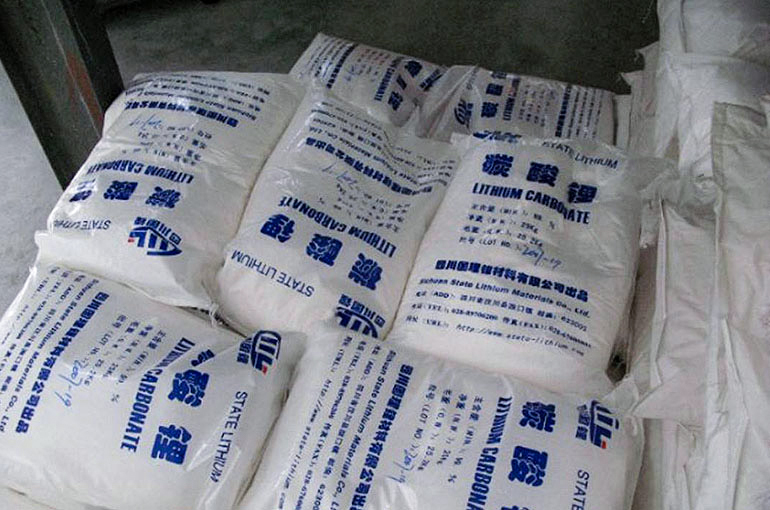
    China’s most actively traded lithium carbonate futures contract ended nearly a month of decline last week, bolstered by increasing demand for energy storage, new energy vehicles, and artificial intelligence computing infrastructure, along with reforms in the power market.

    The September futures contract rose 6 percent to close at 175,000 yuan (roughly $25,865) per ton on the Guangzhou Futures Exchange. This marks a significant move out of a deep two-year downturn in lithium carbonate prices, according to industry participants.

    Prices for lithium briefly surged back to the 200,000 yuan mark in early May, then sharply declined before reaching a low near 157,000 yuan in early June and rebounding again. Over the longer term, lithium carbonate prices have approximately tripled since hitting a low of 58,000 yuan per ton in June 2023.

    Amid ongoing demand for energy storage systems, the outlook for the lithium battery industry this year could surpass expectations, said Jin Xihan, a manager of a selected hybrid fund at Ping An New Energy. He noted that supply and demand in the lithium battery market have already experienced a temporary reversal.

    Looking ahead, profitability is expected to remain strongest among leading battery cell manufacturers, followed by upstream lithium carbonate producers and then midstream materials suppliers. As demand continues to develop, the earnings rebound upstream and midstream may become even more pronounced, Jin added.

    Experts suggest that the driving factors behind fundamentals are shifting from primarily electric vehicles to a three-way dynamic involving electric vehicles, energy storage, and AI computing power. This shift could lead to a healthier and more sustainable supply-demand cycle, according to an analyst specializing in the lithium battery industry chain.

    Another analyst highlighted that AI computing power is also reshaping lithium demand. Data centers for AI require energy storage systems with higher power output, longer cycle life, and enhanced safety, which could create differentiated demand for high-quality lithium carbonate and possibly lead to a “computing power premium,” the analyst explained.

    Minerals such as lithium, cobalt, nickel, copper, and rare earth elements are essential raw materials for clean energy technology, electrification, and digital development, states a report from the United Nations Conference on Trade and Development. The report projects global lithium demand will increase by 353 percent from 2024 to 2040.

  • China’s Government Debt Surpasses CNY100 Trillion for First Time, Experts Say Risks Remain Manageable

    China’s Government Debt Surpasses CNY100 Trillion for First Time, Experts Say Risks Remain Manageable

    As China’s government debt surpasses CNY100 trillion (approximately USD14.77 trillion) for the first time, experts affirm that the associated risks remain manageable and under control.

    Data released by the People’s Bank of China on June 12 indicates that the country’s outstanding government bonds totaled CNY100.6 trillion at the end of last month. This represents a 15% increase compared to the same period last year. The record-high debt levels are due to the government’s proactive fiscal policy in recent years, aimed at counteracting economic challenges. The central government has increased borrowing to fund major infrastructure projects, encouraging investment and growth. Meanwhile, local governments have ramped up bond sales to replace hidden debts and mitigate risks, collectively boosting the total government bond balance.

    Despite the size of the debt, many experts assure that the overall risk remains low and within manageable limits. They highlight that both central and local authorities still possess significant borrowing capacity.

    When expressed as a percentage of gross domestic product, China’s government debt remains moderate. The debt-to-GDP ratio was 69% at the end of 2024, which is notably lower than the 118% and 123% averages seen among the G20 and G7 nations, respectively. The Ministry of Finance has consistently maintained that China’s debt levels are within a reasonable range, emphasizing that risks are controlled.

    Furthermore, the majority of government debt is allocated toward infrastructure and public service projects—such as transportation, municipal utilities, energy, and water management—rather than consumptive expenses like wages. These investments generate valuable assets that support sustainable economic growth and provide ongoing revenue for debt repayment.

    Most of China’s debt is domestically held, backed by a savings rate exceeding 44%, ensuring stable funding sources. Foreign debt constitutes only about 5% of the total, which minimizes vulnerability to international financial fluctuations and external risks.

  • CXMT Clears Final Hurdle for China’s Largest IPO in Four Years

    CXMT Clears Final Hurdle for China’s Largest IPO in Four Years

    China’s securities regulatory authority has granted final approval for a major chip manufacturer to launch an initial public offering on the Shanghai Stock Exchange’s STAR Market, which is expected to be the largest on the mainland since 2022. The company’s IPO registration was officially accepted on June 12, indicating regulatory approval. Headquartered in Hefei, the firm plans to sell approximately 10.6 billion shares to raise around 29.5 billion yuan (roughly $4.4 billion), making it the second-largest IPO on the platform.

    This company stands out as the only Chinese integrated device manufacturer capable of large-scale production of dynamic random access memory (DRAM). It has attracted investments from leading securities firms and insurance funds, including China Merchants Securities and Hua’an Securities. These investors are participating through various channels such as alternative investment subsidiaries, private equity funds, and industrial funds.

    The listing is expected to bolster China’s independence and control over its memory chip sector, fostering coordinated growth across the entire supply chain—from raw materials, manufacturing equipment, and components to end-use applications. The company operates three 12-inch DRAM wafer fabrication plants located in Hefei and Beijing, positioning itself as a top producer within China and ranking fourth globally. Its supply chain encompasses equipment, materials, packaging, and testing, with more than 30 mainland-listed firms supplying over 3 trillion yuan ($444 billion) worth of components.

    In the past year, the company purchased raw materials valued at approximately 11.5 billion yuan, including 4.3 billion yuan worth of chemicals, 1.4 billion yuan of photoresists, 980 million yuan (about $145 million) of silicon wafers, 590 million yuan of specialty electronic gases, and 250 million yuan of target materials.

  • Shanghai Bourse & FEAS Launch First Joint Event to Boost Eurasian Market Cooperation

    Shanghai Bourse & FEAS Launch First Joint Event to Boost Eurasian Market Cooperation

    The Shanghai Stock Exchange has formed a partnership with the Federation of Euro-Asian Stock Exchanges to bolster collaboration among Eurasian financial markets through a combined exchange and training program hosted in Shanghai.

    This partnership marks the inaugural joint organization of the SSE’s Conference and International Workshop for Stock Exchanges with FEAS, demonstrating an increasing commitment to improve communication and cooperation among regional exchanges and financial institutions.

    The recent event, titled the “2026 Conference and International Workshop for Stock Exchanges & Euro-Asian Capital Market Exchange,” attracted over 120 participants. Attendees included senior executives from nearly 30 exchanges across Eurasia, as well as representatives from securities firms, asset management companies, and publicly listed corporations.

    Spanning four days, the event was organized collaboratively by the SSE, the Shanghai International Centre for Communication and Cooperation between Exchanges, and FEAS, based in Yerevan, with backing from the Asset Management Association of Shanghai. Discussions centered on the development of capital markets in China, Europe, Southeast Asia, and Central Asia, along with exploring opportunities for closer cooperation across Eurasian markets.

    Since its inception in 2019, this conference and workshop have been held six times. This year’s focus was on strengthening cooperation within Eurasian capital markets and drew significant participation from domestic and international exchanges and financial organizations.

    During the gathering, SSE experts presented topics including an overview of CSI indices and indexed investment strategies, investor protection and education in the era of social media, developments in ETFs and derivatives markets, and the application of new technologies in stock exchange operations. These sessions highlighted China’s experiences in cultivating its capital markets.

    Participants also toured companies representing China’s “new quality productive forces,” a concept emphasizing innovation-driven, high-tech economic growth. This provided firsthand insights into how China’s capital markets are supporting advanced manufacturing and technological advancements.

    Additionally, foreign delegates took part in a special exchange session supported by the Asset Management Association of Shanghai. They learned about the evolution of China’s asset management industry and Shanghai’s efforts to position itself as a global hub for asset management.

    Established in December 2018, the Shanghai International Centre for Communication and Cooperation between Exchanges aims to support the city’s development as an international financial hub. It promotes the role of China’s capital markets in serving the Belt and Road Initiative, China’s global development strategy, through improved communication, exchanges, and information sharing among international exchanges and related entities.

    Founded in 1995, the organization seeks to foster cooperation among Eurasian capital markets. It currently includes 30 members from 29 countries, such as the Abu Dhabi Securities Exchange in the United Arab Emirates, the Amman Stock Exchange in Jordan, as well as regional stock exchanges, post-trade institutions, dealer associations, and federations across the region.

  • Anchorpoint and HSBC to Launch Hong Kong’s First Stablecoins by Year-End, HKMA Chief Says

    Anchorpoint and HSBC to Launch Hong Kong’s First Stablecoins by Year-End, HKMA Chief Says

    Hong Kong’s financial regulators expect two prominent entities with stablecoin licenses to roll out their respective digital currencies within this year. The chief executive of the local monetary authority announced that one issuer plans to launch its stablecoin around mid-year, with testing to commence in a few weeks. The other intends to introduce its stablecoin in the third or fourth quarter. Both entities serve different purposes: one concentrates on cross-border payments, aiming to lower remittance costs and speed up transactions, making it ideal for international e-commerce and regional trade. The other is focused on expanding retail payment options and may link to clearing platforms to streamline the settlement of tokenized assets in the future.

    In April, the Hong Kong Monetary Authority granted licenses to these two institutions, marking a significant milestone in developing the city’s stablecoin regulatory framework. The authority remains open to issuing additional licenses but emphasizes a cautious approach, with no firm plans in place yet.

    Following a crackdown by China’s securities regulator on unlicensed cross-border stock trading for mainland residents, Hong Kong’s financial institutions have stepped up their account screening procedures. Clients are now required to verify the legitimacy of their funds, and dormant accounts are being closed. A spokesperson for the regulatory body stated that brokers are implementing stricter measures for onboarding and managing mainland investors, and banks are expected to uphold high operational standards similar to those of the securities regulator.

  • Chinese Gold Stocks Drop as Gold Prices Dip Following Sell-Off

    Chinese Gold Stocks Drop as Gold Prices Dip Following Sell-Off

    Shares of Chinese gold jewelry companies experienced sharp declines as the price of gold continued its downward trend following the release of strong U.S. non-farm payroll data, which heightened expectations for a Federal Reserve interest rate hike.

    In Shenzhen, Sichuan Gold closed 5.6% lower at CNY41.23 (around $6.08), after dropping 8.6% the previous day. Shanjin International Gold increased by 2.2%, reaching CNY20.74, although it fell 7.1% yesterday. In Hong Kong, GT Gold Holdings traded steady at 29 HK cents (roughly 4 US cents). Zijin Gold International went up 2.2% to HKD109.40 (about $13.96), while Laopu Gold declined 3.5% to HKD456.40. All three companies saw combined losses of approximately 10.8%, 8.8%, and 5.4% respectively yesterday.

    The U.S. labor report for May significantly exceeded forecasts, resulting in a notable rise in market expectations for an interest rate increase by the Fed later this year. International gold prices fell to a low of $4,268 per ounce yesterday, down $1,330 from the peak of $5,598 per ounce earlier this year.

    Multiple negative factors have contributed to the decline in gold prices, with the primary driver being the unexpectedly robust U.S. non-farm payroll figures that reinforced prospects for interest rate hikes, according to Wu Zewei, a senior researcher at Jiangsu Su Merchants Bank. The earlier anticipation of Fed rate cuts has largely diminished, strengthening the dollar and boosting U.S. Treasury yields, which increases the opportunity cost of holding gold, Wu explained.

    Chinese brands such as Chow Sang Sang, Lao Miao Gold, and Lao Feng Xiang have significantly cut their gold jewelry prices to approximately CNY1,300 ($191) per gram from about CNY1,700. However, the expected surge in consumer demand has not materialized, with store traffic remaining limited.

    Data from the China Gold Association shows that China’s gold consumption was 682.73 tons in the first three quarters of last year, representing an 8% decrease from the previous year. Gold jewelry demand plummeted 33% to 270.04 tons, while gold bars and coins increased by 25% to 352.116 tons.

    In the first quarter of this year, overall gold consumption rose by 4.4% to 303.29 tons compared to the same period last year. However, gold jewelry demand fell sharply by 37% to just 84.62 tons, while gold bars and coins saw a 46% increase, reaching 202.06 tons. This indicates that even before recent price declines, elevated gold prices had long-term pressure on jewelry demand.

    Wang Lixin, CEO of WGC China, previously noted that this structural divergence reflects a long-term trend rather than short-term fluctuations. As consumers reevaluate gold’s value, the line between investment demand and jewelry demand is becoming more distinct.

    Wang Yanqing, chief precious metals analyst at Citic Securities Futures, pointed out that increased speculation on rate hikes and geopolitical tensions have put additional pressure on precious metals. Concerns about liquidity stemming from declines in U.S., Japanese, and South Korean equity markets have also contributed to a weekend selloff in precious metals.

    Looking ahead, the upcoming release of the U.S. core consumer price index for May will influence market sentiment. The impact of the ongoing U.S.-Iran conflict on inflation and Fed policy will also be closely monitored.

    If inflation is brought under control, it could ease some pressure related to rate hikes. Conversely, persistent high inflation might deepen the downward trend for gold prices.

  • Capital to Exit Chinese Mainland Business Post-Regulatory Crackdown

    Capital to Exit Chinese Mainland Business Post-Regulatory Crackdown

    After Chinese regulators initiated a crackdown on unlicensed cross-border stock trading services for residents on the mainland, the cross-border securities firm announced it will cease its operations within China. Starting June 15, existing investors in mainland China will no longer be able to open new accounts, add to existing positions, or deposit funds and securities into their accounts from within the country. However, reductions in positions and transfers out of accounts will still be permitted.

    Similar statements were issued earlier by several other financial technology companies after the China Securities Regulatory Commission revealed on May 22 that these firms were operating unlicensed businesses involving cross-border securities, funds, and futures. The regulators announced they would seize any illegal earnings and impose fines.

    The commission granted a two-year grace period from May 2026 to May 2028, during which existing accounts in mainland China are only authorized to sell or transfer funds. Deposits and new purchases are strictly prohibited during this time. Once the grace period concludes, all accounts held by investors in the mainland will be closed, and the companies will fully withdraw from the local market.

    The changes will apply specifically when account holders are physically present in China. Customer service representatives explained that if users travel to Hong Kong or abroad, their account functions will remain unaffected. For accounts opened by international clients, functions are restricted when they are in China but will be restored once they are overseas.

    This means that regardless of whether accounts are registered under mainland or offshore clients, any trading or fund transfers initiated from within China will be impacted by these new restrictions.

    The firm was established in Hong Kong by a major Chinese internet company, known for its social media platforms. In March 2024, it announced it would remove its app from app stores within mainland China, clarifying that existing customers in the region could continue using the app without interruption.

  • Rising Shareholder Conflicts at Chinese Banks Amid Profit Slump

    Rising Shareholder Conflicts at Chinese Banks Amid Profit Slump

    Shareholder meetings at publicly traded Chinese banks are shifting from mere formalities to significant events where smaller investors are actively utilizing their voting rights to voice discontent over issues such as dividend payout ratios and executive pay, especially amid slowing profit growth.

    Annual dividend plans have become a key focus for small and medium-sized shareholders. For instance, a proposed dividend for 2025 by a rural commercial bank in Suzhou was opposed by 10 percent of voters, with dissent reaching as high as 15 percent among shareholders holding less than 5 percent of the bank’s shares.

    Although this bank increased its annual dividend payout ratio to nearly 21 percent from 17 percent the previous year, it still lagged behind most listed banks, which typically distribute around 30 percent. This discrepancy has fueled dissatisfaction among smaller investors.

    In another case, a large bank’s annual profit-sharing proposal received 804.8 million abstentions, matching the number of shares held by its biggest shareholder, a Canadian bank. The proposed dividend payout ratio was only 17 percent, leading the Canadian appointee to abstain from voting during an earlier review in April.

    Factors like narrowing net interest margins and mounting capital replenishment pressures have prompted bank management to favor reduced dividends to bolster their capital base, according to a researcher at a major bank. With declining risk-free interest rates, minority shareholders prioritize cash returns and are less tolerant of banks maintaining low payout ratios over time.

    A banking analyst from an East China brokerage explained that prolonged low market valuations make high dividend payouts a crucial draw for investors. This situation has widened the gap between bank management and minority shareholders regarding profit distribution policies.

    Executive pay has also become a contentious issue. At the annual meeting of a city commercial bank, the proposals most opposed by shareholders—more than 9.5 percent of those owning less than 5 percent—were related to executive compensation.

    Last year, the bank’s pre-tax executive remuneration reached CNY 21.7 million (about USD 3.2 million), making it the second-highest among city commercial banks in China, just behind a Ningbo-based bank. The combined pay for the top three executives surpassed CNY 7.4 million (around USD 1.1 million), ranking among the highest in similar institutions.

    Although this compensation decreased significantly from 2024, some shareholders questioned whether it was justified, particularly amid broader industry efforts to cut costs and increase efficiency.

    A researcher tracking bank governance noted that shareholder concerns are not solely about high salaries but also about whether executive compensation aligns with company performance. Under conditions of shrinking interest margins and slower revenue, if executive pay rises disproportionately, it risks triggering shareholder scrutiny of compensation mechanisms.

    Experts say these developments reflect the maturing of China’s capital markets. With more institutional investors and heightened awareness of shareholder rights, bank management is likely to face increasing oversight and regulation from the financial sector’s evolving landscape.

  • China’s Small Private Banks Cut Long-Term, High-Coupon Deposits Amid New Regulations

    China’s Small Private Banks Cut Long-Term, High-Coupon Deposits Amid New Regulations

    Regulatory adjustments in China have tightened restrictions on online lending activities for small- and medium-sized private banks, leading many to withdraw their higher-yield medium and long-term deposit offerings. Last month, Beijing Zhongguancun Bank discontinued its three-year lump-sum deposits, while Bank of Sanxiang eliminated its five-year fixed deposits and reduced rates on three-year deposits. Additionally, online banking platforms such as Mybank and Yillion Bank have removed or marked as sold out their five-year deposit products on mobile apps.

    Historically, private banks expanded their credit portfolios by partnering with internet platforms and loan service providers, shouldering the capital and credit risk themselves while their partners handled customer acquisition, data collection, and operational processes in exchange for service fees. However, in October, the national financial regulator prohibited banks from outsourcing core credit approval and risk management services to external vendors to mitigate partnership risks. This regulation hit smaller banks with weaker risk controls hardest, forcing them to scale back related lending activities and shrinking their credit assets significantly.

    For example, Yillion Bank saw its annual online consumer loans drop nearly 46% last year to CNY22.9 billion (roughly USD 3.4 billion), with its online consumer loan balance declining 49% to CNY8.9 billion (about USD 1.3 billion). With limited access to high-quality credit assets, many smaller banks are deliberately eliminating high-coupon, long-term deposits to reduce costly long-term liabilities, according to a senior analyst from a digital technology research institute.

    Rigid oversight has also led to a notable decrease in annual loan disbursements among small and mid-sized private banks, reducing their need to issue expensive medium-to-long-term deposits. This pattern may extend to more small banks, though major state-owned and large joint-stock commercial banks are expected to adopt measures such as deposit caps to control their deposit volume, the analyst added.

    A banking professional noted, “Our bank has a significant amount of three-year fixed deposits maturing this year. We’re focusing on offering one- and two-year deposit products, large-denomination certificates of deposit, and wealth management products, expecting depositors to prefer using maturing funds for these shorter-term options.”

  • Bank of Communications Macau Joins mBridge, Launching Business Operations

    Bank of Communications Macau Joins mBridge, Launching Business Operations

    June 4 – Macau’s BoCom branch became part of the first group of institutions approved by the local Monetary Authority to participate in an innovative cross-border payment project on June 1. Just a day later, on June 2, the branch completed two significant transactions in Macau: it processed an e-MOP (digital Macau Pataca) cross-border remittance for Macao Industrial Limited, and handled a RMB 500 million digital yuan cross-border collection for Far East Horizon Limited. These actual transactions represent a major breakthrough for digital currency applications in Macau.

    This project, known as the Multilateral Central Bank Digital Currency Bridge (mBridge), is based on distributed ledger technology and was initiated by multiple central banks. It provides a cross-border payment infrastructure for CBDCs, enabling direct point-to-point clearing links of digital fiat currencies across different regions. The platform significantly decreases the time needed for cross-border settlements and helps cut down on associated transaction fees.

    As a leading state-owned bank with deep ties to Macau, early access to the mBridge project allows local clients to enjoy quicker, more cost-effective cross-border funds settlements. Utilizing the bank’s extensive global service network, the branch plans to expand mBridge’s role in cross-border settlements, trade finance, and international capital pooling. It also intends to explore business opportunities between China and Portugal to help establish a secure, efficient, and inclusive digital financial ecosystem. The goal is to further promote economic and trade cooperation between China and Portugal, while supporting Macau’s digital finance industry’s high-quality growth.

  • Shanghai Announces New Electricity and Computing Power Futures

    Shanghai Announces New Electricity and Computing Power Futures

    Shanghai is set to continuously expand its derivatives market product offerings and explore innovative futures, such as electricity and computing power contracts, to establish itself as a leading global asset management center.

    The city will accelerate the introduction of liquefied natural gas futures and options while preparing to launch electricity and computing power futures. It plans to actively broaden its shipping index futures lineup and develop new types of futures that reflect emerging high-quality productivity trends, according to a recent policy document from the municipal government released on June 2.

    Shanghai operates two key derivatives trading platforms: the Shanghai Futures Exchange and the China Financial Futures Exchange. The Shanghai Futures Exchange currently offers 25 types of futures and 20 options focusing on significant commodities like gold, crude oil, copper, and aluminum. Meanwhile, the China Financial Futures Exchange provides stock index futures based on the CSI 300, SSE 50, CSI 500, and CSI 1000 indices, along with treasury bond futures with maturities spanning two, five, 10, and 20 years.

    Furthermore, Shanghai plans to enhance its offerings of equity and interest rate derivatives by launching new futures and options tied to indices like the Star Market 50, the Shenzhen 100, and the ChiNext. It also intends to introduce treasury bond options linked to existing treasury futures and explore pilot programs for Chinese yuan foreign exchange futures, as outlined in the new policy.

    The development of futures for computing power and electricity, along with the promotion of the Star Market 50 index futures, signals Shanghai’s commitment to building a derivatives system aligned with emerging productive forces. These efforts aim to equip tech companies with comprehensive risk management tools throughout their lifecycle, fostering a healthy cycle of innovation, industry growth, and financial development, explained Jing Chuan, a visiting professor at Xi’an Jiaotong University.

    As a testing ground for financial innovation, Shanghai’s success in launching and operating computing power futures and electricity futures could serve as a model for other exchanges in China.

    While China’s derivatives market is currently heavily weighted toward commodity futures, with financial derivatives playing a smaller role, Shanghai’s focus on expanding its equity, interest rate, and foreign exchange derivatives is expected to help rectify this imbalance. This growth will support China’s integration into more mature international markets, according to Jing.

    Last month, the Chicago Mercantile Exchange announced a partnership with Silicon Data to launch the world’s first computing power futures market later this year.

  • Midea, Haier, Roborock Boost Buy-Backs Amid Market Crunch

    Midea, Haier, Roborock Boost Buy-Backs Amid Market Crunch

    As the home appliance market slows, China’s leading companies—Midea Group, Haier Smart Home, and Roborock—are stepping up share repurchase plans to demonstrate confidence in their future prospects. In the two months leading up to May 31, Midea purchased approximately CNY3.4 billion (around USD505.7 million) worth of A-shares. Recently, both Haier Smart Home and Roborock have increased their buy-back activities as well, according to their financial disclosures.

    Midea announced late yesterday that it had repurchased around 43 million A-shares by the end of May. Meanwhile, Haier Smart Home retook over 49.4 million A-shares from March 27 to the end of May, and Roborock made its initial repurchase under the latest plan on June 2.

    These buy-backs are taking place amidst a challenging environment for China’s home appliance sector, where growth is decelerating despite ongoing government initiatives. Notably, exports continue to outperform domestic sales.

    Midea’s stock, trading on the Shenzhen Exchange, closed nearly unchanged at CNY82.61 (USD12.20) today. Haier’s shares declined 2% to CNY20.70, whereas Roborock’s stock fell 1.1% to CNY104.87 (USD15.50).

    Midea Takes the Lead in Sector Buy-Back Initiatives

    In late March, Midea’s board approved a plan to repurchase A-shares totaling between CNY6.5 billion to CNY13 billion (approximately USD960 million to USD1.9 billion) within a year. The purpose of the repurchases is to support employee incentive schemes and stock ownership plans, with a maximum purchase price of CNY100 per share. To date, the company has bought shares at prices ranging from CNY75.58 to CNY83.30 each.

    Haier announced on June 1 that it had spent CNY1 billion to buy back more than 49.4 million A-shares—around 0.5% of its total share capital—to be allocated for employee stock programs and incentives. Similarly, Roborock reported that on June 2, it repurchased 113,700 shares via centralized bidding, representing about 0.04% of its total shares, at a cost of CNY12 million (roughly USD1.8 million).

    Market Growth Faces Continued Challenges

    Data released yesterday by market research firm ChinaIOL.Com highlights significant divergence within the appliance sector in April. Production and sales of household air conditioners declined compared to the previous year, while refrigerator output and sales reached record levels, and washing machines saw slight increases. Overall, exports outperformed domestic sales during this period.

    Peng Yu, COO of Zitan Insight Data, explained that the growth of China’s home appliance market is under pressure this year. Companies are using buy-backs as a signal of confidence. Despite the ongoing government subsidy program, Peng noted that consumer preferences are becoming more segmented, making future growth more complex. He emphasized that innovation remains the key to overcoming current sales stagnation in China’s domestic appliance market.

  • Newly Launched Foreign Funds in China Still Small in Size

    Newly Launched Foreign Funds in China Still Small in Size

    Since China removed restrictions on foreign ownership of public fund managers over six years ago, nine fully foreign-owned companies have been established. Aside from the three that were originally joint ventures and already had established scale, the six companies formed under the new regulations have experienced slow growth and remain relatively small.

    As of March 31, JPMorgan Asset Management China managed assets worth CNY231.9 billion (USD34.3 billion), making it the largest among these nine firms. Data from Wind Information shows that Manulife Investment Management China and Morgan Stanley Investment Management China followed with assets totaling CNY114.4 billion and CNY30.5 billion (USD4.5 billion), respectively. Both began as joint ventures and later transitioned to fully foreign-owned entities through equity transfers.

    However, they are still overshadowed by their Chinese counterparts. JPMorgan Asset Management ranks 37th among China’s 165 public fund companies, with the top 11 Chinese firms managing assets exceeding CNY1 trillion (USD147.8 billion) each.

    Of the six newer foreign firms, only Neuberger Berman Fund Management China and BlackRock Fund Management had assets exceeding CNY10 billion at the end of the quarter, with CNY14.5 billion and CNY11.0 billion, respectively. The combined assets of all six companies totaled only CNY33.6 billion (USD4.97 billion), placing them roughly around 100th out of 165 firms if they are considered as a single entity.

    The differing structures and investor mindsets between Chinese and foreign fund markets have long fueled concerns that foreign companies may face difficulties adapting to the Chinese environment, an industry insider told this publication.

    Most domestic fund managers have built comprehensive product lines over decades, accumulating profound experience, establishing a track record trusted by investors, developing extensive local sales networks, and understanding Chinese investor preferences, another insider noted.

    While foreign firms typically possess extensive overseas investment expertise, global market insights, and strengths in risk management, it remains uncertain whether they can leverage these advantages to develop investment capabilities suited for China and foster a strong local brand presence, the second insider added.

    Additionally, new foreign mutual funds are underperforming compared to Chinese peers. Wind data indicates that out of 61 funds launched by these six companies, 47 have year-to-date returns below 5%, with only nine exceeding 10%. The top performer was a product from Schroders Investment Management China, returning 29 percent, while the poorest was a Fidelity Fund Management China product, which declined nearly 12 percent.

    The three firms that transitioned from joint ventures managed a total of 240 products and generally performed better. Seventy-one of these products gained more than 10 percent, with Manulife Investment Management’s top product rising over 88 percent this year.

    In comparison, 15 Chinese fund products gained over 90 percent in value, with the top performer doubling.

    “Performance remains the primary benchmark for all fund institutions, whether domestic or foreign,” said a fund manager based in southern China. “Firms need to fully localize their investment, research, and sales teams to generate superior returns and outperform competitors.”

    Those that transitioned from joint ventures have already localized their teams and understand how to effectively compete in China’s market. The newer fully foreign-owned fund managers still have significant progress to make in this area.

  • Mining Surpasses Finance in Executive Pay at Chinese Mainland Firms

    Mining Surpasses Finance in Executive Pay at Chinese Mainland Firms

    The mining sector emerged as the highest-paying industry for executives among companies listed in mainland China in 2025, surpassing the financial industry. According to a recent report, the average annual compensation for executives at A-share listed companies reached approximately CNY1.7 million (USD247,273), representing a 2% increase from the previous year. Executives in the mining industry earned over CNY2 million on average, the highest across all sectors, as detailed in the China Entrepreneur Value Report 2026 released by a Shanghai-based consultancy.

    Li Ge, who leads the contract research firm WuXi AppTec, topped the list with an annual salary nearing CNY40 million (USD5.9 million), making him the highest-paid chairman among A-share corporations. In total, 18 executives earned more than CNY10 million during the year, including John Oyler, chairman and CEO of BeOne Medicines (formerly BeiGene); Pan Gang, chairman and president of Yili Industrial Group; and Stella Li, EVP at BYD.

    Several top executives saw significant jumps in their pay, with Sun Chengsi of semiconductor memory maker Biwin Storage Technology, Lang Guanghui of the pre-baked anode manufacturer Suotong Development, and Zhu Yi of Biokin Pharmaceutical each experiencing salary increases of over CNY4 million from 2024.

    In terms of market segments, the executive pay on Shanghai’s Star Market remained higher than on other exchanges in 2025. The order then followed with the main boards in Shanghai and Shenzhen, the ChiNext Board, and the Beijing Stock Exchange.

    The report also found that over 70% of A-share-listed companies experienced growth in market value since the start of 2025 as the market recovered. Additionally, there were notable changes in equity incentive programs. Last year, these companies announced 570 equity incentive plans, marking an almost 7% decline compared to 2024. Meanwhile, employee stock ownership plan announcements increased by 18%, reaching 328, including 153 initial plans and 175 follow-up plans.