التصنيف: السيارة الكهربائية

  • جيلي الصينية ونيون تعزيضان تحالف تبديل البطاريات باتفاق تبادل الأسهم

    جيلي الصينية ونيون تعزيضان تحالف تبديل البطاريات باتفاق تبادل الأسهم

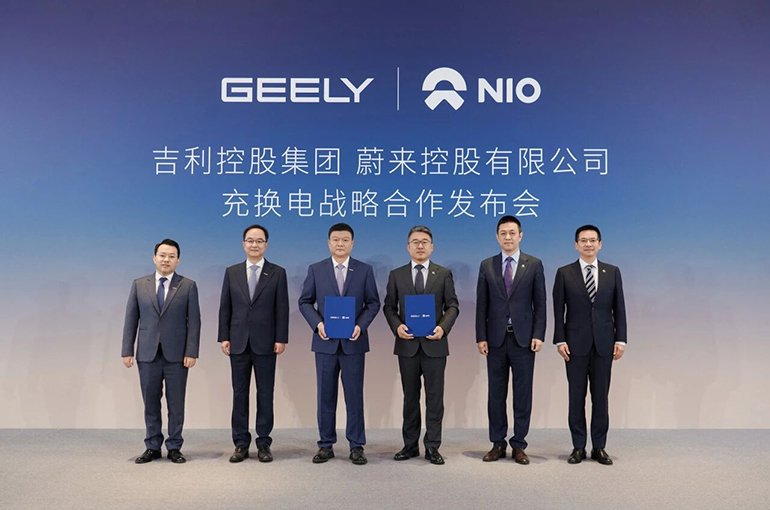
    تعمق مجموعة السيارات الصينية الكبرى والمصنع الرئيسي للمركبات الكهربائية صفقة التعاون الاستراتيجي بينهما، بحيث سيتم تعزيز التعاون في مجالي استبدال البطاريات وشحن السيارات الكهربائية من خلال تنظيم تبادل حصص على مستوى الشركات التابعة، بهدف تسريع توسيع شبكات خدمات استبدال البطاريات والشحن.

    ستخوض الشركة الصينية في مشروعها الجديد عن طريق استخدام كامل حصتها في مزود خدمة استبدال البطاريات وتخصيص مبلغ 640 مليون يوان صيني (أي ما يعادل حوالي 95.3 مليون دولار أمريكي) لشراء حصص جديدة في وحدة بطاريات وتشغيل السيارات الكهربائية الخاصة بشركة نيو، والتي تعمل في شنغهاي. عقب إتمام الصفقة، ستحتفظ الشركة بحصة تبلغ 30 بالمائة في وحدة نيو باور، التي ستقيم بقيمة تقارب 16 مليار يوان صيني (ما يعادل 2.4 مليار دولار أمريكي).

    كانت نيو إحدى أولى الشركات الصينية التي تبنّت تقنية استبدال البطاريات، وإنشأت شبكة خدماتها في عام 2017 لتطوير وإدارة عمليات استبدال البطاريات وشبكات الشحن. ووفقًا للمعلومات الأخيرة، تدير نيو حاليًا أكثر من 4,099 محطة لاستبدال البطاريات و5,289 محطة لشحن السيارات، وقدمت لعملائها أكثر من 120 مليون عملية استبدال بطارية.

    شركة يي يي، التي تأسست عام 2017، كانت تدير أكثر من 470 محطة لاستبدال البطاريات في أكثر من 40 مدينة عبر الصين حتى أبريل من العام الماضي، وتخطط لزيادة عدد محطاتها إلى 2,000 محطة بحلول العام القادم.

    إندماج شركة يي يي مع نيو باور سيعزز بشكل كبير من عملية توسع شبكة استبدال البطاريات لنيو، مع هدف بناء 10,000 محطة بحلول عام 2030. كما ستعمل الشركتان معًا على وضع معايير موحدة لتقنية استبدال البطاريات، فيما ستقوم شركة جيلي، التي تتخذ من هانغتشو مقرًا لها، بتطوير نماذج من سيارات استبدال البطاريات للمستخدمين.

    بالإضافة إلى ذلك، ستقوم نيو أيضًا بالحصول على حصة في مزود خدمات شحن السيارات الكهربائية التابع لجيلي، وهوتان. وبموجب الاتفاق، ستكون حصة نيو في هوتان 10 بالمائة، وستتشارك الشركتان في الموارد بهدف توسيع شبكة الشحن وتحسين الكفاءة التشغيلية.

    هوتان تدير حاليًا حوالي 2,500 محطة شحن و12,000 منصة شحن في 232 مدينة عبر الصين، وتخطط لزيادة شبكتها إلى 22,000 محطة و100,000 منصة بحلول نهاية عام 2027.

    يعود التعاون بين نيو وجيلي إلى نوفمبر 2023، حين أعلنت نيو عن نيتها تشكيل تحالف لتبادل البطاريات مع شركات تصنيع السيارات، ومنذ ذلك الحين أبرمت شراكات مع ثمانية مصنعي سيارات منهم شركة تشانغان وهونجتشن.

    —

  • تيسلا تقدم حافزًا حتى 1940 دولارًا للزبائن الصينيين في حملة تخفيضات سبتمبر

    تيسلا تقدم حافزًا حتى 1940 دولارًا للزبائن الصينيين في حملة تخفيضات سبتمبر

    شهدت سوق السيارات في الصين مؤخرًا تراجعًا ملحوظًا في الأسعار مع انضمام إحدى الشركات الكبرى في مجال السيارات الكهربائية إلى جولة جديدة من التخفيضات. حيث قدمت حوافز مؤقتة تصل قيمتها إلى 13,000 يوان صيني (حوالي 1,940 دولار أمريكي)، مما أدى إلى انخفاض تكاليف الشراء إلى أدنى مستوياتها على الإطلاق.

    ويمكن للمشترين الذين يختارون ويسلمون سيارات من طرازات Model 3 وModel Y حتى تاريخ 30 سبتمبر الحصول على مكافآت نقدية بقيمة 5,000 و10,000 يوان على التوالي (أي حوالي 745 و1,490 دولار). بالإضافة إلى ذلك، يحصل المشترون الذين يختارون نسخًا معينة من طراز Model 3 على دعم تأميني إضافي بقيمة 8,000 يوان، وفقًا للإعلان الصادر اليوم.

    بعد تطبيق هذه الحوافز، انخفض سعر أدنى طرازي Model 3 وModel Y إلى 222,500 و253,500 يوان على التوالي (أي حوالي 33,150 و37,770 دولار)، وهو أدنى مستوى لهما منذ طرح النسخ المجددة من الطرازين.

    تأتي هذه الخطوة في ظل منافسة متزايدة بين أكثر من عشرة شركات سيارات في السوق المحلي، حيث أعلنت عن عروض ترويجية تشمل حزم خيارات، وحوافز نقدية، وتمويل ميسر، وذلك وسط تباطؤ في الطلب على السيارات في أكبر سوق عالمية للسيارات.

    كما أطلقت شركة Leapmotor Tech مفاجآت شراء بقيمة تصل إلى 19,680 يوان، شملت خيارات داخلية وخارجية مجانية ومحطات شحن، بينما قدمت شركة Zeekr المدعومة من قبل شركة Zhejiang Geely حوافز تأمينية بقيمة 10,000 يوان بالإضافة إلى خصومات في التمويل والخيارات لسيارتها الرياضية Zeekr 8X.

    أما العلامات التجارية الفاخرة التي تعتمد على محركات بنزين، فقد أعلنت عن خصومات أكبر، حيث كشفت SAIC عن أسعار محدودة خلال سبتمبر بلغت 262,800 يوان لطراز A7L الراقٍ رباعي الأبواب، و467,600 يوان لسيارة Q6 الرياضية متعددة الاستخدامات، بمعدلات خصم تصل إلى 37% و29% على التوالي من سعرها الرسمي.

    وتأتي هذه التخفيضات الأخيرة في ظل تراجع ملحوظ في أداء سوق السيارات المحلي هذا العام، حيث انخفضت المبيعات التجزئية للسيارات الركاب بنسبة 20% مقارنة بالعام السابق لتصل إلى 11.8 مليون وحدة في الأشهر الثمانية الأولى، فيما انخفضت مبيعات السيارات الكهربائية الجديدة بنسبة 11% إلى 6.7 مليون وحدة، وفقًا لأحدث إحصائيات رابطة سيارات الركاب الصينية.

  • China Issues Largest NEV Recall Due to Door Handle Safety Risks

    China Issues Largest NEV Recall Due to Door Handle Safety Risks

    China has launched the country’s largest recall of new energy vehicles, involving more than 4.2 million cars from nine automakers, including Tesla. The safety issue centers around concealed door handles that could pose risks in emergencies.

    The recall was mandated by the State Administration for Market Regulation on August 21 and represents the biggest cross-brand recall linked to a single design flaw. Automakers have issued notices the same day, warning that emergency mechanical door releases are integrated into the interior trim and can be difficult to locate and operate. In severe crashes, where the vehicle’s 12-volt power supply fails, this problem could hinder occupants from quickly opening doors or escaping. It also complicates efforts for emergency responders to gain access from outside.

    Tesla accounts for the majority of the recall, with nearly 2.98 million vehicles affected. These vehicles, produced from March 2019 to late April 2026, include both domestically manufactured and imported models, specifically the Model 3, Model Y, Model X, and Model S.

    Other automakers with significant recalls include Xiaomi with 390,500 vehicles, Leapmotor with 371,200, Xpeng with 264,800, and Geely Holding with 92,658.

    To resolve the issue, these companies are implementing various measures at no cost to owners. Solutions consist of adding warning labels near the emergency releases, using over-the-air software updates to enable windows to automatically lower after an accident for easier escape, and replacing handle covers to improve visibility.

    Starting January 1 of next year, new national standards for automotive door handles will take effect. Experts have noted that the safety risks associated with hidden door handles are increasingly evident. Although these standards will not apply retroactively, it is considered reasonable for automakers to recall existing vehicles to mitigate hazards.

    The concept of concealed pop-out door handles was first widely adopted in passenger cars by Tesla’s Model S, primarily for better aerodynamics, sleek design, and advanced appearance. This trend was subsequently adopted by numerous Chinese new energy vehicle manufacturers. However, as the design becomes more common, concerns about emergency situations have also grown.

    In the event of a serious accident disabling electronic door release systems, exterior hidden handles could fail to deploy automatically, making rescue efforts more challenging. Although mechanical emergency releases are included inside the door, their low visibility and non-distinct covers can make quick access difficult, potentially limiting occupants’ chances of escape after an accident.

  • JV Automakers’ China Market Share Drops Below 25%, Drives Localization Efforts

    JV Automakers’ China Market Share Drops Below 25%, Drives Localization Efforts

    The market share of foreign and joint venture automakers in China has fallen below 25% for the first time, driven by the rapid growth of domestic new energy vehicle (NEV) brands. In response, these joint ventures are ramping up efforts to localize operations in order to stay competitive.

    In June, the combined market share of joint venture and foreign brands dipped to just 24.5%, a situation unthinkable three years ago, according to Wang Qian, deputy general manager of Dongfeng Motor Group and Dongfeng Nissan Passenger Vehicle, a JV between Nissan and Dongfeng. He spoke at the 2026 China Auto Forum in Shanghai.

    The challenges for JV automakers go beyond just losing market share; they face a complete overhaul of the competitive landscape. The traditional JV model, where foreign partners supplied technology and Chinese partners handled distribution—exchanging cost advantages for market reach—has been fundamentally altered by the rise of China’s NEV market, Wang explained.

    Data from the China Association of Automobile Manufacturers shows that foreign and JV automakers made up over 60% of China’s auto market in 2020. That portion has shrunk to 28% in the first half of this year.

    All major foreign brands operating through joint ventures in China have seen sales decline in the past six months. Volkswagen’s deliveries decreased by 26% year-over-year to 971,000 units, while Japanese brands Toyota, Nissan, and Honda experienced drops of 17%, 15%, and 35%, with sales falling to 695,000, 237,000, and 206,000 units, respectively.

    Luxury foreign brands also experienced setbacks. BMW’s sales in China fell 20% in the first half of the year to 262,000 units. Mercedes-Benz declined by 28% to 210,000 units, and Audi’s sales dropped 19% to 218,000 units.

    Amid the shift toward electrification and smart vehicles, Chinese brands have edged ahead of their international counterparts by developing more agile product cycles, aligning product features more closely with consumer preferences, and optimizing organizational structures, noted Liu Yan, deputy secretary-general of the China Association of Automotive Manufacturers (CAAM).

    To adapt, JV automakers are focusing on five strategic pathways: localizing R&D efforts, combining Chinese and international resources, adopting multi-tier brand positioning, overhauling sales channels, and utilizing global distribution networks. Several leading JV companies are already seeing positive market feedback from these approaches, according to Ron Zheng, head of Roland Berger’s automotive division for the Asia-Pacific region.

    Dongfeng Nissan, for instance, has implemented a “GLOCAL” strategy where its China team drives decision-making and core technology development, making sure product upgrades keep pace with the market. Over the past year, the Wuhan-based company introduced three new models — the N7, N6, and NX8 — advancing development in pure electric, plug-in hybrid, and extended-range EVs.

    Thanks to these initiatives, Dongfeng Nissan’s NEV sales increased by 192% in the first half compared to the previous year. NEVs accounted for 30% of total sales in June, up significantly from 7% at the start of the year.

    Similarly, Beijing Hyundai (a joint venture between Hyundai Motor and BAIC Motor) is strengthening its local R&D capabilities. The company has built a research team of 1,500 employees across Beijing, Shanghai, Guangzhou, and Yantai, focusing on electrification, smart driving, electronic and electrical architecture, and manufacturing, said General Manager Li Fenggang at the forum.

    The automaker is also collaborating with Chinese companies such as Contemporary Amperex Technology, ByteDance, Momenta, and Haomo.ai. With its enhanced local R&D, Beijing Hyundai plans to launch the IONIQ V — its first fully electric vehicle specifically developed for China — in September.

  • Chinese EV Makers Focus on Lightweighting Battle

    Chinese EV Makers Focus on Lightweighting Battle

    As battery technology continues to evolve and charging stations become more widespread, range anxiety for electric vehicles is gradually decreasing. Currently, the main concerns are energy consumption and vehicle handling, prompting manufacturers to focus more on lightweighting as a key competitive advantage.

    On July 20, a major automaker unveiled the Exeed ES 2027 model at the Tongji University Intelligent Connected Vehicle Testing Center in Shanghai. A primary feature of this new vehicle is its emphasis on lightweight construction, notably incorporating the all-aluminum Flying Fish Chassis 2.0, which cuts unsprung weight by 60 kilograms.

    Lightweighting is not a new concept. Historically, internal combustion engine vehicles highlighted this as a crucial aspect for enhancing handling and improving fuel economy. However, during the initial stages of electric vehicle development, manufacturers prioritized adding larger batteries and luxury features, resulting in increasingly heavier cars. This has led to debates over the negative impact overweight EVs can have on road infrastructure.

    Recently, a prominent Chinese automaker introduced an intelligent electric drive system that integrates 16 core hardware components, including the motor, electronic controls, and reducer. This new system weighs only 75 kilograms, approximately 15% less than conventional options.

    Additionally, the company showcased its Starray wheels, crafted from aerospace-grade aluminum and processed through T6 heat treatment to achieve a balance between weight reduction and durability.

    In June, another EV manufacturer announced its new Onvo L60, which is about 300 kilograms lighter than comparable models in its class, owing to the extensive use of high-strength lightweight materials, an ultra-slim 85-kWh battery pack, and a 900-volt high-performance silicon carbide electric drive system.

    Experts say that producing lighter vehicles involves technological challenges and cost considerations. Automakers are cautious about reducing features because consumers often value comfort, and cutting back on configurations can harm market appeal and competitiveness.

    Whether lightweighting will evolve into a tangible benefit for consumers or remain primarily an engineering focus is still uncertain, industry insiders note.

    One solution highlighted involves increasing efficiency and minimizing costs without compromising user experience. According to Xu Jun, COO of a leading NEV startup in China, the goal is to find a balance that optimizes battery performance while ensuring affordability and customer satisfaction.

  • BYD Debuts New Car Abroad at 3x Chinese Price

    BYD Debuts New Car Abroad at 3x Chinese Price

    China’s auto industry continues to expand its global footprint as local automakers introduce new models overseas ahead of their domestic debut, often pricing these vehicles at three times their home market prices. This shift highlights the increasing importance of international sales for Chinese car manufacturers amid declining demand at home.

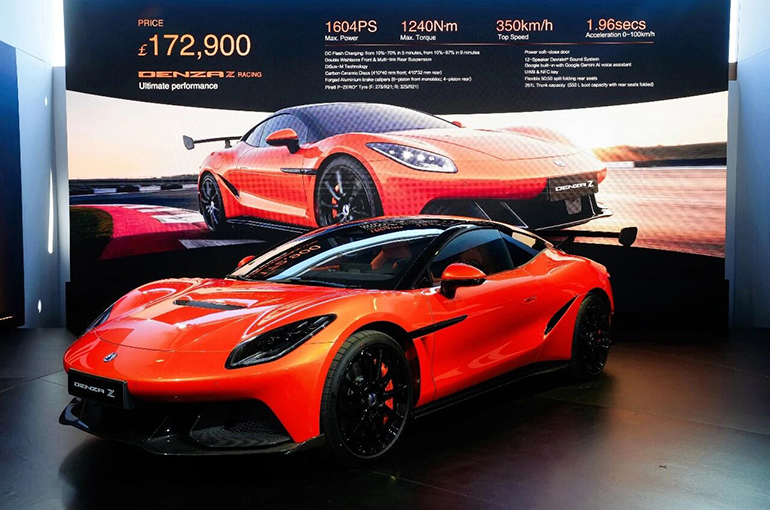
    Recently, pre-sales of the Denza Z electric supercar began in China, just four days after its launch in Europe. Consistent with common industry practice, the vehicle is priced significantly higher outside China—around GBP142,900 to GBP172,900 (roughly USD191,300 to USD231,500)—compared to a domestic price of 680,000 RMB (about USD100,300).

    Several Chinese automakers are setting higher prices abroad, a trend partly driven by import tariffs, logistics costs, overseas labor expenses, and the costs associated with gaining certification and adapting to local markets. Moreover, the limited competition overseas allows these companies to maintain larger profit margins.

    Data analysis indicates that at least four Chinese vehicle models are priced at three times or more their domestic costs in foreign markets, including the Geely Galaxy E5 and BYD Han EV. Over ten other models are sold internationally at prices 1.5 to 2.5 times higher than in China.

    Launching vehicles abroad before domestic release appears to be an effective strategy. The Denza Z experienced strong early interest in the UK, with nearly 20 orders from Serbia on its first day. It has also attracted customers in other European countries and parts of the Middle East. Similarly, Xpeng Motors plans to debut its Mona L03 in Germany before launching it in China, marking a shift toward a global-first approach for future models. Company leadership noted that European sales are on the rise this year, prompting a strategic shift to target international markets from the beginning.

    As the market for new energy vehicles abroad expands rapidly, China’s auto exports in the first half of the year jumped 65% year-over-year to over 5 million vehicles, even as domestic sales declined sharply. In the first six months, domestic vehicle sales fell 21% from the previous year to nearly 9.92 million units, with May alone seeing a 22% drop year-over-year to 1.53 million units.

  • Avatr Loses $1.9B in Four Years as EV Firm Seeks Hong Kong IPO Revival

    Avatr Loses $1.9B in Four Years as EV Firm Seeks Hong Kong IPO Revival

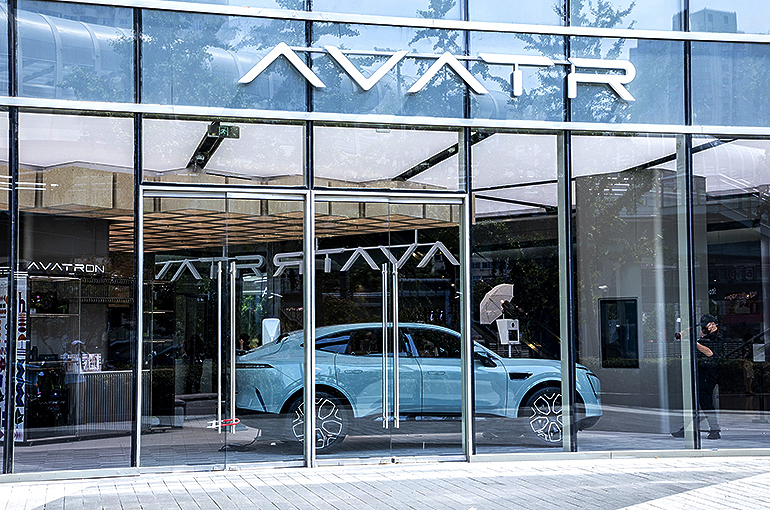
    Avatr Technology, a Chinese electric vehicle startup supported by Changan Automobile and a leading technology company, announced its revised IPO filing after its initial application expired. Over the past four years, the company accumulated losses totaling approximately $1.9 billion.

    In the most recent data, Avatr’s net loss decreased by 13% from the previous year to around $515 million, while revenue increased significantly by 69%, reaching about $3.7 billion, driven primarily by strong sales of new energy vehicles. Despite these gains, the firm still reported total net losses of nearly $1.5 billion from 2022 to 2024.

    The company’s revenue growth was accompanied by rising research and development costs, which climbed 72% last year to nearly $309 million. R&D expenses now represent about 8.1% of revenue, up slightly from before.

    Looking ahead, Avatr plans to enhance its financial health and achieve profitability by focusing on several strategic initiatives. These include shifting its product mix toward more profitable premium models, expanding sales into targeted international markets, and tightening cost control across procurement, R&D, and sales operations.

    Founded in 2018 through a collaboration between Changan Auto, Huawei, and a major lithium battery manufacturer, Avatr launched mass production in 2022. Last year, its delivery volume doubled from the previous year to over 122,000 vehicles. However, this year has seen a downturn in sales due to changes in China’s NEV tax exemption policies and intensified competition. In the first five months alone, deliveries dropped more than 50% compared to the same period the previous year, totaling just over 20,000 units, though exports increased by 33%, reaching nearly 3,000 units.

    The company first filed for a Hong Kong IPO last November, aiming to use the raised funds to develop new vehicle models, create next-generation intelligent platform architecture, expand its brand and sales network, and strengthen working capital limits.

  • How Zhejiang County Is Creating a CNY100B Auto Hub from Zero

    How Zhejiang County Is Creating a CNY100B Auto Hub from Zero

    June 26 — In southeastern Zhejiang province, Changxing County in Huzhou City has become a remarkable example of how traditional manufacturing regions in China can successfully transform into hubs for emerging industries. Since attracting a major automobile manufacturer eight years ago, the county has developed an intelligent vehicle and auto parts industry that produced approximately CNY50 billion (around USD7.3 billion) in last year’s output. Today, the region aims to double that scale.

    Historically, textiles and refractory materials served as two core industries for Changxing. However, both grew out of small family-run workshops, and as they expanded, their fragmented, unorganized structures increasingly became a challenge. Coupled with stricter environmental regulations and the necessity for technological upgrades, the need for industrial transformation became unavoidable.

    Around 2013, Changxing welcomed a new energy vehicle manufacturer. Although the company eventually withdrew due to market conditions, the project provided valuable experience and resources in battery technology and manufacturing. Concurrently, local battery industry leaders and equipment manufacturers, such as Tianneng Group, Chilwee Group, and Noblelift Group, expanded their presence, laying the groundwork for the region’s automotive ambitions.

    The Geely Effect

    The pivotal shift occurred in 2018 when a prominent automaker decided to establish operations in Changxing. The leadership at the time emphasized that this was the first time the company had set up a manufacturing project at the county level and acknowledged that Changxing’s resource base couldn’t compare with larger cities.

    “This decision has proven to be the right one,” commented a vice president of the automotive group and chairman of its new energy vehicle division in Changxing.

    Changxing’s advantages include its strategic location in the heart of the Yangtze River Delta, a highly developed industrial ecosystem, and a government team that treats business needs as a priority,” he added.

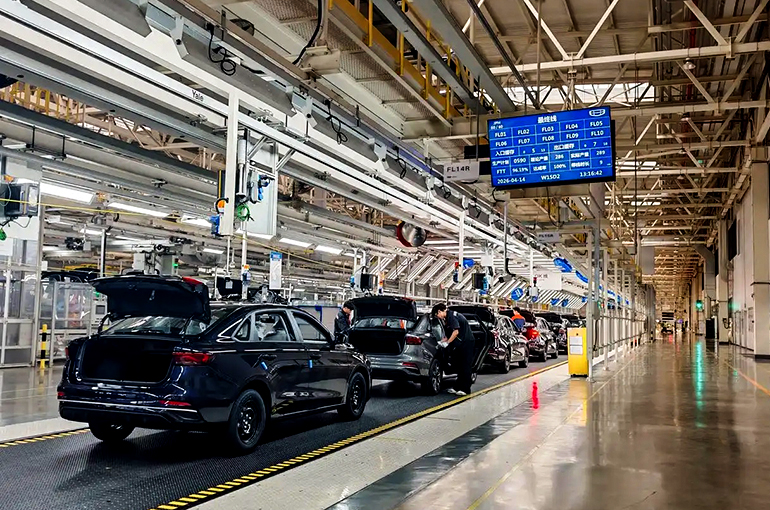
    The company completed its Changxing project in less than 28 months, setting a world record for bringing an NEV project from design to mass production — a feat recognized globally. By 2021, the plant was operational and was classified as a major industrial enterprise, with annual revenues surpassing CNY20 million (around USD2.9 million). This project became a benchmark for rapid construction, high standards, and swift return on investment within the industry.

    Last year, the plant’s output value exceeded CNY23 billion, and by 2025, the Changxing Digital Factory will reach an annual production capacity of 400,000 vehicles, with a new car rolling off the line every 55 seconds.

    The company’s influence extends well beyond its own production numbers, fundamentally upgrading the local supply chain. “Before this automaker arrived, the region’s largest companies had yearly outputs between CNY100 million and CNY200 million,” said a local official. Not only has this automaker brought its extensive supplier network, but it has also accelerated the overall upgrade of the regional industrial chain.

    Currently, 16 upstream and downstream companies directly supply this automaker, with the total number of indirect suppliers still being counted. When the company arrived in 2018, the area had about 26 companies above a certain size in the automotive supply chain. By 2025, that number has grown to 61, and presently, the region accounts for more than half of the total automotive industry output in Huzhou.

    Supplier Cluster

    An example of a supplier closely aligned with the automaker is a company based in Hunan Province called Ditong Automotive Parts. It established a base in Changxing in 2018 next to the automaker’s plant, with transport times under 10 minutes.

    This company mainly produces body and chassis components, according to a deputy general manager. Its entire capacity in Changxing is dedicated to supplying the local vehicle plant, which has been operational for two years and generated last year’s output value of about CNY400 million (USD58.8 million).

    Another firm, Jirui Intelligent Systems, develops advanced driver assistance system controllers and other smart driving products. Unlike Ditong, a portion of Jirui’s management team previously worked at the automaker itself.

    Founded in June 2024, Changxing Jirui Intelligent moved into production within a year. Its output value surpassed CNY200 million (USD29.4 million) in 2025, with goals to double that this year. By 2029, annual output is projected to reach CNY1 billion, growing by about CNY200 million annually.

    Industrial Growth

    In 2025, Changxing attracted a startup focused on commercial vehicles, DeepWay Technology. Unlike the automaker which emphasizes passenger vehicles, DeepWay specializes in new energy heavy-duty trucks. Its battery, motor, and electronic control system projects are already in production, with vehicle manufacturing facilities under construction.

    The expansion of the industry is also reaching upstream. DeepBlue Technology, a subsidiary of Demark Group that focuses on semiconductor equipment and components, began operating in Changxing late last year.

    Currently in trial production, the first phase of DeepBlue’s plant is expected to generate about CNY60 million (USD8.8 million) in output this year, rising to CNY300 million once fully operational, according to Wang Yafei, the company’s general manager.

    Future Challenges

    Despite rapid progress, Changxing’s new energy vehicle sector faces obstacles. Compared to cities like Shanghai and Hangzhou, it lags behind in attracting high-end R&D talent. Earlier this year, a local company highlighted its need for skilled professionals during a regular government-business forum. Many firms prefer to locate their R&D centers in larger cities, leaving Changxing mainly as a manufacturing hub and part of the broader regional division of labor.

    Another common issue is recruiting general workers. To address this, the county launched the “Changxing Changqing” program in 2024, aiming to recruit, train, and keep highly skilled workers. The program offers free tuition and accommodation for students from nearby provinces, with these students often entering employment upon graduation—enrollment essentially acts as initial recruitment, and graduation as an employment gateway.
  • Nio CEO Predicts China Car Sales to Fall 15-20% in 2026

    Nio CEO Predicts China Car Sales to Fall 15-20% in 2026

    The Chinese automotive market has entered a harsh and competitive final phase this year, with retail vehicle sales projected to decrease by 15 to 20 percent compared to last year, according to the CEO of an electric vehicle startup.

    China’s passenger vehicle ownership now exceeds 370 million, indicating the conclusion of a high-growth era and the beginning of intensified competition for existing customers. During the China Auto Chongqing Summit on June 13, he emphasized that automakers will face numerous challenges related to defining their product offerings, advancing core technologies, managing supply chains, manufacturing, sales, after-sales service, and brand development.

    Auto sales in China sharply declined by 20 percent to 7.1 million units in the first five months of the year, compared to the same period last year, influenced by factors such as changes to the country’s new energy vehicle (NEV) purchase tax and soaring international oil prices, according to data from the China Passenger Car Association. The decline deepened to 23 percent in the first week of June.

    As new energy vehicles become more uniform, simple comparative parameters will no longer provide competitive advantages. Instead, establishing a comprehensive, mature, and efficient development system will be crucial for automakers to stand out and build core barriers, the executive noted.

    Sales of NEVs declined by 15 percent in the first five months to 3.7 million units, a smaller drop compared to traditional fuel-powered vehicles, which resulted in NEVs capturing a market share of 52 percent. This share further increased to nearly 67 percent in the first week of June, according to the China Passenger Car Association.

    This year has been the most challenging since the company’s inception. Although sales continue to grow, the upcoming months are filled with uncertainties and market obstacles, he expressed during a media briefing on June 12.

    The company’s deliveries, including vehicles from its Onvo and Firefly brands, increased by 69 percent to 150,526 units from January to May year-over-year. The firm has set a target to sell between 450,000 and 490,000 vehicles this year, representing a 40 to 50 percent increase over the previous year.

  • Stellantis & Dongfeng Invest $1.2B in China for Peugeot, Jeep EVs

    Stellantis & Dongfeng Invest $1.2B in China for Peugeot, Jeep EVs

    Stellantis and its longstanding partner in China, Dongfeng Motor Group, have signed a deal worth 8 billion Chinese Yuan (approximately $1.2 billion) to localize the production of electric vehicles for the Peugeot and Jeep brands. This initiative aims to boost sales performance for these brands within the Chinese market.

    The joint venture between Dongfeng and Stellantis, known as Dongfeng Peugeot Citroën Automobile, plans to begin manufacturing two new Peugeot and two new Jeep off-road electric models starting next year at its facility in Wuhan. These electric vehicles will be marketed both domestically and internationally.

    Stellantis is expected to allocate around 130 million euros (roughly $151.4 million) towards this project, which will benefit from supportive industrial policies in Hubei Province and Wuhan, the provincial capital.

    “Building on more than 30 years of collaboration and shared automotive knowledge, Stellantis and Dongfeng Motor are positioned to further leverage their strengths to introduce completely new vehicles equipped with the latest EV technologies from brands trusted and appreciated worldwide,” said the company’s CEO.

    Dongfeng Motor’s Chairman emphasized that revitalizing and transforming Dongfeng Peugeot Citroën Automobile remains a strategic priority, with full support for its sustainable development.

    Through this strategic partnership, combining Hubei’s industrial capabilities, Stellantis’ global operational advantages, and Dongfeng’s advanced electric vehicle technologies, a new path of mutually beneficial collaboration has been established. This initiative is expected to energize the joint venture’s ongoing transformation.

    In recent years, Stellantis’ operations in China have encountered challenges as local competitors have quickly gained ground. Last year, the sole remaining joint venture, Dongfeng Peugeot Citroën, sold only 51,507 vehicles—a 25% decrease from the previous year and a drop of over 90% from its peak sales a decade ago.

    Another of Stellantis’ Chinese joint ventures, GAC Fiat Chrysler, filed for bankruptcy and ceased operations in 2022. The production of Jeep vehicles through this partnership was halted, with the brand shifting to an import model within the country.

  • Geely’s Lotus Abandons All-Electric Car Plans, CEO Reveals

    Geely’s Lotus Abandons All-Electric Car Plans, CEO Reveals

    < div id="news-body" data-cover="https://img.yicaiglobal.com/src/image/2026/05/119534243120837.jpg">

    May 14 — The British luxury car brand owned by a major Chinese automotive group is shifting away from its all-electric plans and refocusing on hybrid models and gasoline sports cars amid a challenging market environment, according to its CEO.

    In the coming weeks, the company will introduce the Emira 420, a new sports car powered by an internal combustion engine. Additionally, a hybrid hypercar, the Type 135, is scheduled for release in 2028. The company, based in Wuhan, emphasized that it will only move entirely to electric vehicles once market conditions are favorable, the CEO stated in a letter to employees yesterday.

    Just two days prior, the brand announced its 2030 strategic plan, highlighting a flexible approach that includes internal combustion engine vehicles, plug-in hybrids, and fully electric models. The plan aims for an approximate distribution of 60 percent hybrids and 40 percent battery electric vehicles across its electrified lineup as it transitions to full electrification.

    The company’s stock, traded on NASDAQ under the symbol LOT, closed yesterday at $1.43, down 3.4 percent in New York trading.

    Founded in 1948, this marque was once among the world’s top three sports car manufacturers alongside Porsche and Ferrari. After facing financial difficulties, it was first acquired by General Motors in 1986, followed by Proton in 1996, before being taken over by the Chinese automotive conglomerate in 2017.

    Following the takeover by the Hangzhou-based group, the brand announced a decade-long revival plan focusing on a complete transition to electric vehicles and smarter, software-oriented models by 2028. Since then, it has launched several battery electric models, including the Evija, Eletre, and Emeya.

    However, the electric sports car market has not met expectations. The company’s global sales fell by 46 percent last year to 6,520 units, while revenue decreased by 44 percent to $519 million, according to its recent annual earnings report. Despite this, improved product mix and cost management contributed to a 58 percent reduction in net losses, which totaled $464 million.

    The CEO announced that the company will shift its focus from solely driving sales growth to prioritizing higher profit margins. To achieve profitability next year, it plans to further reduce costs by consolidating its sports car research, development, and manufacturing activities in the UK with its electrification and smart technology operations based in China.

  • [In Photos] 180+ New Car Models Unveiled at Record-Breaking Beijing Auto Show

    [In Photos] 180+ New Car Models Unveiled at Record-Breaking Beijing Auto Show

    The ongoing Beijing International Automotive Exhibition, also known as Auto China, has shattered previous records in both exhibit size and the number of global premieres, underscoring China’s vibrant role as a driving force in the international automotive industry.

    Taking place from April 24 to May 3, this event spans 380,000 square meters, making it the largest auto show worldwide. Nearly 1,000 exhibitors from 21 countries and regions are participating, displaying a total of 1,451 vehicles, including 181 world premieres.

    The showcased vehicles emphasize electrification, smart technology, and enhanced comfort. Among them are premium sports cars and SUVs crafted by domestic manufacturers, alongside intelligent models designed specifically for the Chinese market by joint venture brands.

    The debut of the Denza Z marks a significant milestone—being the first highly intelligent, all-electric supercar introduced by Denza, which is part of the luxury division of a major automaker.

    Hongqi Auto, under FAW Group, unveiled its first luxury SUV, the Hongqi Offroad, demonstrating the brand’s expanding portfolio.

    Electric vehicle startup Li Auto is launching its new flagship SUV, the L9 Livis, which is set to begin customer deliveries on May 15.

    SAIC Audi, a joint venture between Chinese and German companies, introduced the E7X—the brand’s first all-electric SUV.

    A specially designed mid-size electric sedan for China, the BMW i3 Long Wheelbase, was also showcased, highlighting tailored offerings for the local market.

    The event also featured the global debut of the new all-electric Mercedes-Benz GLC SUV, emphasizing the shift toward sustainable luxury.

    [Images accompany the descriptions, showcasing these innovative vehicles and their unique features.]

  • Chinese EV Startups See Sales Bounce Back in March

    Chinese EV Startups See Sales Bounce Back in March

    After a slow start to the year, sales for Chinese electric vehicle startups experienced a significant rebound in March.

    Leading the market, Leapmotor Technology, the top-selling new energy vehicle startup last year, announced it sold 50,029 cars in March—a 78% increase from February and a 35% rise compared to the same month last year, making it the nationwide leader.

    Li Auto took the second spot in sales last month with 41,053 vehicles sold, marking a 55% growth from the previous month and a 12% increase year-over-year.

    Nio’s sales jumped by 71% from February and soared 136% from last year, totaling 35,486 units in March. Meanwhile, Xpeng Motors delivered 27,415 cars in March, up 80% from the month prior but down 17% compared to the same period last year.

    China’s new energy vehicle (NEV) market experienced a slowdown in the first two months of the year, primarily due to the expiration of purchase tax exemptions for electric cars. As a result, total EV sales declined 7% year-over-year to 1.7 million units, according to industry data. Despite this, most EV startups still reported overall growth in the first quarter, driven mainly by a substantial rebound in March.

    In the first quarter, Leapmotor sold 110,155 units—up 26% from the previous year. Li Auto delivered 95,142 vehicles, an increase of 2.5%. Nio’s deliveries nearly doubled, reaching 83,465 units. Conversely, Xpeng’s sales declined by 33%, totaling 62,682 units.

    It’s worth noting that in China, auto sales for January and February are often combined because the Chinese New Year holiday, which impacts sales patterns, falls on different months each year.

    Traditional automakers’ EV brands also generally showed positive results last month. GAC Hyptec Aion, the recently reorganized EV division of GAC Group (formerly GAC Aion), reported sales of 38,268 vehicles, a 231% jump from February and a 12% increase year-over-year.

    Changan Automobile’s electric brand Deepal sold 31,742 EVs in March, reflecting an 88% month-over-month growth and a 30% increase compared to the same period last year.

  • Leapmotor Surges as China’s Top NEV Startup Achieves First Profitable Year

    Leapmotor Surges as China’s Top NEV Startup Achieves First Profitable Year

    Shares of the leading Chinese new energy vehicle startup experienced an increase after the company turned a profit for the first time last year, becoming only the second emerging Chinese automaker to report an annual profit following Li Auto. The company’s stock rose by 4.7 percent to HKD 46.64 (USD 5.96) per share as of 11:35 a.m. local time, after earlier soaring by up to 7.4 percent.

    The company posted a net profit of CNY 538.4 million (USD 78.1 million) for the 12 months ending December 31, a significant turnaround from a net loss of CNY 2.8 billion (USD 406 million) the previous year. Revenue more than doubled to CNY 64.7 billion (USD 9.4 billion). Sales jumped 103 percent to 596,555 units last year from 2024 units, marking a second consecutive year of doubling and positioning the firm as the top Chinese EV startup. Its exports also led the sector with over 67,052 units sold internationally.

    The company’s gross profit margin improved to 14.5 percent from 8.4 percent, reaching 15 percent in the fourth quarter, a new quarterly high. The firm aims to sell one million vehicles this year, setting an ambitious growth goal at 68 percent, according to the founder and chairman, Zhu Jiangming, who announced this target in December.

    In the first two months of this year, sales increased by 19 percent year-over-year, totaling 60,126 units. However, the company slipped to third place among Chinese EV startups in January, delivering 32,059 vehicles, behind Aito—developed jointly by Seres Group and Huawei Technologies—with 40,016 units, and Xiaomi Auto, which sold over 39,000 units.

    The growth of new energy vehicle sales in China has slowed, partly due to the government reducing the purchase tax exemption for such vehicles to 5 percent this year, along with cuts to subsidies for trade-in programs.

  • Nio Projects First Operating Profit, Surges in US & Hong Kong Markets

    Nio Projects First Operating Profit, Surges in US & Hong Kong Markets

    Chinese electric vehicle startup reported its first-ever operating profit in the fourth quarter of last year, leading to a surge in its stock prices on both the US and Hong Kong exchanges.

    The company’s shares closed up 7 percent at HKD39.10 (roughly USD5) in Hong Kong today, while its US-listed shares finished about 5.9 percent higher at USD4.70 yesterday.

    Based on initial estimates, the company anticipates recording an adjusted operating profit between USD100 million and USD172 million in the fourth quarter, excluding stock-based compensation costs. This marks a significant turnaround from an adjusted operating loss of approximately CNY5.5 billion (around USD792.5 million) during the same period last year.

    Under standard accounting rules, the company expects to have posted an operating profit ranging from approximately USD29 million to USD100 million for the quarter.

    Since its founding in 2014, the company has faced ongoing criticism for persistent financial losses. In 2024, its net loss widened 8 percent year-over-year to CNY22.4 billion (about USD3.2 billion). In the first three quarters of last year, total net losses reached CNY15.7 billion, a 1 percent increase compared to the previous year.

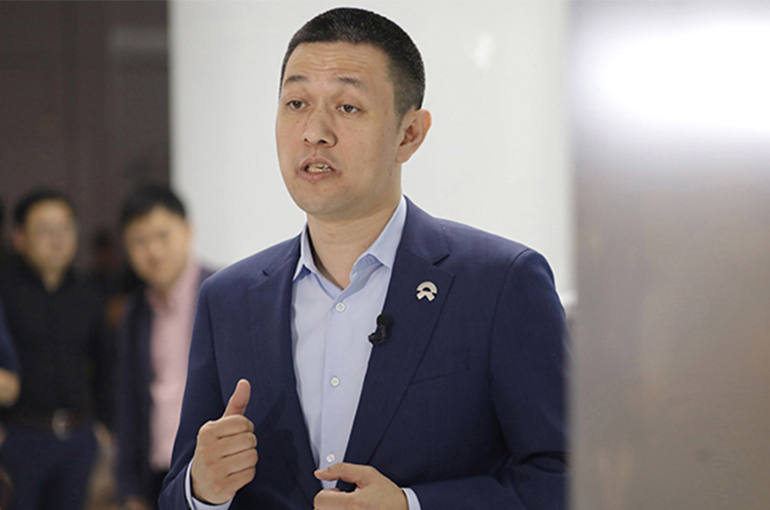
    In light of this situation, the company’s founder and CEO emphasized in an internal meeting last October that achieving profitability by the end of 2025 is crucial. He warned that failure to reach this goal could pose serious challenges to the company’s long-term growth.

    The projected profit for the quarter ending in December 2025 was primarily driven by consistent growth in sales volume during the fourth quarter, improved vehicle margins due to a favorable product mix, and the company’s ongoing efforts to cut costs and boost efficiency.

    The company introduced its third-generation ES8, a large all-electric SUV, in September last year, delivering 40,000 units within just 100 days. Thanks to the strong performance of this model, fourth-quarter deliveries soared 72 percent year-over-year to nearly 124,810 vehicles, setting a new quarterly record.

    In January this year, the company delivered over 27,180 vehicles, a 96 percent increase compared to the same month last year but a 44 percent decline from December.

  • Aito Overtakes Leapmotor to Lead China’s NEV Sales in January

    Aito Overtakes Leapmotor to Lead China’s NEV Sales in January

    A new energy vehicle startup has overtaken its competitors to claim the top spot in China’s EV market last month. The company, a joint venture between a major Chinese automaker and a leading tech company, saw a remarkable 83% increase in deliveries, reaching 40,016 units in January compared to the same period last year. Meanwhile, the previous market leader experienced a 27% growth, with deliveries totaling 32,059 units, but fell to third place overall.

    Additionally, a prominent smartphone maker’s electric vehicle division surpassed the former leader, delivering over 39,000 units last month.

    In Shanghai, a well-known electric vehicle manufacturer nearly doubled its monthly deliveries, hitting 27,182 units, driven largely by strong sales of its recently launched flagship model.

    On the other hand, two other major automaker startups experienced declines. One recorded an 8% decrease, with 27,668 units sold, while the other saw a significant 34% dip to just over 20,000 units during the period.

    Across the board, most early-stage EV manufacturers saw a slowdown in January. Among these, one reported a 47% decrease, another a 44% decline, and some saw drops of 37%, 31%, and 22%, respectively.

    This pattern is partly due to the typical post-year-end market slowdown, as Chinese automakers often ramp up promotional activities late in the year to meet annual sales goals. Additionally, a recent policy change has increased the vehicle purchase tax from zero to 5% based on the selling price, raising costs for consumers starting January 1.

    According to industry data, retail sales of passenger cars in China from January 1 to 18 totaled 679,000 units, representing a 28% decrease compared to the same period last year and a 37% decline from the previous month. Of these, new energy vehicle sales amounted to 312,000 units, down 16% year-over-year and 52% month-over-month.

  • Leapmotor Tops 11 Chinese Automakers’ 2026 Sales Goals

    Leapmotor Tops 11 Chinese Automakers’ 2026 Sales Goals

    Eleven automakers in China have announced their sales targets for 2026 since the beginning of the year, with an electric vehicle startup aiming for the most aggressive growth rate of 68%, despite industry analysts predicting more moderate overall market growth.

    The company based in Hangzhou plans to sell one million vehicles this year, according to its founder and chairman. Last year, the startup experienced a year-over-year sales increase of 103%, delivering nearly 597,000 vehicles and surpassing its annual goal of 500,000 units.

    Among other EV startups, a company aims to sell between 550,000 and 600,000 cars in 2023, which represents a growth of 28% to 40% over last year’s sales of approximately 429,450 vehicles. Another company has set a sales growth target of 40% to 50%, having delivered nearly 326,000 vehicles last year.

    A tech giant in the industry, now in its third year, plans to sell 550,000 vehicles in 2023. Its auto division saw a threefold increase last year, with sales reaching nearly 412,000 units—marking its debut in the top 10 new energy vehicle manufacturers in China by volume.

    A partnership between a group and a technology firm aims to sell 500,000 premium electric vehicles this year, representing a modest growth of about 6% from the previous year.

    In the traditional automaker segment, one major manufacturer has set the most ambitious goal, increasing sales by 36% to 1.8 million vehicles. Additionally, two other large firms, both having recently received permits for L3 autonomous driving, are targeting sales growth of 13% and 26%, respectively, to reach 3.3 million and 2.2 million units.

    Another large group expects to boost sales by 31% to 3.3 million units, while a different manufacturer aims for 14% growth, reaching 3.2 million. Two other major automakers, a brand under Geely and another national group, anticipate growth of 8% and 7%, respectively, each reaching around 3.5 million units.

    Despite these ambitious sales plans, industry associations and research organizations remain cautious. The government recently ended a 12-year tax exemption on new energy vehicle purchases, introducing a 5% tax, and subsidy programs for vehicle trade-ins have been reduced for this year.

    The national automotive industry association forecasts a slight 1% increase in total vehicle sales, climbing to 34.8 million units—this being the slowest growth since 2017. Industry analysts expect wholesale sales to decline slightly in the low single digits and retail sales to see a mid single-digit decrease, although sales of new energy vehicles are projected to grow by around 8% despite the broader market downturn.