Brazil: The Only Country to Cross Both the Equator and a Tropic Line
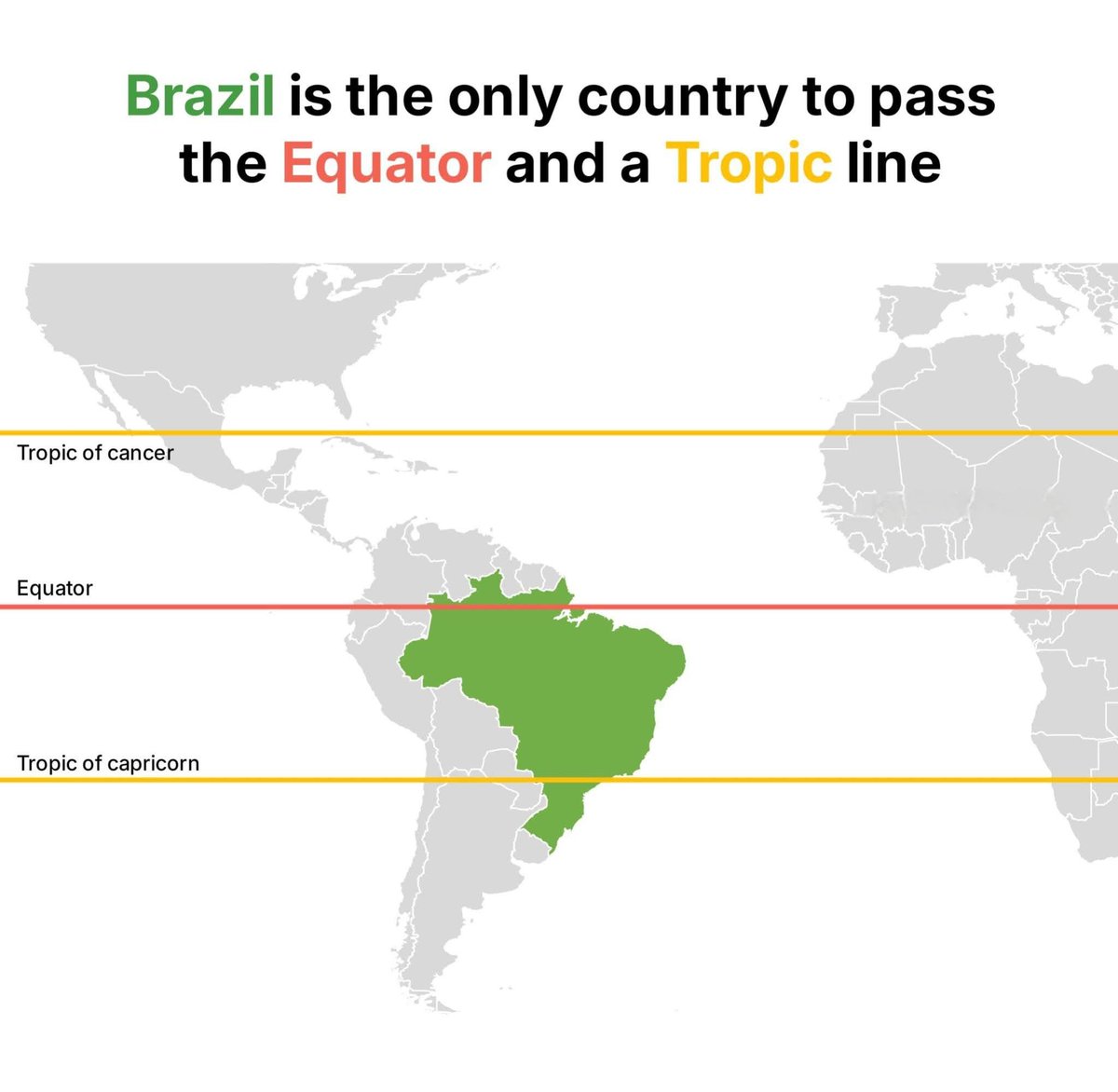
Brazil is a remarkable country with unique geographic distinctions. Notably, it’s the only nation in the world that fully crosses both the Equator and a Tropic line. This exceptional geographic feature greatly influences Brazil’s climate, biodiversity, and cultural diversity. Here’s a closer look at this fascinating aspect of Brazil’s geography.
1. Brazil’s Unique Position on the Globe
Brazil’s vast territory stretching across South America places it in multiple climate zones, but what sets it apart is its precise location crossing the Equator and the Tropic of Capricorn. The country spans from the northern hemisphere into the southern, a feature that influences its diverse ecosystems and weather patterns. Its proximity to these key lines of latitude makes Brazil uniquely positioned—an intersection of the tropical and subtropical zones.
2. Crossing the Equator: A Worldly Milestone
The Equator, marking 0 degrees latitude, runs through northern Brazil, particularly through the Amazon basin. Visitors and researchers can stand right at the line, which is marked at several points across the country. This crossing point highlights Brazil’s position as a truly global nation, straddling hemispheres. The city of Macapá, in particular, sits directly on the Equator, offering a popular tourist destination where visitors can experience standing in both hemispheres simultaneously.
3. The Tropic of Capricorn: A Southern Boundary
South of the Equator, Brazil also crosses the Tropic of Capricorn at approximately 23.5° south latitude. This line defines the boundary of the tropical zone in the Southern Hemisphere. Since Brazil extends across this line, large parts of the country experience tropical weather conditions, influencing agriculture and natural ecosystems. The Tropic of Capricorn passes through parts of central Brazil, including the states of São Paulo and Mato Grosso do Sul.
4. Impact on Climate and Biodiversity
Brazil’s crossing of both lines of latitude results in a diverse climate spectrum, ranging from equatorial rainforests to more temperate zones in the south. The Amazon rainforest, thriving along the Equator, is the most biodiverse area on Earth. Meanwhile, regions closer to the Tropic of Capricorn support different ecosystems like savannas and cerrado. This variation supports over 70,000 plant species and countless animal varieties, reinforcing Brazil’s reputation as one of the world’s biodiversity hotspots.
5. The Cultural Significance
This geographic uniqueness also influences cultural diversity. Regions near the Equator are home to indigenous communities with rich traditions tied to the rainforest environment. In contrast, southern areas with temperate climates have cultures shaped by European influences. The crossing points serve as symbols of Brazil’s broad natural and cultural landscapes, attracting researchers, tourists, and geographers alike.
6. Environmental Challenges and Conservation Efforts
Brazil’s diverse geography faces environmental threats, including deforestation, climate change, and urbanization. Protecting the Amazon rainforest and maintaining the ecological balance along the Tropic of Capricorn are crucial efforts being supported by local governments and international organizations. Recognizing the country’s distinct geographic position underscores the importance of sustainable practices to preserve these vital ecosystems for future generations.
7. Visitors’ Experience: Standing on the Line
Several locations in Brazil provide the unique experience of standing on the Equator or the Tropic of Capricorn. For instance, Macapá’s “Equator Line Monument” is a popular site, where visitors can experience the thrill of being geopolitically on two hemispheres at once. Similarly, near cities like Campo Grande, tourists can walk along markers representing the Tropic of Capricorn, learning about the environmental significance of these lines.
Brazil’s geographic exclusivity as the only country to cross both the Equator and a Tropic line highlights its natural splendor and global significance. This positioning influences its climate, biodiversity, and cultures, making it a fascinating subject of exploration and study. As the world continues to face environmental challenges, Brazil’s unique geographical features serve as a reminder of the planet’s intricate and interconnected natural systems.