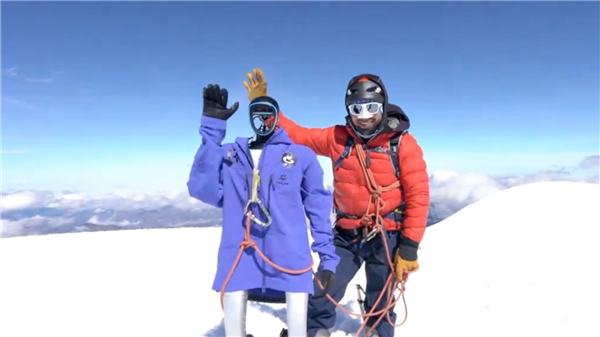
A humanoid robot named Pemba, modified from the Yushu G1, recently achieved a significant milestone by reaching the summit of Chimborazo Volcano in Ecuador at an elevation of 6,200 meters. This accomplishment marks the first leg of an ambitious “Triple Crown” exploration project focused on robotic high-altitude expeditions. According to the project’s plans, Pemba may soon venture into the Himalayan range, with the ultimate goal of attempting to climb Mount Everest.
The team behind Pemba’s success included experts with extensive experience in natural conservation efforts in regions such as the Congo Basin and the Amazon Rainforest. They emphasized the limitations of static monitoring devices like cameras and sensors, which are costly to deploy and maintain, and have restricted coverage. To overcome these challenges, the project aims to utilize a mobile robot equipped with cameras, sensors, satellite communication, and onboard AI technology. Such a robot can autonomously patrol vast areas and continuously gather crucial environmental data.
Future plans include powering Pemba with solar energy and maintaining communication through satellite networks, ensuring sustained operation in remote locations. During the ascent, Pemba was capable of navigating slopes below 30 degrees independently. However, when faced with more challenging terrains and steeper inclines requiring sustained effort over 16 hours of the summit push, human team members needed to carry the robot.
To enhance Pemba’s adaptability to more complex environments, the team intends to incorporate reinforcement learning systems that will improve its autonomy. Engineers have also developed a dedicated thermal management system to protect the robot from extreme cold, integrating ventilation into its protective suit. This cold-weather customization draws on prior testing experiences, including extreme low-temperature conditions in the Altay region where the Yushu G1 was tested down to -47.4°C.
Looking ahead, the project aims to send Pemba to the Himalayas, where it will operate between Everest Base Camp and the nearly 8,000-meter-high Camp 4. The robot will collect data on battery performance, walking ability, joint stress, and environmental adaptability. Researchers hope that in the future, Pemba can contribute to activities such as glacier monitoring, waste removal, search and rescue, and environmental research in the region.