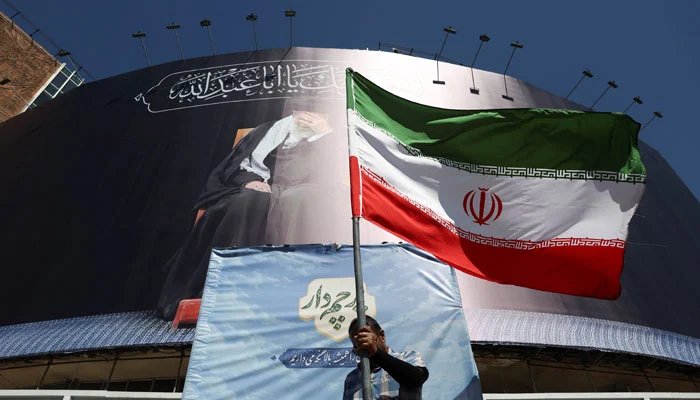
A man waves an Iranian flag on the street, following news that the U.S. and Iran have reportedly reached an agreement to end hostilities and reopen the Strait of Hormuz, in Tehran, Iran, June 15, 2026. — Reuters
– “All parts of the deal are signed,” states President Trump upon arriving in France.
– Future negotiations will focus on Iran’s nuclear program.
– Iranian Foreign Minister calls for Israel to cease attacks on Lebanon.
The U.S. president announced Monday that both the U.S. and Iran have signed a preliminary deal to bring an end to the conflict in the Gulf, although specifics haven’t been disclosed, and a comprehensive, long-term peace agreement still needs to be negotiated. This agreement prolongs a fragile ceasefire that began in April by an additional 60 days and allows for the reopening of the Strait of Hormuz, which Iran has effectively blocked since early February following attacks by the U.S. and Israel.
Negotiations will now tackle complex issues like Iran’s nuclear ambitions moving forward.
Trump, speaking after arriving in France for the G7 summit, said, “The deal’s all signed,” and mentioned that Vice President JD Vance is expected to participate in a formal signing event in Geneva on Friday.
Following the announcement, oil futures dropped to their lowest levels since March 10, amid concerns that Iran’s blockade, which has disrupted about 20% of global oil trade, might ease.
This development marks a significant step toward resolving a conflict that has resulted in at least 7,000 deaths, predominantly in Iran and Lebanon, and has shaken global energy markets. However, many details about the terms of the agreement are still unknown, and it’s unclear whether it differs from the previous ceasefire established in April.
Iranian President Masoud Pezeshkian posted on social media that the US-Iran memorandum of understanding is an “important step” toward ending the fighting, but emphasized that a final agreement for a sustainable ceasefire “has yet to take shape.”
Vance told CNN that the signed document covers about a page and a half, describing it as a “very general” outline. Officials indicated more details would be made available over the next couple of days. Vance also highlighted that the deal includes “a very substantial sanctions relief package” for Iran.
Both sides suggest that, ultimately, Iran could see considerable economic benefits, including sanctions relief, the unfreezing of previously held assets, and the creation of a $300 billion reconstruction fund financed by Gulf countries, which host U.S. military bases.
U.S. officials remain cautious, stating that Iran will need to meet U.S. demands, such as permanently abandoning its nuclear weapons program and halting support for regional militias like Hezbollah, to receive these perks.
Iran’s nuclear future remains a contentious focus. The 2015 nuclear deal, which Iran agreed in, included significant reductions in its uranium enrichment program, but Trump withdrew from this accord during his first term. Since then, Iran has managed to regain billions in assets that were previously frozen.
Trump’s recent military actions, including strikes in February, have not resulted in regime change or the dismantling of Iran’s ballistic missile program, nor have they stopped Iran’s regional militias’ support.
The current agreement does not conclusively address Iran’s stockpile of enriched uranium, a key concern for the U.S., which Trump has insisted should be destroyed or removed.
Iranian officials, who have always denied aiming to develop nuclear weapons, argue that engaging in diplomatic discussions with the U.S. over their nuclear program resumes a process halted by Trump’s decision to initiate war.
While the agreement lifts Iran’s control over the Strait of Hormuz, restoring pre-war conditions, shipping companies stress that traffic will only resume once safety assurances are in place. Iran has hinted it may retain oversight with Oman of the strait. The U.S. has committed to keeping the strait open without tolls for 60 days, expecting this to be part of the final deal.
### Netanyahu States He “Stood Firm”
Conflicts between Israel, a U.S. ally, and Hezbollah in Lebanon, where over 1.2 million people have been displaced, remain unresolved. Iran insists the deal requires full cessation of hostility in Lebanon, but Israeli Prime Minister Benjamin Netanyahu declared that Israel will maintain its military presence in southern Lebanon and retain the right to respond to Hezbollah assaults.
“Israel insisted on staying firm,” Netanyahu said at a press conference, acknowledging differences with President Trump over the issue. Israel has not participated directly in negotiations with Iran.
A U.S. official highlighted that Israel’s withdrawal from Lebanon, which they invaded in March following Hezbollah’s involvement in the conflict, was not a stipulation of the deal. Disagreements over Lebanese inclusion had also caused friction in the earlier ceasefire.
On Monday, reports indicated reduced fighting in Lebanon, though clashes did not cease altogether. Lebanese media said an Israeli drone struck a car in Kfar Tebnit, killing the driver, with Netanyahu claiming four militants were killed in the operation. Iranian Foreign Minister Abbas Araqchi called for immediate cessation of Israeli attacks.
Privately, Israeli officials have voiced negative opinions about the deal, with one senior source telling Reuters that the agreement is “terrible for Israel,” sentiments reportedly shared across the government.
[End of rewritten content]