الوسم: Defense

  • US-Iran Tensions Escalate as Trump Warns of Bold Military Action

    US-Iran Tensions Escalate as Trump Warns of Bold Military Action

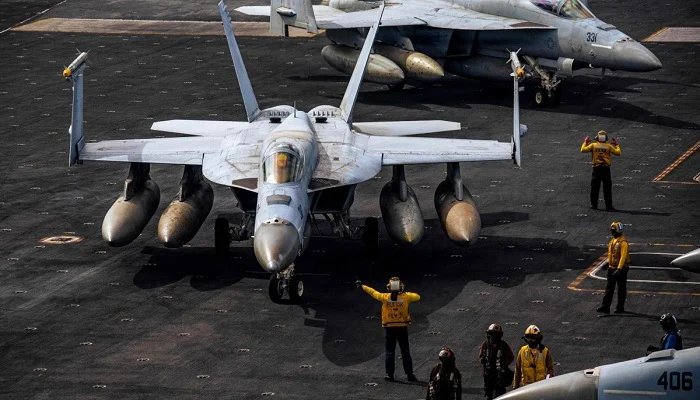
    A photo shows F/A-18E Super Hornets on the flight deck of the USS Gerald R. Ford, dated March 15, 2026. — AFP

    – President Trump states, “There will be a response” following an Iranian attack.
    – Iran claims it launched missiles at U.S. bases in Jordan.
    – Three individuals were killed during a U.S. strike on Larak Island.

    Tensions flared Monday as President Donald Trump vowed to retaliate against Iran after a month of rising hostilities, shifting from economic sanctions to direct military exchanges. Iran responded by firing missiles at two U.S. military installations in Jordan, retaliating for a U.S. attack on its Larak Island, where Washington claimed to have hit Iranian missile launchers involved in mine-laying operations in the Strait of Hormuz.

    This confrontation underscores how swiftly a conflict rooted in sanctions and economic pressure can escalate into military action. Although neither side appears intent on full-scale war, both have indicated readiness to respond to future assaults.

    A Fox News reporter quoted Trump saying, “We’re going to hit them hard. There will be a response.” In the Oval Office, Trump added that the recent strikes don’t mean a return to all-out war, describing Iran as a “failed nation” with a severely weakened economy and military. He stated, “That doesn’t mean we won’t smack them. We’ll see what happens.”

    When asked if nuclear weapons were off the table, Trump responded that there was “no reason” to consider using nukes, since Iran is already “totally defeated militarily.”

    A senior Iranian official told Reuters that the missile exchanges, the first since late July, were a “limited and contained confrontation,” but warned Iran would retaliate harshly if attacked again.

    Trump asserted that U.S. defenses intercepted all Iranian missiles capable of causing damage and claimed that new U.S. sanctions are significantly impacting Iran’s economy, according to Fox News. Earlier, Trump shared AI-generated videos of explosions at Iran’s main oil export terminal with the caption, “Kharg Island being blown to smithereens!!!” However, Iran dismissed the videos as “laughable,” clarifying that no such attack occurred. Vice President JD Vance commented that Trump was “sending a message” with his social media posts and noted his tendency to “switch it up.”

    So far, the U.S. has avoided striking Iran’s major oil and gas infrastructure, fearing Iran’s retaliation against Gulf neighbors in response.

    ### Increasing Economic Pressure

    Instead, the U.S. has intensified efforts to pressure Tehran and its trading partners through secondary sanctions targeting nations that buy Iranian oil. Treasury Secretary Scott Bessent said Iran is “lashing out” because these sanctions are hurting its economy. “They’re in shock over their economic decline,” he told reporters at the G20 finance ministers’ meeting. Bessent mentioned plans to introduce weekly secondary sanctions focusing initially on Iranian banks to accelerate pressure.

    ### U.S. Strikes on Iranian Targets

    U.S. forces targeted two Iranian missile launchers on Larak Island Sunday after observing Islamic Revolutionary Guard Corps forces preparing to launch rockets and mines into the Strait of Hormuz. The attack resulted in three fatalities, including two Revolutionary Guards Navy members, according to Iran’s Tasnim news agency. Larak Island, close to the strategic port of Bandar Abbas, lies in the narrow strait that typically handles 20% of global oil and gas shipments but has been effectively closed since hostilities escalated.

    The U.S. Central Command described the strike as a “limited, precise” operation targeting imminent threats, without providing further details. Iran’s state TV claimed a supertanker caught fire after being hit by mines; the U.S. military later denied that.

    ### Iran’s Position and Ongoing Conflict

    President Trump paused his “Operation Epic Fury” bombing campaign in April with a ceasefire, and in June, both sides agreed to informal talks. However, the peace quickly unraveled, leading to renewed exchanges of fire in July.

    In recent weeks, the U.S. has tried to cripple Iran economically through a blockade of ports, aiming to pressure Tehran into capitulating on its demands. Iran maintains that the Strait of Hormuz remains closed unless reopened under its own terms.

    Iranian President Masoud Pezeshkian expressed willingness to negotiate, advising that continuing the war serves no one’s interests. “We believe that ongoing conflict benefits no one—neither us nor the region or humanity at large,” he told Indian Prime Minister Narendra Modi during a regional security meeting in Kyrgyzstan.

    Despite setbacks, Trump’s objectives—dismantling Iran’s nuclear program, limiting its regional aggression, and enabling regime change—remain unmet.
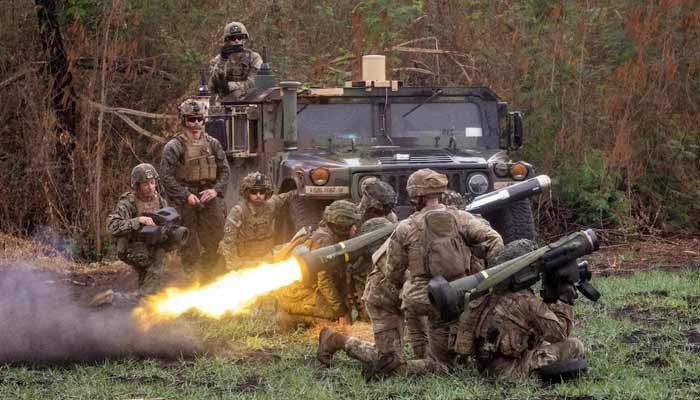
  • India and US Agree to Sale of Javelin Anti-Tank Missile Systems

    India and US Agree to Sale of Javelin Anti-Tank Missile Systems

    A Filipino soldier fires a Javelin anti-tank missile during a live-fire exercise as part of the annual U.S.-Philippines joint military drills called “Balikatan” at Fort Magsaysay, located in Nueva Ecija province, Philippines, on April 13, 2023. — Reuters

    – The missile system is already operational with the U.S. Army.
    – India and the U.S. sealed a 10-year defense agreement in October.
    – This missile system is designed to target various threats, including armored vehicles.

    The Indian military has agreed to purchase Javelin anti-tank missile systems from the United States, according to the U.S. Embassy in India on Friday, though the deal’s financial details were not disclosed. The missile, a medium-range guided weapon, is produced collaboratively by Lockheed Martin and RTX and is capable of engaging a wide array of targets. It is currently in service with the U.S. Army and Marine Corps, as well as multiple international clients.

    This agreement opens the door for increased collaboration between the defense industries of both nations, stated U.S. Ambassador Sergio Gor. “We see significant potential for future cooperation that will reinforce the defense industrial bases of both countries,” he added.

    India was unavailable for immediate comment regarding the deal. Despite recent strains—such as the U.S. imposing tariffs on Indian imports, countering India’s purchase of Russian oil, and close engagement with Pakistan—India’s defense partnership with the U.S. has remained resilient.

  • Turkiye-Pakistan-Saudi Pact Echoes NATO’s Article 5: FM Fidan

    Turkiye-Pakistan-Saudi Pact Echoes NATO’s Article 5: FM Fidan

    A defense agreement signed among Turkey, Pakistan, and Saudi Arabia is essentially comparable to NATO’s Article 5, according to Turkish Foreign Minister Hakan Fidan. He emphasized that the pact is not aimed at Iran. Fidan revealed that Turkish President Erdogan is eager to expand the alliance, with Egypt being a possible future member, among others.

    On Friday, Pakistan, Saudi Arabia, and Turkey formalized the Makkah Joint Defense Agreement, stating that the goal is to bolster collective deterrence against any aggression. The agreement stipulates that an armed attack against any of the three nations will be considered an attack on all.

    Fidan told Anadolu News Agency that this alliance is not directed at Iran or any other country. Its primary aim is to reaffirm commitment to mutual security. The nations will consult on the nature, extent, and type of support needed if any member faces an assault, with no country seen as a threat as long as the others are not attacked.

    Turkey, which boasts the second-largest military force within NATO, has indicated that the pact is open to regional expansion and does not intend to replace existing alliances. “NATO is a vast military alliance consisting of 32 member countries. We are starting small—with three countries—and are taking humble yet concrete steps,” Fidan said. The pact’s formation has been over two years in the making.

    He also mentioned plans to establish a committee of ministers similar to NATO’s, along with a secretariat based in Saudi Arabia, where operational details will be discussed at the initial meeting. The Turkish foreign minister expressed a desire for the alliance to grow beyond three countries, bringing in other regional players like Egypt once certain technical issues are resolved.

    Recently, Turkey, Saudi Arabia, Pakistan, and Egypt have formed a group to address regional concerns, including tackling Iran. This group, dubbed R4, aims to build a stronger partnership through actionable mechanisms.

    Fidan also noted Turkey’s interest in being part of an international coalition to safeguard Red Sea shipping from Houthi attacks, aligning with Turkey’s strategic interests.

    President Erdogan reaffirmed that the joint defense pact targets no country and remains open to all “brotherly” nations. He tweeted that the agreement, rooted in collective deterrence, will bolster security, foster joint defense projects, and fight terrorism.

    Erdogan emphasized that the pact aligns with the right to self-defense as outlined in UN Charter Article 51 and underscores its inclusive nature, inviting countries committed to regional peace and stability. He called for continued dialogue and diplomacy to resolve regional crises, asserting Turkey’s commitment to international law and peaceful conflict resolution. He expressed hope that their efforts and agreements will bring blessings to the entire region.

  • US Increases Patriot Missile Production to Refill Declining Stockpiles

    US Increases Patriot Missile Production to Refill Declining Stockpiles

    The US Army has awarded Lockheed Martin a contract valued at up to $58.6 billion for the production of Patriot missile interceptors, according to the Pentagon on Wednesday. This move comes as tensions in Iran and Ukraine are depleting US weapon reserves.

    The United States has been supplying large amounts of weaponry to allies and deploying munitions in its military actions, notably in Iran, which has raised alarms over the stock levels of vital air defense systems and precision-guided munitions.

    This new award transforms an earlier one-year deal worth $4.7 billion, issued in April, into a seven-year draft agreement. It establishes a multi-year procurement plan for interceptors from fiscal year 2026 to 2032, the Army noted.

    Defense contractors are under increased pressure from Pentagon negotiators to accelerate production. Earlier this year, tentative agreements focused on ramping up missile output. The Trump administration actively pushed defense firms to prioritize manufacturing over shareholder dividends, signing an executive order in January targeting underperforming contractors while still encouraging profit distribution.

    Industry leaders have expressed optimism about the production agreements but emphasized that Congress must first allocate funding before companies can significantly boost investment in components and manufacturing capacity.

    Details about many Pentagon munition contracts, including specific terms and delivery schedules, are still being finalized.

    A similar agreement was reached with Raytheon’s parent company, RTX, to increase Tomahawk cruise missile production from approximately 60 per year to an eventual block of 1,000 annually.

    Lockheed Martin, based in Bethesda, Maryland, stated that with this funding, it would fulfill its commitment to tripling PAC-3 MSE interceptor production capacity by 2030. It also plans to hike employment at its Camden, Arkansas facility by 50%, reaching about 1,850 employees from the current 1,200. Previously, Lockheed announced plans to ramp up Patriot PAC-3 missile production to 2,000 units per year.

    The company is investing between $8 billion and $9 billion through 2030 to modernize more than 20 US facilities, including establishing new munitions centers in Alabama and Arkansas.

    The PAC-3 MSE is a “hit-to-kill” missile used within the Patriot missile system to intercept ballistic missiles, cruise missiles, and aircraft.

    According to the Washington-based Center for Strategic and International Studies, the US military currently has fewer than 1,000 Patriot interceptors and under 250 THAAD interceptors—two crucial air defense systems—that have seen significant use in the Middle East recently.

  • US House Approves $1T Defense Bill Amid Iran and Israel Tensions

    US House Approves $1T Defense Bill Amid Iran and Israel Tensions

    The House votes 216-212 to approve the fiscal 2027 National Defense Authorization Act, setting the stage for negotiations with the Senate. This legislation, which has been passed annually for 65 years, now faces increased hurdles this year due to partisan divides.

    On Wednesday, the House of Representatives narrowly backed the expansive defense policy bill, raising concerns among Democrats over its hefty price tag, ongoing tensions with Iran, and a clause aimed at strengthening Pentagon collaborations with Israel. The bill authorizes a historic $1.15 trillion in military spending. While most Republicans supported it, nearly all Democrats opposed, citing the large financial commitment amid cuts to social programs by President Trump and fellow Republicans.

    Opposition also centered on the ongoing unpopular Iran conflict, which has reportedly cost the U.S. around $37.5 billion. Supporters argue that such investment is vital for military readiness, countering Iran, developing defense technology, and providing improved benefits for service members—such as pay raises up to 7% and upgraded housing and barracks.

    A contentious element involves expanding military technology cooperation with Israel, prompting criticism from many Americans—especially on the left—who are concerned about the heavy toll of Israeli military actions on Palestinian civilians in Gaza.

    Historically, the NDAA has been seen as “must-pass” legislation, law that typically clears Congress annually. However, this year’s version faces significant challenges due to partisan disagreements over the military budget size, Iran policy, aid to Israel and Ukraine, and cultural issues like transgender service members.

    Complicating the process, Republicans attached the NDAA to the “SAVE America Act,” a Trump-backed effort to tighten voting restrictions, before sending it to the Senate—though the impact of this move is uncertain, as the Senate lacks enough votes to pass the voting law. Democrats in the Senate rejected the NDAA last week, but Republican leaders are determined to try again before the August recess.

    The legislation process involves each chamber passing its own version of the NDAA, followed by negotiations between Armed Services Committee members to produce a compromise bill, which then must be approved by both chambers before heading to President Trump for signature or veto.

  • Hegseth Launches Testosterone Checks for U.S. Military Members

    Hegseth Launches Testosterone Checks for U.S. Military Members

    US Defense Secretary Pete Hegseth gestures as he makes an announcement about mandatory annual testosterone screening for troops 30 years old or older on July 15, 2026. — Reuters

    WASHINGTON: On Wednesday, U.S. Defense Secretary Pete Hegseth announced a new policy mandating yearly testosterone screenings for military personnel aged 30 and up. He stated that the initiative aims to address testosterone deficiencies, which can negatively impact health.

    Hegseth explained that the screenings could result in the offering of testosterone replacement therapy, designed to help soldiers maintain optimal testosterone levels to perform at their peak.

    “It’s well-documented that testosterone levels tend to decline naturally with age,” he said in a video statement.

    This screening will be integrated into annual health assessments for service members aged 30 and above. Soldiers diagnosed with low testosterone can choose to undergo hormone replacement treatments voluntarily. Those younger than 30 can also request testing if desired.

    This decision coincides with recent changes by the U.S. Department of Health and Human Services, which are easing restrictions on testosterone therapy, including plans to lift usage limits for men experiencing age-related testosterone decline.

    However, Hegseth’s announcement has faced criticism from Democratic lawmakers, who pointed out inconsistencies with his stance on transgender service members, many of whom rely on hormone therapy.

    “So, now you support gender-affirming care?” asked Democratic Congresswoman Summer Lee.

    “That sounds like gender-affirming care to me,” added Senator Tammy Duckworth.

  • Erdogan’s Revolver Dilemma Leaves NATO Leaders Puzzled Post-Summit

    Erdogan’s Revolver Dilemma Leaves NATO Leaders Puzzled Post-Summit

    Belgium’s Prime Minister was fairly taken aback upon returning home from Wednesday’s NATO summit in Turkey when he discovered a handgun and ammunition in his luggage. After the summit in Ankara, host Turkish President Recep Tayyip Erdogan presented each leader with an unusual farewell gift: an antique revolver loaded with live ammunition, clearly not just a prop. Erdogan aimed to highlight Turkey’s defense industry, which has become a significant export and strategic asset.

    Photos circulated by Lithuanian President Gitanas Nauseda’s office showed what appeared to be the Gumusay 357 Magnum, a rare six-shooter made by Turkish arms manufacturer MKE in the 1990s. The firearm was displayed in a wooden box adorned with Turkey’s flag, NATO’s emblem, and a sign stating “Gumusay, the first revolver-type handgun produced in our country,” printed in both Turkish and English.

    While engraved Turkish revolvers are uncommon gifts, all NATO leaders received the same model, personalized with their names. The Belgian Prime Minister, Bart De Wever, handed his to Brussels airport police to be stored securely. A Polish presidential aide, Karol Nawrocki, said his revolver was awaiting customs clearance in Warsaw and would be stored safely, emphasizing it would not be used for shooting.

    The Dutch and Swedish prime ministers reported their revolvers had been moved to their respective embassies in Ankara, with plans for the Dutch one to be disabled and the Swedish one awaiting import approval. British Prime Minister Keir Starmer’s revolver came with a cleaning kit and 500 bullets, according to a Downing Street source. Italian Prime Minister Giorgia Meloni’s firearm was already stored at Palazzo Chigi, Italy’s government headquarters, alongside other diplomatic gifts.

    EU Commission President Ursula von der Leyen intended to donate her revolver to a military museum, and Greece’s leader planned to gift his to Athens’ War Museum. Turkey’s handgun industry mostly produces semi-automatics, making the Gumusay something of a collector’s rarity. The country’s firearms manufacturers have gained a foothold in Europe’s civilian market by offering low-cost pistols and shotguns, challenging long-established Italian and Belgian brands associated with higher-end sporting and service weapons.

    According to the Geneva-based Small Arms Survey, Turkey ranked as the world’s third-largest exporter of small arms from 2019 to 2024, earning roughly $3 billion in exports during that period, behind only the United States and Italy.

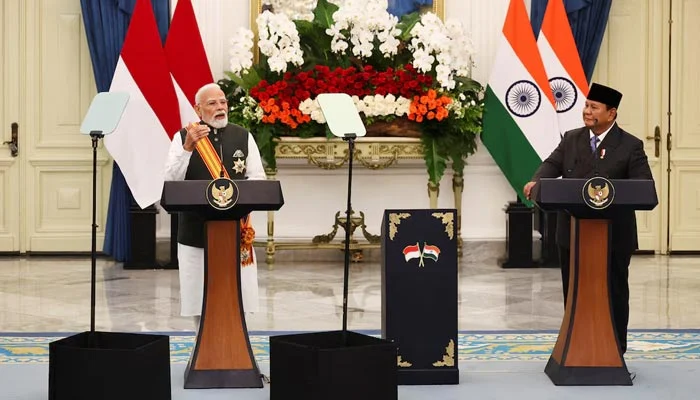
  • Indonesia to Acquire Indian Supersonic Cruise Missiles During Modi’s Visit

    Indonesia to Acquire Indian Supersonic Cruise Missiles During Modi’s Visit

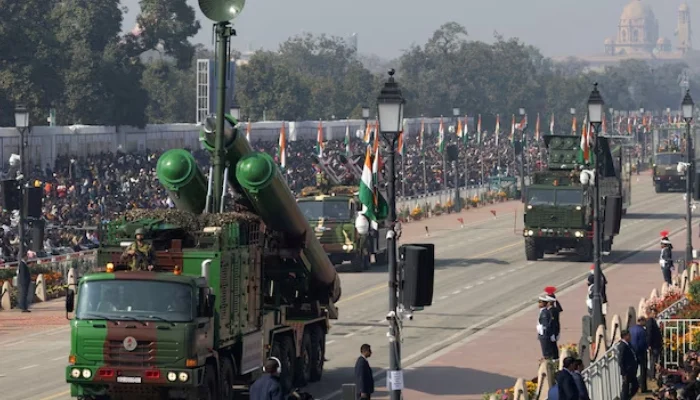
    India plans to supply BrahMos supersonic cruise missiles along with Astra air-to-air missiles to Indonesia, according to an Indian government official on Tuesday, coinciding with Prime Minister Narendra Modi’s two-day visit to Jakarta. Earlier reports from Indian sources indicated that a deal, valued at approximately $630 million, is likely to be signed during Modi’s stay.

    Indonesia is set to become the third country to formalize an agreement to purchase these missiles, produced by BrahMos Aerospace Private Limited. This deal signifies a significant boost in India’s defense exports and strengthens strategic partnerships with Southeast Asia’s largest economy.

    Developed collaboratively by India and Russia, BrahMos missiles are among the fastest in the world and can be launched from land, sea, and air platforms. The Astra beyond-visual-range air-to-air missile can be integrated with Indonesian Sukhoi fighters, which are domestically made by Russia.

    Officials on both sides did not immediately respond to requests for comments. Indonesia had previously announced in March an agreement with India to acquire the BrahMos missile system. At that time, Indonesia’s Defense Ministry described the deal as being in advanced negotiations, with an expected value between $200 million and $350 million.

    India has also reached agreements to sell BrahMos missiles to Vietnam and the Philippines and has garnered interest from more than half a dozen other nations, including the United Arab Emirates.

    During his visit, Modi is expected to discuss maritime security, defense industrial cooperation, regional connectivity, and broader strategic coordination within the Indo-Pacific region with Indonesian President Prabowo Subianto. The negotiations around the BrahMos deal are expected to emphasize a phased approach, allowing Indonesia to incrementally expand its missile capabilities. The package under consideration may include missile systems, supporting infrastructure, operator training, maintenance services, and other technical support aimed at long-term deployment.

    Trade between India and Indonesia reached $28.15 billion in the 2024-2025 fiscal year, positioning Indonesia as India’s second-largest trading partner within ASEAN.

    Ahead of the visit, Modi emphasized that his trips to Indonesia, Australia, and New Zealand are designed to bolster India’s “Act East” policy, its commitment to regional security, and its vision for a free, open, and inclusive Indo-Pacific region.

  • India Approves $5.46 Billion Military Equipment Purchase

    India Approves $5.46 Billion Military Equipment Purchase

    India has given the green light for a $5.46 billion purchase of various military systems, including missiles, electronic warfare gear, and Kamikaze drones. The move was approved “in-principle” by the Defense Acquisition Council, which includes top military leaders and is led by the defense minister, according to a government statement.

    The expected cost of the entire deal is approximately 520 billion Indian Rupees ($5.46 billion). The statement did not specify whether these systems would be imported or produced domestically, nor did it specify the timeline for completing the acquisition.

    Over the past decade, India has been working to lessen its reliance on Russia, its traditional military equipment supplier, shifting toward purchases from the United States and France, alongside efforts to boost local manufacturing.

    The approved procurement includes anti-drone and electronic warfare systems, medium-range surface-to-air and portable anti-tank missiles, and a “Jet-Based Kamikaze Drone System” for the Indian Army. The government also greenlit the acquisition of new naval mines, shipborne drones, and a maritime testing facility to enhance naval defense and surveillance. Additionally, India plans to acquire a high-altitude unmanned aircraft platform for intelligence and remote sensing purposes.

    India’s current defense spending is around $85 billion, as the country pushes forward with modernization efforts. Recently, Delhi ordered at least 75 ships and submarines, most of which are domestically built, and approved defense spending worth approximately $39 billion, including Rafale fighter jets from France.

  • Hegseth praises NATO defense gains, urges some to “do more”

    Hegseth praises NATO defense gains, urges some to “do more”

    Progress and Spending in NATO

    Brussels: On Thursday, U.S. Defense Secretary Pete Hegseth praised NATO allies for making strides in meeting their defense spending commitments, though he emphasized that some countries still need to “do more.” He adopted a friendly tone during the alliance’s meeting.

    “Many nations are following through with their commitments, while others still need to step up, and we will be transparent about that—both privately and publicly,” Hegseth stated before discussions with NATO defense ministers in Brussels.

    “It’s important — friends are honest with friends.”

    This amicable stance is likely to provide reassurance to Washington’s allies ahead of a summit with President Donald Trump next month, especially after Trump criticized European countries over their responses to his stance on Iran.

    NATO plans to highlight increased European defense spending to show Trump progress on last year’s goal of reaching 5% of GDP on defense expenditures.

    “What we’re seeing in terms of spending is extraordinary — huge amounts of money are coming in,” said NATO Secretary General Mark Rutte.

    “Europe and Canada will spend over $90 billion more in 2025 compared to 2024—a nearly 20% rise in defense spending.”

    Despite the upbeat outlook from NATO, an official noted that three European nations, including Slovenia and the Czech Republic, are projected to fall short of the 2% GDP defense spending threshold this year.

    The U.S. has been clear that it envisions NATO allies on the continent assuming greater responsibility for their own conventional defenses as American focus shifts toward China.

    As part of this shift, the Pentagon has informed allies that it will cut back the number of assets it makes available globally for NATO operations.

    This decision has raised concerns that Europe might become more vulnerable to Russia’s threats, given that many countries still depend on Washington for crucial weaponry.

    Rutte acknowledged that the reductions are “immediate,” but assured that the U.S. would still support NATO members in the event of an attack.

    “All allies, including the U.S., will do everything possible to ensure we can defend ourselves in wartime,” he said.

    Military Asset Reductions

    U.S. and German sources report that the cuts include about a third of the 150 U.S. F-16 and F-15 fighter jets designated for NATO, along with refueling planes, reconnaissance aircraft, bombers, and drones.

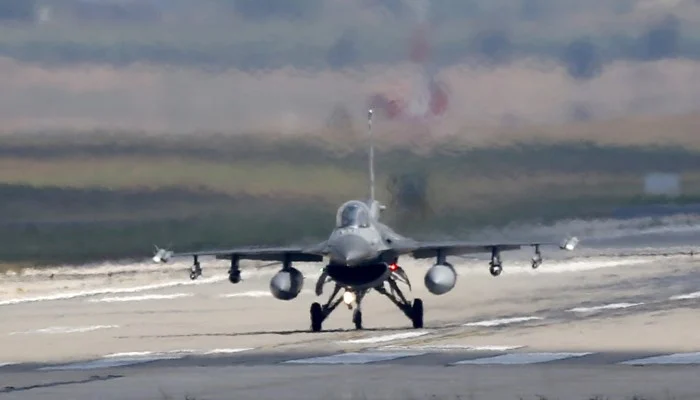
    A Turkish Air Force F-16 fighter jet lands at Incirlik Air Base in Adana, Turkey, August 11, 2015. — Reuters

    The report also states that a submarine capable of launching cruise missiles is being decommissioned, along with one of two aircraft carrier groups.

    “Overall, we will be able to compensate in many areas. Still, we need a bit more time, and that message is clear,” said German Defense Minister Boris Pistorius.

    “It’s risky and potentially dangerous for NATO’s European security if capabilities are withdrawn too quickly without clarity on when they can be restored.”

    While NATO focuses on its broader security, the alliance will also discuss bolstering support for Ukraine. President Volodymyr Zelensky plans to join a meeting with Kyiv’s military allies later today before heading to an EU leaders’ summit.

    Ukraine aims to leverage the momentum from Zelensky’s positive meeting with Trump at the G7 summit in Evian to secure additional backing in its conflict with Russia.

  • US to Cut Fighter Jets and Warships in Europe’s NATO Forces, Report

    US to Cut Fighter Jets and Warships in Europe’s NATO Forces, Report

    The United States is planning to reduce the number of fighter jets and warships it supplies to NATO forces in Europe, according to a Thursday report by the New York Times.

    These cutbacks come amid efforts by European nations to strengthen their defense capabilities following Russia’s full-scale invasion of Ukraine in 2022. The invasion has heightened fears that Moscow might target a NATO member.

    Former President Donald Trump has criticized the alliance, dismissing it as a “paper tiger” and calling its members “cowards” for not joining the US and Israel in the conflict against Iran.

    The plan involves a one-third reduction in fighter jet provisions to Europe, the elimination of all eight aerial refueling tankers, and cuts to maritime reconnaissance aircraft, the report cites two unnamed senior European officials.

    In addition, a missile-launching submarine, an aircraft carrier, a bomber group, and several jets and warships are slated for reallocation. The Pentagon has been contacted for comments.

    Earlier this month, the US European Command announced it would review Washington’s contributions to NATO to ensure that Europe assumes greater responsibility for its own conventional defense.

    US General Alexus Grynkewich criticized Europe’s reliance on US forces, describing it as an “unhealthy co-dependence.”

    Founded in 1949, NATO’s 32-member alliance’s core principle is that an attack on one member is considered an attack on all, triggering collective defense.

    Last week, US Secretary of State Marco Rubio stated that President Trump will attend a NATO summit in Turkey this July. Rubio called it “probably the most important NATO meeting in history,” emphasizing the need to resolve outstanding issues and make necessary improvements.

  • AUKUS Partners to Develop Payloads for Autonomous Undersea Vehicles

    AUKUS Partners to Develop Payloads for Autonomous Undersea Vehicles

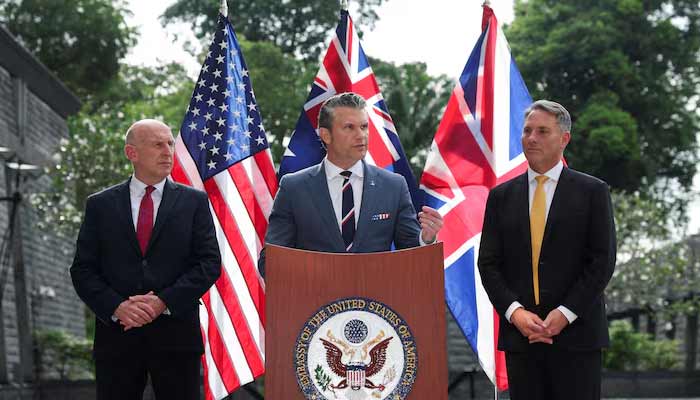
    The United States, Australia, and the United Kingdom are working together to develop advanced underwater drone payloads as part of their trilateral security alliance, announced Pentagon Secretary Pete Hegseth on Saturday.

    Hegseth met with his Australian and British counterparts during the Shangri-La Dialogue in Singapore, where they discussed progress on the AUKUS agreement, designed to strengthen their military presence in the Indo-Pacific region and beyond.

    “Today, we’re excited to reveal the first major project under AUKUS Pillar 2, focusing on deploying sophisticated uncrewed underwater vehicles, or UUVs,” Hegseth explained to reporters at a briefing held at the U.S. embassy in Singapore.

    “This project will provide a range of highly versatile, multi-mission UUV payloads engineered to enhance undersea operations and sustain our collective maritime edge,” he added.

    While Pillar 1 of AUKUS involves Australia acquiring nuclear-powered submarines armed with conventional weapons, Pillar 2 leverages the defense capabilities of each member country to develop cutting-edge military technologies.

    The alliance is presented as supporting a “free and open Indo-Pacific,” but many see it primarily as a strategic measure against China’s growing influence, which strongly opposes the partnership.

    British Defense Secretary John Healey mentioned that the planned technology, including a “spectrum of advanced sensors and weapons systems” for undersea drones, will quickly arm our forces with the latest battlefield technology. These systems are intended to be mounted on autonomous underwater vehicles, he said.

    Underwater infrastructure security has become a key focus at Asia’s leading defense summit held recently in Singapore.

    “The seabed has emerged as a major arena of contest over the past 18 months,” Australian Defense Minister Richard Marles told attendees earlier. “We’ve seen a series of incidents targeting subsea critical infrastructure at a scale and frequency that’s without precedent in history.”

    Over the past two years, several seabed cables have been damaged by ships, affecting regions from the Baltic to Asia. Nearly all of Australia’s internet traffic passes through just 15 underwater cables, according to Canberra’s top diplomat.

    “Our economy and government operations depend heavily on infrastructure that cannot move and is exposed to threats,” he emphasized. “As demonstrated in the Baltic, this infrastructure can be severed with an anchor in the dead of night.”

  • India Calls for Proposals for 5th-Gen Combat Jets

    India Calls for Proposals for 5th-Gen Combat Jets

    India has initiated the process to locally develop a fifth-generation combat aircraft, with three firms shortlisted to submit proposals, according to defense officials cited by ANI. These bidders include Tata Advanced Systems, along with joint ventures between Larsen and Toubro, Bharat Electronics, and Bharat Forge—all Indian companies.

    The project was launched last year following India’s approval, shortly after a serious military conflict with Pakistan, to build stealth fighter jets. It plays a key role in strengthening the Indian Air Force, which has seen its fleet of mostly Russian aircraft decline to fewer than 30 squadrons, down from the sanctioned strength of 42.

    This initiative aligns with Prime Minister Narendra Modi’s broader goal of boosting domestic manufacturing capabilities. The U.S. has offered its advanced F-35 fighter jets, while Russia has countered with its fifth-generation Su-57; however, India has remained non-committal toward both options.

    Traditionally dependent on importing military hardware, India has been increasingly promoting homegrown defense production under Modi’s leadership. Defense manufacturing revenue hit a record INR 1.54 trillion (around $16.09 billion) in the fiscal year ending March 2025.

  • South Korea Evaluates Gradual Support for Strait of Hormuz Security

    South Korean Defense Minister Ahn Gyu-Back announced on Wednesday that South Korea is evaluating a phased approach to contribute to ensuring safe navigation through the Strait of Hormuz. The steps suggested support measures but stop short of military involvement, Yonhap News Agency reported.

    During a press conference with South Korean media in Washington, Ahn stated that he conveyed Seoul’s stance during a meeting with U.S. Secretary of Defense Pete Hegseth on Monday. “We indicated that, at a basic level, we will participate as a responsible member of the international community,” he explained. “We are reviewing ways to contribute gradually.”

    Possible forms of assistance could include political backing, dispatching personnel, sharing intelligence, and providing military assets, but no detailed discussions about expanding South Korea’s troop commitments have taken place. “There was no in-depth discussion about specifically increasing our military’s involvement,” Ahn clarified. “Any decisions will need to follow domestic legal procedures.”

    The day after the meeting, Seoul condemned an attack on a South Korean-flagged vessel near the Strait of Hormuz, emphasizing an ongoing investigation into the incident. The South Korean presidential office strongly denounced the attack but said responsibility had yet to be determined.

    Hegseth emphasized that the U.S. expects allies to stand united in the face of rising global threats, citing President Donald Trump’s authorization of Operation Epic Fury as evidence of U.S. resolve. He praised South Korea’s plans to boost defense spending and take on greater responsibility for regional security as an example of fair burden-sharing among allies.

    Additionally, Ahn noted that Hegseth expressed understanding of South Korea’s position regarding a conditions-based transfer of wartime operational control (OPCON) from the United States, with an aim to complete the process sooner rather than later. The two sides also discussed other alliance topics, including plans to develop nuclear-powered submarines. No discussions occurred regarding reducing U.S. troop levels or altering the strategic flexibility of U.S. forces stationed in South Korea.

  • Israel approves US fighter jet purchase deal

    Israel approved a multi-billion-dollar agreement on Sunday to buy two fighter jet squadrons from the US, aiming to strengthen its air dominance. The deal includes a squadron of F-35 stealth multirole fighters from Lockheed Martin and another of F-15IA aircraft from Boeing, according to the defense ministry.

    Defense Minister Israel Katz emphasized that the goal is to maintain Israel’s air superiority for years to come. He stated that these acquisitions are key components of the “Shield of Israel” plan, designed to give the Israeli Defense Forces a lasting strategic advantage. The F-35, one of the world’s most advanced military aircraft, is a collaborative project involving the US and several allies, and Israel already operates multiple units.

    Prime Minister Benjamin Netanyahu highlighted the importance of this move, noting it would enhance Israel’s “overwhelming air superiority” and pledged to develop domestically-produced weapons and fighter jets. He mentioned that Israeli pilots are capable of reaching anywhere in Iranian skies and are prepared to do so if necessary.

    Netanyahu announced plans to increase Israel’s defense budget by 350 billion shekels ($118 billion) over the next decade. This funding will be directed toward manufacturing advanced weaponry and fighter aircraft within Israel to reduce reliance on foreign suppliers. He also spoke about developing new “blue-and-white” aircraft, a term signifying domestically developed Israeli products.

    The Israeli Air Force has played a crucial role in recent conflicts, including intensive aerial bombardments during the Gaza war, targeting Hamas positions, tunnels, command centers, and missile launch sites, often resulting in widespread destruction in densely populated areas. Meanwhile, Israel has engaged in two separate wars with Iran over the past year, utilizing its air power for long-range strikes inside Iranian territory.

    Israel recently approved its 2026 national budget, which includes significant increases in defense spending, reflecting ongoing military priorities fueled by the recent conflicts and regional tensions.

  • Chinese Fighter Jet Sales Soar Post India-Pakistan Tension: Report

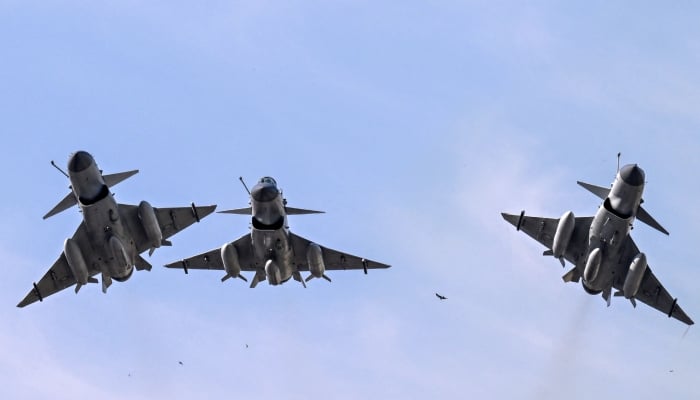
    PAF J-10 fighter jets fly over the President's House during the national day parade in Islamabad on March 23, 2025. — AFP
    PAF J-10 fighter jets streak past the President’s House during Pakistan’s National Day parade in Islamabad on March 23, 2025. — AFP

    • Revenue increased by 15.8%, reaching 75.4 billion yuan in 2025, according to reports.
    • Company’s profits grew by 6.5%, totaling 3.4 billion yuan in 2025.
    • Chengdu sales in the first quarter surged nearly 80% year-over-year.

    According to Bloomberg, AVIC Chengdu Aircraft Corporation, the manufacturer of the J-10C fighter jet utilized by Pakistan to shoot down India’s French-made aircraft last May, has reported a notable increase in profits.

    In 2025, revenue rose by 15.8% to 75.4 billion yuan ($11 billion), while profits increased by 6.5% to 3.4 billion yuan, the aircraft producer announced.

    These figures are the highest in the company’s history, Bloomberg noted, highlighting that Chengdu’s first-quarter sales climbed almost 80% compared to the previous year.

    Pakistan’s Air Force (PAF) introduced the J-10C in March 2022, significantly enhancing its aerial defense capabilities.

    At that time, officials stated the fighter jet could carry advanced, fourth-generation air-to-air missiles, including the short-range PL-10 and the long-range PL-15.

    The J-10C first saw combat in May 2025 during a conflict with India, which initiated an unprovoked attack on Pakistan on May 6, following an assault on tourists in Indian-occupied Jammu and Kashmir.

    During the 87-hour engagement, Pakistan shot down seven Indian fighter jets, including French-made Rafale aircraft, along with numerous drones.

    The four-day confrontation featured Pakistan effectively deploying Chinese-made HQ-9 air defense systems, PL-15 missiles, and J-10C fighters, which were credited with downing several Indian aircraft.

    Additionally, the PAF utilized its JF-17 Thunder jets to destroy India’s S-400 missile defense system at Adampur using hypersonic missiles.

    The hostilities concluded on May 10 with a ceasefire brokered by the United States.

    In the aftermath, Lieutenant General Ahmed Sharif Chaudhry, director-general of Inter-Services Public Relations, commended China’s weapon systems, stating they performed “exceptionally well,” according to The News, citing Bloomberg.

    “Recently, Chinese platforms have demonstrated outstanding performance,” Lt. Gen. Chaudhry remarked in an October interview.

    A report submitted to the U.S. Congress in November acknowledged Pakistan’s “military success over India” during the conflict.

    The US-China Economic and Security Review Commission noted that Pakistan used advanced Chinese weaponry to bolster its military edge against India.

  • Sources: US Navy Secretary Phelan Has Been Dismissed

    Washington: Navy Secretary John Phelan has been dismissed, according to a U.S. official and a knowledgeable source. This marks another significant personnel shakeup at the Pentagon amid ongoing military leadership changes, just weeks after Defense Secretary Pete Hegseth removed the Army’s top general.

    The Pentagon issued a brief statement confirming his departure, stating he was leaving the administration “effective immediately.” No further details or reasons for his exit were provided.

    First reported by Reuters, sources who requested anonymity indicated that Phelan’s ousting was partly due to his slow progress in implementing reforms to accelerate shipbuilding and due to strained relationships with key Pentagon leaders. The sources pointed to conflicts with Hegseth, Hegseth’s deputy Steve Feinberg, and Navy Deputy Secretary Hung Cao, who is now expected to serve as acting Navy Secretary. Additionally, an ethics investigation into Phelan’s office was cited as a possible factor.

    Phelan, a billionaire reportedly close to President Donald Trump, is the first service secretary appointed by the current administration to be replaced since Trump’s return to office last year.

    His departure aligns with broader upheaval within the Pentagon’s leadership under Hegseth’s oversight, including the previous year’s firing of the Chairman of the Joint Chiefs of Staff, Air Force General CQ Brown, as well as the chiefs of naval operations and the Air Force vice chief of staff.

    On April 2, Hegseth also dismissed Army Chief of Staff Randy George without publicly explaining the reasoning. Two U.S. officials suggested this decision was related to tensions between Hegseth and Army Secretary Daniel Driessol.

    Senator Jack Reed, the top Democrat on the Senate Armed Services Committee, characterized Phelan’s dismissal as “troubling,” expressing concern about the ongoing instability and dysfunction at the Department of Defense, which he attributed to the policies of President Trump and Secretary Hegseth.

    This leadership change comes amid a tense ceasefire with Iran, as the U.S. increases its naval presence in the Middle East. The U.S. military relies heavily on naval assets to enforce a blockade against Iran, which President Trump hopes will push Tehran to negotiate an end to the conflict under America’s terms.

    The Navy faces mounting pressure to expand its fleet. China’s shipbuilding capabilities now surpass those of the U.S., which was once the global leader in naval power.

    For fiscal year 2027, Trump’s proposed $1.5 trillion defense budget includes over $65 billion allocated for the purchase of 18 warships and 16 support vessels built by General Dynamics and Huntington Ingalls Industries. This initiative is part of what the Pentagon calls the “Golden Fleet” plan, projected to be the largest shipbuilding effort since 1962.