
Digital Phablet – With GTA 6 facing bans in numerous countries ahead of its launch, Australia has opted for a different tactic by requiring players to verify their age with a real ID in accordance with the nation’s new online safety regulations.
 What will GTA 6 $100 Ultimate Edition include?
The highly anticipated game is scheduled to release on November 19. Fans eager to play can pre-order the standard edition for $80 or the $100 Ultimate Edition, both of which include bonus content.
Rockstar Games states that Grand Theft Auto VI: Ultimate Edition will deliver “the most immersive GTA experience yet,” featuring luxury vehicles, advanced weaponry, cosmetic options, and access to exclusive activities within Jason and Lucia’s storyline. Some fans have criticized the company for its approach of locking content behind paywalls, especially given the game’s already steep $80 price point.
Australian GTA 6 players will need real ID to access the game; Rockstar could face $49.5 million in fines if a breach occurs
The introduction of these online safety laws has sparked debate among locals, with many expressing concerns over the privacy of their personal data, including national IDs, driver’s licenses, and selfies.
 These countries have already banned GTA 6
According to News.com.au, Australia implemented the law in March, requiring users to submit their official ID to Rockstar if they want to play the R18+ rated game.
Dexerto also noted, citing an Australian news outlet, that Rockstar could face fines of up to $49.5 million for non-compliance in case of violations.
This news comes amid growing anticipation for the third trailer of GTA 6, which is expected to reveal gameplay footage and provide further details about Jason and Lucia’s storyline.
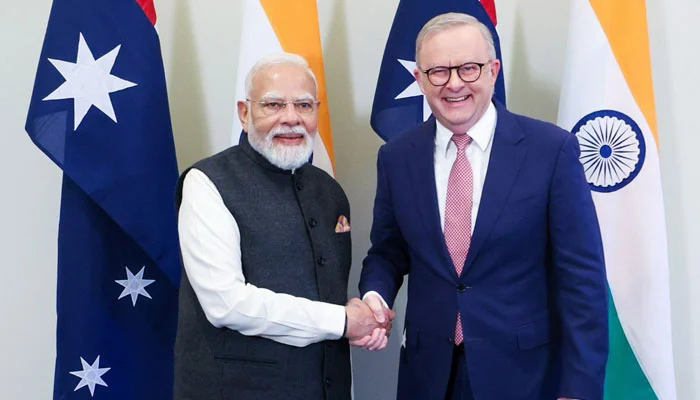
India Secures Agreement for Peaceful Australian Uranium Supply
Indian Prime Minister Narendra Modi met with Australian Prime Minister Anthony Albanese in Melbourne on July 9, 2026. — X/ @narendramodi
– Exports will be regulated under safeguards set by the IAEA.
– Both countries will collaborate to establish a temporary space tracking station.
– Albanese commended Modi’s leadership for strengthening international relations.
Modi announced during his visit to Australia that he secured a uranium supply deal, which is vital for advancing India’s nuclear energy goals. With an ever-growing demand for electricity, Modi plans to significantly expand nuclear power in the near future.
Although Australia holds approximately 28% of the world’s uranium reserves, regulatory and political challenges have previously limited exports to India. “Today, we finalized an important nuclear agreement,” Modi stated after discussions with Albanese. “This paves the way for Australian uranium to support India and boosts our clean energy initiatives.”
According to a joint statement, this agreement allows for long-term uranium exports strictly for peaceful purposes, with adherence to IAEA safeguards. Albanese emphasized, “This arrangement helps Australia increase its non-fossil fuel energy capacity.”
A nuclear cooperation treaty signed in 2015 laid the groundwork for uranium exports between the two nations. Recently, their relationship has grown closer, partly driven by a shared interest in countering China’s military ambitions and expanding trade outside of China.
The leaders also agreed to enhance defense cooperation and strengthen supply chains for critical minerals. Additionally, they plan to build a temporary space tracking facility on Australia’s Cocos Keeling Islands, which will support Indian space launches, according to the joint statement.
Prime Minister Albanese appeared cheerful during a selfie moment with Modi earlier in the day. He has jokingly called Modi “The Boss,” suggesting he can draw larger crowds than U.S. rock star Bruce Springsteen.
Albanese praised Modi’s role in boosting the partnership between the two countries, saying, “Your leadership and personal involvement have been central to these developments.”
India’s diaspora in Australia has surged sharply, making it the largest overseas community in the country. Last year’s statistics confirmed that Indian-born residents now outnumber those from Britain—a significant demographic shift.
Modi is expected to receive a warm welcome at an upcoming community rally in Melbourne, with organizers anticipating over 20,000 attendees. However, his visit is also likely to provoke opposition protests, including concerns over perceived radical Hindu nationalism at home. Australia’s Alliance Against Islamophobia plans to protest outside the rally, highlighting issues faced by minority groups in India.
Anti-immigration demonstrators have also assembled beforehand, carrying signs like “Put Australians First.” After Australia, Modi is scheduled to travel to New Zealand.
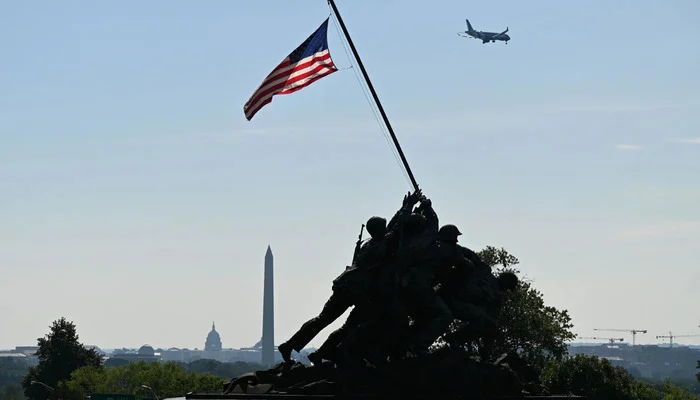
US Military to Establish War-Prepared Stockpile in Australia
The US military is working on establishing a permanent, war-ready weapons cache for its Marine Corps along Australia’s southeastern coast, beyond the reach of most Chinese missiles, according to tender documents and confirmed by officials to AFP.
This will be the Marine Corps’ first such stockpile in Australia, aimed at utilizing the continent’s strategic position in the South Pacific to counter China’s rapid military expansion, experts said.
During the Cold War, the US Marine Corps began prepositioning military supplies globally—using floating stores on ships and storage caves in Norway for weapons, ammunition, and vehicles needed to sustain thousands of troops.
The first land-based stockpile in the Asia-Pacific region is set to open this year in the Philippines, near potential hotspots in the South China Sea.
Recently released US Navy documents reveal plans for an even larger Australian stockpile, with $30 million allocated for constructing warehouses and offices in southeastern Victoria for “critical forward provisioning.”
By 2028, this Australian facility is expected to reach full capacity and will be stored in Melbourne before being relocated to US warehouses at an Australian military base in Bandiana, rural Victoria, under construction next year, according to tender details.
Australia does not permit foreign military bases on its territory—a sensitive issue given its security alliance with the US and the increasing presence of rotating US forces at Australian defense facilities.
The US Navy has contracted a global defense firm to staff the Australian stockpile with around 110 specialists—including engineers, mechanics, and safety experts—to oversee the supplies, which include “crew-served weapons,” according to the documents.
A Marine Corps Forces Pacific spokesperson told AFP that Marine activities in Australia support global sustainment efforts by maintaining ready-to-issue equipment and supplies for operations and exercises across the Indo-Pacific. The spokesperson declined to discuss specific contract details or force planning but emphasized that Marine equipment is maintained at “high readiness.”
Coordination on contracting and operations will closely involve Australia’s Department of Defense. The spokesperson added that these activities enhance responsiveness, interoperability with allies and partners, and support various missions throughout the Indo-Pacific, a broader term for the Asia-Pacific region.
In 2023, US Army trucks were stationed at Bandiana following an Australian war game involving US troops that occurs biennially. The Marine stockpile project at Bandiana, approved last July, is separate from these arrangements.
“The Marine Corps and Army equipment programs are tailored to their respective service needs and managed independently,” the Marines spokesperson stated.
Australia’s Department of Defence has not immediately responded to requests for comment.
Beyond China’s missile threat?
The Pentagon has requested $500 million from Congress next year to enhance equipment and fuel prepositioning across the Asia-Pacific, aiming to deter China.
Approximately 2,000 US Marines conduct six months of exercises annually in Darwin, on Australia’s northern coast.
A recent report by the Lowy Institute warned that China possesses the capability to target northern Australia with ballistic missiles launched from its outposts in the South China Sea.
According to Sam Roggeveen, director of international security at the Lowy Institute, this potential threat likely influenced the decision to establish a stockpile in southeastern Australia.
“Once these facilities become operational, they would be obvious targets for China,” he said.
The increasing deployment of US forces and military resources in Australia represents a significant shift in Australian policy, aligning the country more closely with America’s strategic goals in the region, Roggeveen added.
John Blaxland, a professor of international security at the Australian National University, noted that Australia’s geographic importance is gaining recognition amid concerns over the vulnerability of the US military base on Guam.
“With regional influence competition at its highest in over a generation, it’s not surprising the US Marine Corps is looking to Australia for storage solutions,” he said.
“Unless Australia significantly boosts defense spending—something that isn’t politically feasible—facilitating US investment in Australian infrastructure seems to be the most sensible strategy.”
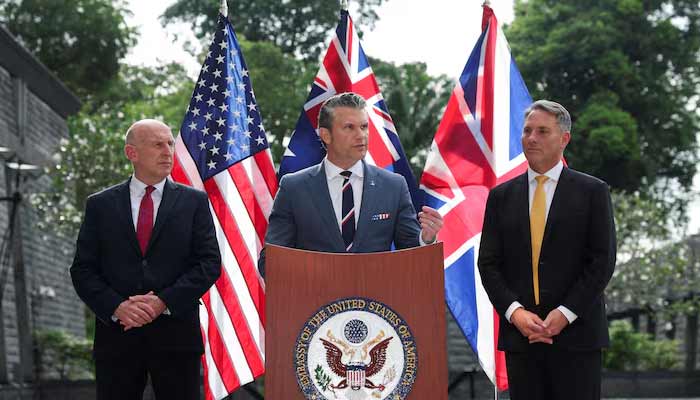
AUKUS Partners to Develop Payloads for Autonomous Undersea Vehicles
The United States, Australia, and the United Kingdom are working together to develop advanced underwater drone payloads as part of their trilateral security alliance, announced Pentagon Secretary Pete Hegseth on Saturday.
Hegseth met with his Australian and British counterparts during the Shangri-La Dialogue in Singapore, where they discussed progress on the AUKUS agreement, designed to strengthen their military presence in the Indo-Pacific region and beyond.
“Today, we’re excited to reveal the first major project under AUKUS Pillar 2, focusing on deploying sophisticated uncrewed underwater vehicles, or UUVs,” Hegseth explained to reporters at a briefing held at the U.S. embassy in Singapore.
“This project will provide a range of highly versatile, multi-mission UUV payloads engineered to enhance undersea operations and sustain our collective maritime edge,” he added.
While Pillar 1 of AUKUS involves Australia acquiring nuclear-powered submarines armed with conventional weapons, Pillar 2 leverages the defense capabilities of each member country to develop cutting-edge military technologies.
The alliance is presented as supporting a “free and open Indo-Pacific,” but many see it primarily as a strategic measure against China’s growing influence, which strongly opposes the partnership.
British Defense Secretary John Healey mentioned that the planned technology, including a “spectrum of advanced sensors and weapons systems” for undersea drones, will quickly arm our forces with the latest battlefield technology. These systems are intended to be mounted on autonomous underwater vehicles, he said.
Underwater infrastructure security has become a key focus at Asia’s leading defense summit held recently in Singapore.
“The seabed has emerged as a major arena of contest over the past 18 months,” Australian Defense Minister Richard Marles told attendees earlier. “We’ve seen a series of incidents targeting subsea critical infrastructure at a scale and frequency that’s without precedent in history.”
Over the past two years, several seabed cables have been damaged by ships, affecting regions from the Baltic to Asia. Nearly all of Australia’s internet traffic passes through just 15 underwater cables, according to Canberra’s top diplomat.
“Our economy and government operations depend heavily on infrastructure that cannot move and is exposed to threats,” he emphasized. “As demonstrated in the Baltic, this infrastructure can be severed with an anchor in the dead of night.”

Katy Perry Under Investigation in Australia Over Ruby Rose Allegations
Digital Phablet – Katy Perry Under Investigation Following Ruby Rose’s Allegations
Additionally read: Justin Bieber Coachella Highest-Paid Artist at $10M as Ticket Prices Surge Post-Leak

A police inquiry is underway in Australia concerning allegations of sexual assault made against Katy Perry by actress Ruby Rose, known for roles in “Batgirl” and “Orange Is the New Black.” The pop icon has denied the accusations, calling them “reckless falsehoods.”
Victoria Police revealed in a statement to Variety: “Detectives from the Melbourne Sexual Offenses and Child Abuse Investigation Team (SOCIT) are examining a reported historical sexual assault incident from Melbourne in 2010.” The incident purportedly took place at a licensed venue in Melbourne’s central business district. Due to the ongoing investigation, no further comments are appropriate at this time.
Ruby Rose has publicly accused Perry of assaulting her nearly 20 years ago. She claims Perry forcibly rubbed her “disgusting v**ina” on her face, which led to her vomiting. Rose indicated she filed a police report regarding the incident just hours earlier.
In a social media post on Threads, Rose detailed that Perry sexually attacked her at a Melbourne nightclub when they were both in their early twenties—Rose is now 40, and Perry is 41. “Katy Perry assaulted me at the Spice Market Nightclub in Melbourne,” Rose wrote. When asked about Perry’s reaction to Justin Bieber’s Coachella performance, Rose dismissed the concern, stating, “Who cares what she thinks.”
Perry’s spokesperson dismissed the allegations in a statement to Variety, asserting, “The false claims circulating online by Ruby Rose about Katy Perry are dangerous and reckless lies. Ms. Rose has a history of making serious public allegations on social media that are consistently denied by those named.”
Perry’s team did not immediately comment on the police investigation. Rose, in a subsequent Threads post, clarified her stance, saying she has finalized all her police reports and will no longer discuss the cases publicly, stating, “In many ways, this brings me relief. I am not ignoring others’ experiences; I’m complying with police procedures.”
She added, “She didn’t kiss me. I was trying to avoid her by resting on my friend’s lap when she bent down and, inappropriately, rubbed her private parts on my face until I vomited.”

The controversy continues as Rose stated she does not intend to file a police report initially but later confirmed she had completed all reports, emphasizing her relief in complying with the legal process.
Note: All company and person names have been preserved as per instructions, with only the necessary replacements and rephrasing to ensure originality and a natural, human tone in American English.

Australian Mosque Protesters Interrupt PM Albanese Over Israel Support
Protesters booed and shouted at Prime Minister Anthony Albanese during his visit to Australia’s largest mosque on Eid al-Fitr, expressing their anger over his support for Israel’s military actions in Gaza. Videos captured the scene roughly 15 minutes after Albanese and Home Affairs Minister Tony Burke arrived at Lakemba Mosque in western Sydney to observe Ramadan’s end.
The demonstrators jeered, instructing Albanese and Burke to leave and branding them as “genocide supporters,” in reference to Israel’s casualties in Gaza. An organizer urged the crowd to remain calm and stop recording, emphasizing that it was a joyful Eid celebration. A security guard was seen physically removing a heckler from the scene before escorting him out.
As Albanese and Burke departed, hecklers continued to shout insults, including “Shame on you!” Despite the disruption, Albanese later described the event as “incredibly positive,” noting that the community managed to handle the few troublemakers.
He explained that some of the unrest was tied to the government’s recent designation of Hizb ut-Tahrir as a banned hate organization, a move partly motivated by laws enacted after a deadly shooting at Bondi Beach in December. Notably, protesters had also gathered in February when Israeli President Isaac Herzog visited, to show support for Jewish Australians reportedly targeted by gunmen inspired by ISIS during the Bondi attack, leading to multiple arrests during clashes with police.

Iranian Women Footballers Abandon Australian Asylum After Repeated Returns
Three additional members of Iran’s women’s soccer team have left their asylum in Australia and are choosing to return to Iran, according to Canberra officials on Sunday.
Seven members of Iran’s delegation competing in the Women’s Asian Cup sought refuge in Australia after being labeled “traitors” at home for refusing to sing the national anthem.
Currently, only three players will stay in Australia, as another teammate had a change of heart earlier this week.
“Last night, three members of the Iranian Women’s Soccer Team decided to rejoin the rest of the squad for their journey back to Iran,” Home Affairs Minister Tony Burke announced.
He added, “After informing Australian officials of their decision, the players were given multiple opportunities to discuss their options.”
The Australian government offered the team members a chance to seek asylum, but Burke emphasized they faced extremely tough decisions.
This situation has unfolded amid ongoing Middle Eastern conflicts ignited by US-Israeli airstrikes targeting Iran.
Human rights organizations have repeatedly accused Iranian authorities of pressuring athletes abroad by threatening family members or confiscating property if they defect or speak out against the regime.
Burke stated, “Australia has done everything possible to ensure these women had a safe future here.”
“Australians can be proud that our country provided these women with real choices and worked with authorities willing to support them.”
State broadcaster IRIB reported Saturday that three team members—including two players and one staff member—had abandoned their asylum claims and are en route to Malaysia.
‘Traitors’
Prime Minister Anthony Albanese praised the women’s bravery and assured they would be embraced warmly.
However, Iran’s football federation accused Australia of kidnapping the players and forcing them to abandon their homeland against their will.
During a match in Australia, the players remained silent while the national anthem played, a symbolic act of defiance.
An Iranian state TV host called the athletes “wartime traitors,” raising fears that they could face persecution, or worse, if they return.
Though some players sang Iran’s anthem in subsequent matches, human rights advocates warn the damage has already been done.
Five players, including captain Zahra Ghanbari, disappeared from their hotel under cover of darkness to seek asylum in Australia.
Two more team members—one player and one support staff—applied for asylum before the team departed from Sydney on Tuesday evening.

Australian police investigate threatening letter to major mosque before Ramadan
A security guard stands outside the Lakemba Imam Ali bin Abi Talib Mosque as worshippers arrive for Friday prayers, following an increased security presence after a fatal mass shooting at a Hanukkah celebration on Bondi Beach on December 14 in Sydney, Australia. — Reuters/File
Australian authorities announced on Thursday they are investigating after a threatening letter was sent to the country’s largest mosque, marking the third such incident leading into Ramadan. The letter, delivered to Lakemba Mosque in western Sydney on Wednesday, featured an illustration of a pig and a warning to eliminate the “Muslim race,” according to local media reports.
Law enforcement officials have collected the letter for forensic analysis and plan to continue patrols around religious sites—including the mosque—and at community events. This recent threat comes just weeks after a similar message was mailed to the mosque, depicting Muslims inside a burning mosque.
In January, police arrested and charged a 70-year-old man in connection with a third threatening letter sent to the mosque’s staff. The Lebanese Muslim Association, which manages the mosque, told ABC that they have reached out to the government requesting additional funding for extra security personnel and surveillance cameras.
During Ramadan, the mosque anticipates nightly attendance of about 5,000 people. Over 60% of the residents in Lakemba identify as Muslim, according to the Australian Bureau of Statistics. Canterbury-Bankstown Council Mayor Bilal El-Hayek said the community is feeling intensively “anxious.” He mentioned hearing from residents who are now hesitant to send their children to prayer services this Ramadan due to fears of potential incidents at local mosques.
Prime Minister Anthony Albanese condemned the recent threats, calling them “outrageous” and emphasizing that it is unacceptable for individuals to be intimidated while practicing their faith, especially during Ramadan. He stressed the importance of lowering the tone of political dialogue in the country.
Since late 2023, anti-Muslim sentiment has been on the rise in Australia, particularly following the Gaza War, according to a government-commissioned report. The Islamophobia Register Australia noted a 740% increase in reports after the December 14 Bondi Beach shooting, where authorities allege two gunmen inspired by Daesh killed 15 people attending a Jewish holiday celebration.
El-Hayek stated, “The tension is unprecedented. It’s the worst I’ve seen.”

Three Dead After Shooting in Eastern Australian Town, Lockdown Enforced
Three individuals have been fatally shot during an incident in New South Wales, Australia, according to authorities on Thursday. Local reports indicate the gunman has not yet been apprehended, and the shooting is believed to be linked to domestic violence.
Law enforcement officials confirmed an ongoing operation in Lake Cargelligo, a town roughly 379 miles west of Sydney, and have advised residents to remain indoors and avoid the area. Emergency responders responded to the scene in the late afternoon after reports of gunfire.
Two women and one man lost their lives, while another man was critically injured but remains in stable condition, police stated. Authorities issued a statement on social media urging the public to stay clear of the vicinity and for locals to stay inside.
The Sydney Morning Herald suggests this was a suspected domestic violence attack, with the suspect believed to be holed up in the town wielding a long-barreled firearm.
Lake Cargelligo has a small population of around 1,100 residents, based on the 2021 census. This shooting follows just a month after two armed assailants opened fire at a Hanukkah celebration on Bondi Beach, resulting in 15 deaths—Australia’s deadliest mass shooting in decades.
In response, the country recently enacted new legislation to facilitate a national gun buyback program and enhance background check procedures for firearm licensing. Since New South Wales has the highest number of firearms among Australian states, laws have also been introduced to limit individuals to owning no more than four guns and to require gun owners to join shooting clubs to obtain or maintain licenses.

Australia shifts India to highest risk tier, enhancing student visa scrutiny
Australia has increased their scrutiny of student visa applications from three countries, including India, Nepal, Bangladesh, and Bhutan, after moving these South Asian nations into its highest risk category due to what it calls “emerging integrity issues,” according to Australian media reports.
The Home Affairs Department confirmed that on January 8, 2026, the Eligibility Levels for several South Asian countries were altered during an unusual out-of-cycle review. These nations were moved from Evidence Level 2 to Evidence Level 3, the highest risk tier under Australia’s Simplified Student Visa Framework.
Last year, India, Nepal, Bangladesh, and Bhutan made up nearly a third of all international student enrollments. A spokesperson for Home Affairs stated that these changes aim to better manage integrity risks while still supporting genuine students.
“This adjustment helps us address emerging integrity concerns more effectively while continuing to allow authentic students to pursue quality education in Australia,” the spokesperson said. They also emphasized that the government wants to ensure international students have confidence that they’re investing in a top-tier education system.
Dr. Abul Rizvi, a former deputy secretary of the Immigration Department, described the move as “highly unusual,” noting that Evidence Levels are typically updated just once annually. Under this framework, countries are evaluated based on factors such as visa refusals related to fraud, visa cancellations, unlawful overstays, and applications for refugee status following visa violations.
A Level 3 rating requires applicants and education providers to submit more detailed documentation, including proof of financial stability and academic records. Dr. Rizvi explained this would lead to increased manual verification, such as transcript and financial statement checks, which could slow down processing times.
The decision follows a recent visit to India by Julian Hill, the country’s Assistant Minister for International Education, who met with Home Affairs officials during his trip.
Dr. Rizvi suggested that authorities might have conducted special data analyses after noticing a rise in concerning cases from these countries.
Although the government has not adjusted its national planning target of 295,000 student placements for 2026, Dr. Rizvi noted that higher refusal rates from the affected nations could lead to the need to source more students from other countries.

Police: Bondi Beach shooting suspects acted solo
A father and son accused of a mass shooting at Bondi Beach in Australia claim they acted alone and are not connected to any terrorist organization, according to police. Sajid Akram and his son Naveed reportedly killed 15 people during an attack inspired by ISIS on December 14. In the weeks prior, they traveled to the southern Philippines, raising suspicions about possible ties to extremists in a region with a history of insurgencies, but authorities say there is no evidence supporting this link.
Australian Federal Police Commissioner Krissy Barrett emphasized that the suspects operated independently. “There is no indication that they were part of a larger terrorist network or directed by others,” she stated. Investigators continue to look into why the pair stayed in Davao, where surveillance footage shows them rarely leaving their modest hotel, and police stress that their presence wasn’t just for tourism.
Images from court exhibits reveal the suspects trained with shotguns in rural Australia and recorded a video in October criticizing Zionists while in front of a ISIS flag. Sajid Akram, aged 50, was shot and killed by officers during the attack. An Indian citizen who arrived in Australia in 1998 with a visa, Sajid was the father. His 24-year-old son Naveed, born in Australia, remains in custody, charged with multiple murders and other serious crimes.
In response, New South Wales authorities are enforcing stricter security measures, with police patrols armed with high-caliber weapons maintaining public safety. Additionally, December 31’s New Year’s Eve celebrations in Sydney will include a moment of silence at 11 p.m. to honor the victims.
Prime Minister Anthony Albanese announced a nationwide crackdown on gun ownership and hate speech, including the largest firearms buyback program since laws were tightened after the 1996 Port Arthur massacre, which resulted in 35 deaths. He also ordered a review of police and intelligence operations to bolster security measures.

Families in Bondi call for national investigation into Australia’s antisemitism rise
Families impacted by the Bondi Beach mass shooting have called for an independent national investigation into antisemitism in Australia, citing failures in law enforcement, intelligence, and policies that they believe allowed the attack to happen. Sajid and Naveed Akram, a father and son duo, are accused of targeting a Hanukkah celebration at Bondi Beach on December 14, resulting in 15 deaths and dozens of injuries. Authorities described the incident as an antisemitic terrorist attack.
Seventeen families presented an open letter to Prime Minister Anthony Albanese, urging the government to establish a Royal Commission to address the surge in antisemitism across the country and scrutinize what went wrong in law enforcement and intelligence agencies leading up to the tragedy. The families emphasized the need for answers and solutions, questioning why warning signs were ignored and extremism was allowed to escalate unchecked.
Albanese has opposed the call for a federal inquiry, advocating instead for action now and pointing to a Royal Commission led by New South Wales, where the attack occurred, which he assured would get full support. The government has proposed reforms to gun laws, hate speech regulations, and investigations into police and intelligence efforts.
Home Affairs Minister Tony Burke expressed concern that a national commission might serve as a platform for some of the worst antisemitic rhetoric, which he believes could undermine national unity and security. Meanwhile, the families argue that the federal response is insufficient and that antisemitism remains a persistent threat that must be addressed decisively.
The victims’ families described their loss—parents, children, spouses, and grandparents—while mourning in a space that should have been safe and joyful. They insist that the government owes them transparency and accountability, warning that the rise of antisemitism constitutes a national crisis that needs immediate and strong action to prevent further tragedies.
During the attack, Sajid Akram was shot and killed by police. He entered Australia on a visa in 1998, originally from India. His 24-year-old son Naveed, a naturalized Australian citizen, remains in custody on multiple charges, including terrorism-related offenses, multiple murders, and planning a terrorist act with explosive devices.

Australian State Prepares for Stricter Gun Laws Post-Bondi Attack
Most gun owners in Australia will be limited to owning no more than four firearms, while farmers will be permitted up to ten. The main opposition Liberal party has expressed support for the proposed amendments. A recent poll shows that about 75% of Australians favor implementing stricter gun laws.
Following the tragic mass shooting at Bondi Beach, New South Wales’ lower house moved quickly to pass new legislation in an emergency session, with plans for the upper house to review it soon. The proposed laws aim to tighten gun ownership restrictions, ban the display of terrorist symbols, and restrict certain protests.
The government’s plan includes capping most individual gun licenses to four firearms, with a maximum of ten for those in agriculture. The attack at a Hanukkah celebration resulted in 15 deaths and numerous injuries, renewing calls for stronger gun regulations and increased action against antisemitism.
Police confirmed that the suspect, Sajid Akram, 50, who was shot and killed by officers, owned six guns. His 24-year-old son, Naveed, faces multiple serious charges, including murder and terrorism. Despite Australia’s gun law reforms since a 1996 tragedy that claimed 35 lives, some in New South Wales still own an excessive number of guns—over 70 individuals hold more than 100 guns, with one licensee owning 298.
A poll indicates that the majority of Australians advocate for tougher firearm regulations. However, opposition from the rural-focused National Party has arisen, with concerns that the reforms could negatively impact farmers. The federal government is also working on measures such as improved gun controls and a gun buyback program, though they have resisted establishing a royal commission to investigate the attack. Instead, Prime Minister Anthony Albanese has announced an independent review of intelligence and law enforcement agencies to address the issues more swiftly.

New Evidence and Photos of Bondi Beach Attackers Revealed
New court documents released Monday shed light on the investigation into Australia’s deadliest mass shooting in decades. The documents feature new images and details of Sajid and Naveed Akram, the father-and-son duo accused of opening fire during a religious festival at Sydney’s Bondi Beach, resulting in 15 fatalities.
The police facts sheet, provided by the NSW Courts, includes redacted images from CCTV footage showing Sajid and Naveed Akram exiting 103 Brighton Avenue in Campsie on December 14, 2025. It was also revealed that the pair underwent firearms training in what is believed to be rural New South Wales before the attack.
A video discovered on Naveed’s phone from late October depicts the father and son practicing tactical shooting with shotguns in the countryside. Police state that the suspects were inspired by Daesh, with flags linked to theterror group recovered from their vehicle.
While Sajid was shot and killed by police, Naveed is hospitalized recovering from gunshot wounds. He faces 59 charges, including murder and terrorism-related offenses. Police also revealed that the duo recorded a video in October condemning “Zionists,” sitting in front of a Daesh flag with multiple rifles and ammunition, explaining their motivations for the attack.
Investigators noted that the suspects conducted a reconnaissance trip to Bondi Beach just days before the shooting. CCTV footage presented in court shows the two leaving an Airbnb in Campsie, heading towards Bondi with concealed weapons. They are also accused of throwing four improvised explosive devices into the crowd shortly before opening fire; none detonated, though three pipe bombs and a tennis ball bomb were assessed as viable.
The federal government announced plans to overhaul gun laws and hate speech regulations, alongside a review of police and intelligence agencies. Prime Minister Anthony Albanese revealed a comprehensive gun buyback program aimed at removing firearms from communities.
In response to the tragedy, New South Wales recalled parliament for two days to pass what are being called “the strictest firearm reforms in the country.” New measures will limit gun ownership to four firearms per person, or ten for exceptions such as farmers. Officials estimated that the state currently holds over 1.1 million guns.

Police hold ‘tactical’ shooting drills in countryside near Bondi
Two individuals linked to last week’s deadly mass shooting at Australia’s Bondi Beach trained for the attack in rural areas, according to court documents filed Monday. Prime Minister Anthony Albanese has committed to enacting stricter laws targeting hate speech and extremism.
Sajid Akram and Naveed are accused of attacking a Hanukkah event on Bondi Beach, resulting in 15 fatalities—the deadliest mass shooting in Australia in nearly thirty years. Court papers reveal the suspects practiced with firearms in what is believed to be the New South Wales countryside prior to the incident. Photos show them firing shotguns and moving in what authorities described as a tactical manner.
In October, the suspects recorded a video condemning “Zionists,” sitting in front of a Daesh flag and explaining their motivations. Furthermore, just days before the attack, the suspects went on a nighttime reconnaissance trip to Bondi Beach.
Australia marked one week since the shooting by observing a minute of silence at 6:47 pm local time. Albanese announced his intention to introduce legislation punishing hate preaching more severely, emphasizing national resilience: “We won’t allow terrorists inspired by Daesh to divide us. We will get through this together.” He expressed regret for the attack and assured efforts to protect Jewish Australians’ rights to practice their faith, educate their children, and participate fully in society.
The federal government has proposed sweeping reforms to firearm regulations and hate speech laws, alongside a review of law enforcement and intelligence agencies. Last week, Albanese revealed a nationwide gun buyback program—the largest since 1996, when Australia implemented strict firearm controls after the Port Arthur massacre that claimed 35 lives.
Additionally, New South Wales held special parliamentary sessions Monday to pass what officials called the “toughest firearm laws in the country.” Premier Chris Minns stated, “The world has changed since Sunday’s terrorist act. We wish we could rewind time, but our focus is on preventing future tragedies.” The new legislation limits gun ownership to four firearms per person, or ten for certain groups like farmers, with over 1.1 million guns already registered statewide.
The reforms will also ban displaying “terrorist symbols,” including the Daesh flag found in a vehicle linked to one of the accused shooters. Authorities will have expanded powers to restrict protests for up to three months after a terrorism-related event.
Sajid Akram, 50, was shot and killed during the assault; he entered Australia on a visa in 1998 from India. His 24-year-old son Naveed, an Australian citizen, was transferred from hospital to jail Monday. Minns announced plans to consider tighter hate speech laws next year, including bans on phrases like “globalize the intifada.”

Australia investigates security agencies post-Bondi Beach attack
Australia’s Prime Minister Anthony Albanese arrived with his wife Jodie Haydon to pay respects at the memorial for victims of a shooting at Bondi Beach in Sydney on December 21, 2025. — AFP
– The attack was reportedly motivated by “Daesh ideology.”
– An official review will scrutinize the authorities’ powers, organizational structure, and communication systems.
– Australian Security Intelligence Organisation (ASIO) looked into the suspect’s son in 2019 but found no threat.
SYDNEY: On Sunday, Prime Minister Anthony Albanese announced a review of Australia’s police and intelligence agencies following a tragic shooting at Bondi Beach that left 15 people dead. The gunmen responsible for the December 14 attack, a father and son, allegedly targeted a Hanukkah celebration inspired by “Daesh ideology.”
Albanese emphasized the need to assess whether law enforcement and intelligence agencies have adequate authority, organizational frameworks, and information-sharing mechanisms to ensure national safety. “The recent attack inspired by Daesh underscores how much the security landscape in our country is evolving,” he said. “Our security agencies must be prepared to respond effectively.”
The suspect, Sajid Akram, 50, was fatally shot by police during the attack. An Indian citizen who arrived in Australia on a visa in 1998, he was killed at the scene. His 24-year-old son Naveed, an Australian citizen born in the country, remains hospitalized under police custody, facing multiple charges including terrorism and the murders of 15 individuals.
The son was previously investigated by ASIO in 2019 for potential radicalization but was deemed no threat at that time. His father was also questioned during this review but was able to secure a license to own six firearms.
In the weeks prior to the attack, the father and son returned to Sydney from a month-long trip to southern Philippines, now under investigation by authorities in both countries. Albanese pointed out serious concerns about the effectiveness of Australia’s intelligence system, especially considering the history of the suspect’s prior assessment.
Regarding their stay on Mindanao, the Prime Minister noted, “While radicalization is being explored, there’s no evidence the Philippines is being used as a training site.”
Authorities in Mindanao indicated the pair mostly stayed confined to their hotel room at Davao City’s GV Hotel, venturing out only briefly. Regional police, after reviewing CCTV footage, confirmed the father visited a gun shop during their stay.
Criminologist Clarke Jones from Australian National University described it as “very, very unusual” for a father and son to be suspected perpetrators in such cases. Once in the Philippines, the suspects could have easily traveled to Mindanao without raising suspicion. Jones noted that their radicalization seemed to have developed unnoticed over the years since the initial 2019 Australian security review, suggesting that support measures for at-risk individuals might have been insufficient.

Police say Bondi shooter stopped at gun shop during Philippines trip
Police officers are present outside the residence of suspects involved in a shooting during a Jewish holiday celebration at Bondi Beach, located in Bonnyrigg, Sydney, Australia, on December 15, 2025. — Reuters
– Australian authorities are investigating whether Sajid and Naveed met with extremists in Mindanao.
– Staff at a hotel in Davao reported that the men mostly stayed in their room for 28 days.
– Authorities are reviewing CCTV footage to determine other locations visited and individuals they may have met.
—
MANILA: Police revealed on Saturday that one of the two accused in the Bondi Beach shooting visited a gun shop while in the Philippines, as investigators work to track the suspects’ movements.
An Australian counter-terrorism unit is examining whether Sajid Akram and his son Naveed encountered extremists during their nearly month-long trip to Mindanao before the deadly shooting that claimed 15 lives in Sydney six days earlier.
Staff at Davao City’s GV Hotel told AFP early this week that the two men remained confined to their small room for most of their 28-day stay, leaving only briefly each morning.
“From what we’ve observed, one of them visited a gun store,” said Catherine Dela Rey, a regional police spokesperson in Davao. She specified that 50-year-old Sajid Akram was the individual seen at the shop.
“CCTV footage review is ongoing, and we’re working to identify other places they visited and people they met,” she added.
Although details remain limited, National Security Adviser Eduardo Ano explained on Friday that it’s unlikely the men left Davao for training purposes.
“They would go out and return within two or three hours, with the maximum being eight hours, but that’s still too short a window for them to have left the city,” he noted.
Police investigations also indicate that neither suspect visited any of Davao’s seven shooting ranges, he said.
President Ferdinand Marcos has criticized media reports suggesting the Philippines serves as a training ground for terrorists, calling such assertions misleading.
“In recent years, we have taken strong action to dismantle terrorist networks, protect communities, and maintain peace,” Marcos declared during a speech marking the 90th anniversary of the armed forces on Friday.
“Disregarding these achievements with baseless speculation is unacceptable.”